Barnard Clay Collective
  • Home (current)
  • About Clay
  • Gallery
  • Join
  • Welcome to the Barnard Clay Collective!

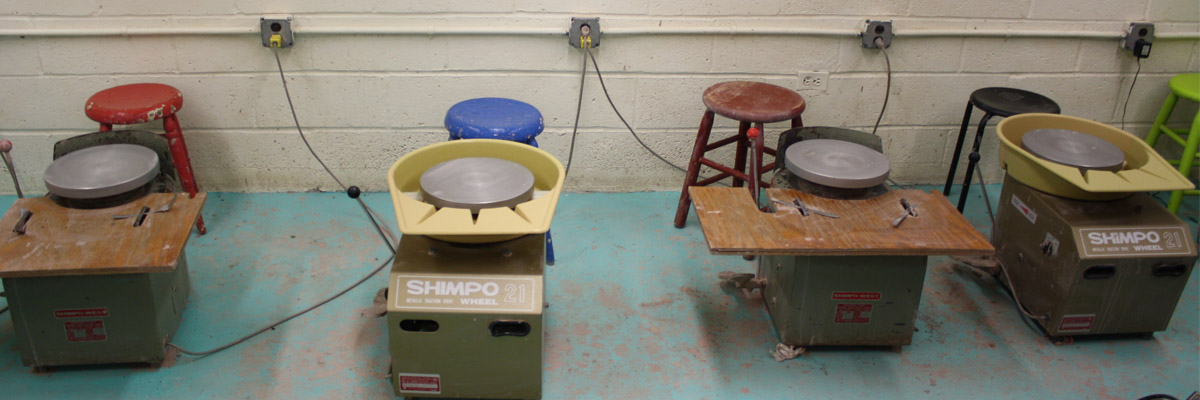
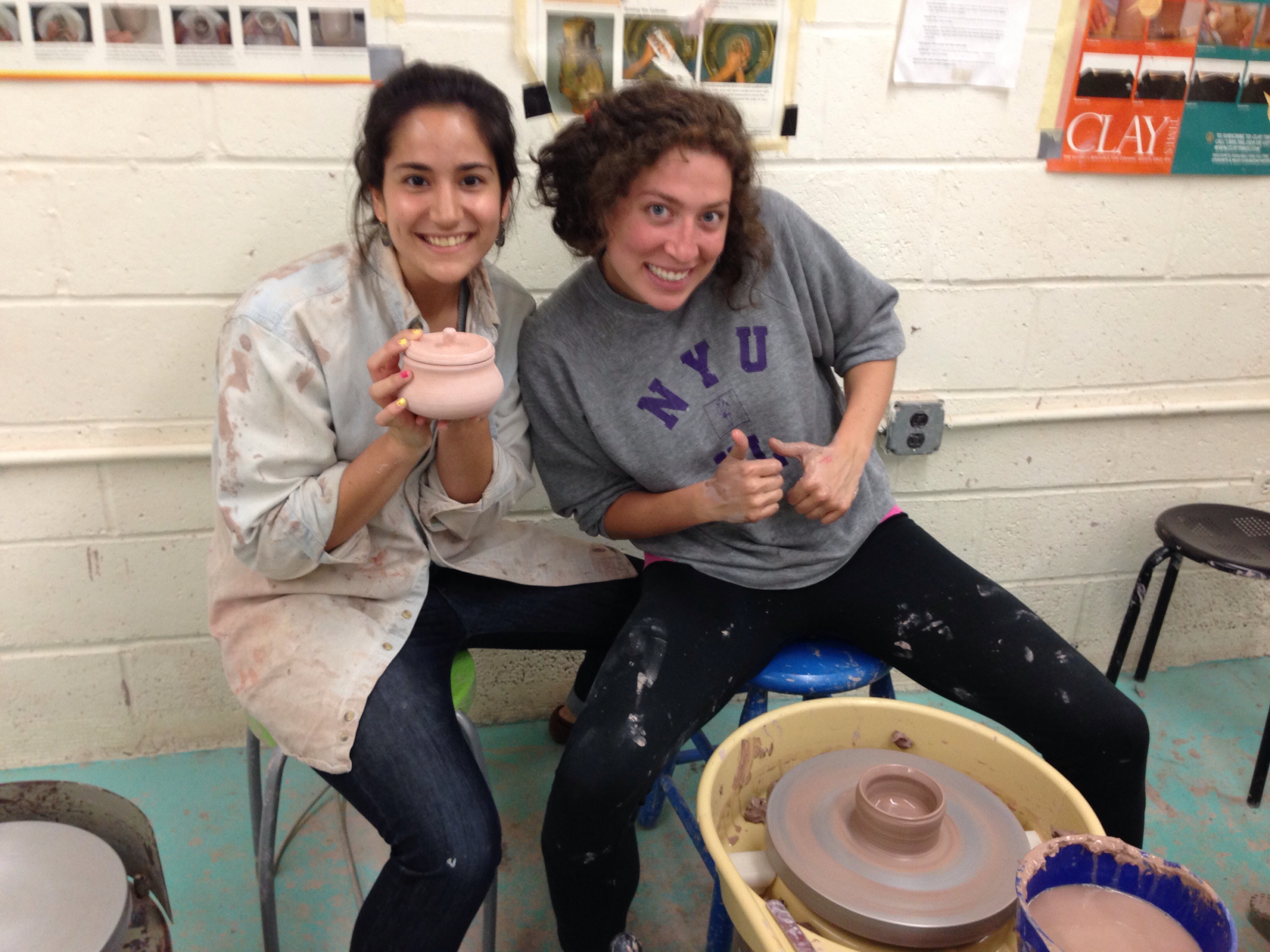
    The Clay Collective is a collaborative space offering a chance for the Columbia Undergraduate community to learn and practice ceramic arts. We welcome artists of all skill levels and want to stress how well fit the space is to people who have never even stepped in a studio before.

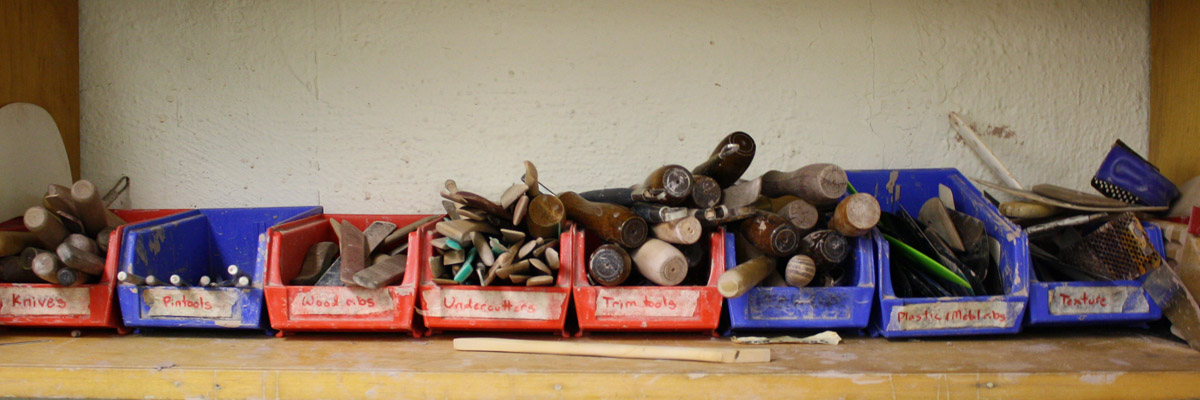
    We are able to offer classes at such low cost because the studio is completely student run and managed. All of our members are expected and required to participate in the operation and maintenance of our shared studio. The studio promotes craftsmanship and provides an artistic outlet for all our members. We encourage a friendly, supportive and non-competitive atmosphere and a clean and safe environment.

    We run sign ups at the beginning of every semester. For registration info, check out the join page. Students are also encouraged to get involved in learning how to run a studio, recycling clay, mixing glazes, and firing kilns. Many of the coordinators are simply the most involved students from past years.
  • What is Clay?

    Clay is a natural material formed by the geological breakdown of feldspathic rock. The chemical formual of pure clay (kaolinite) is Silica + Alumnina + Water. Different clays and other materials are mixed together with pure clay to form workable clay bodies. We use a brown stoneware body that is very plastic and suitable for both hand building and wheel throwing.

    Greenware

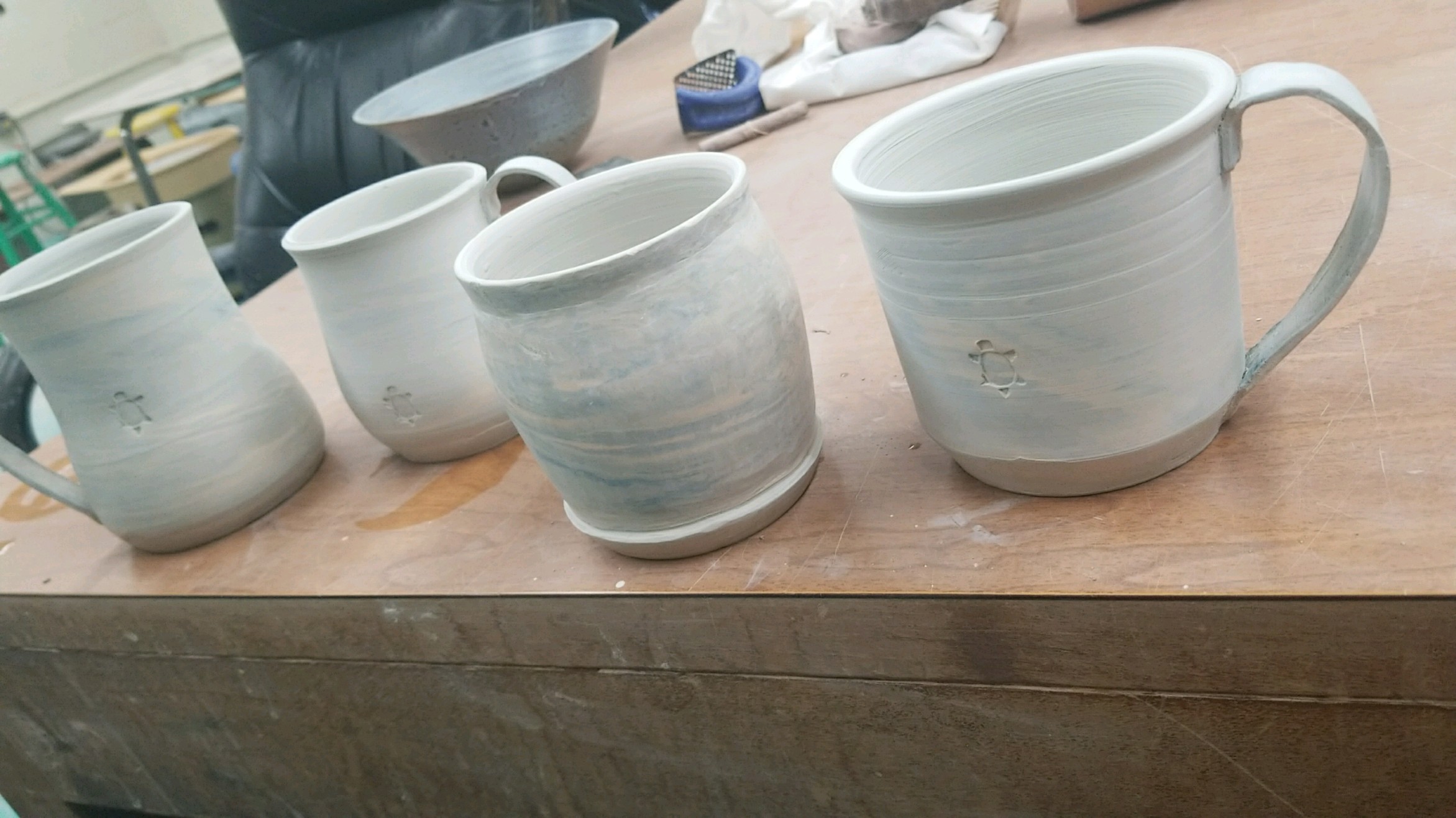
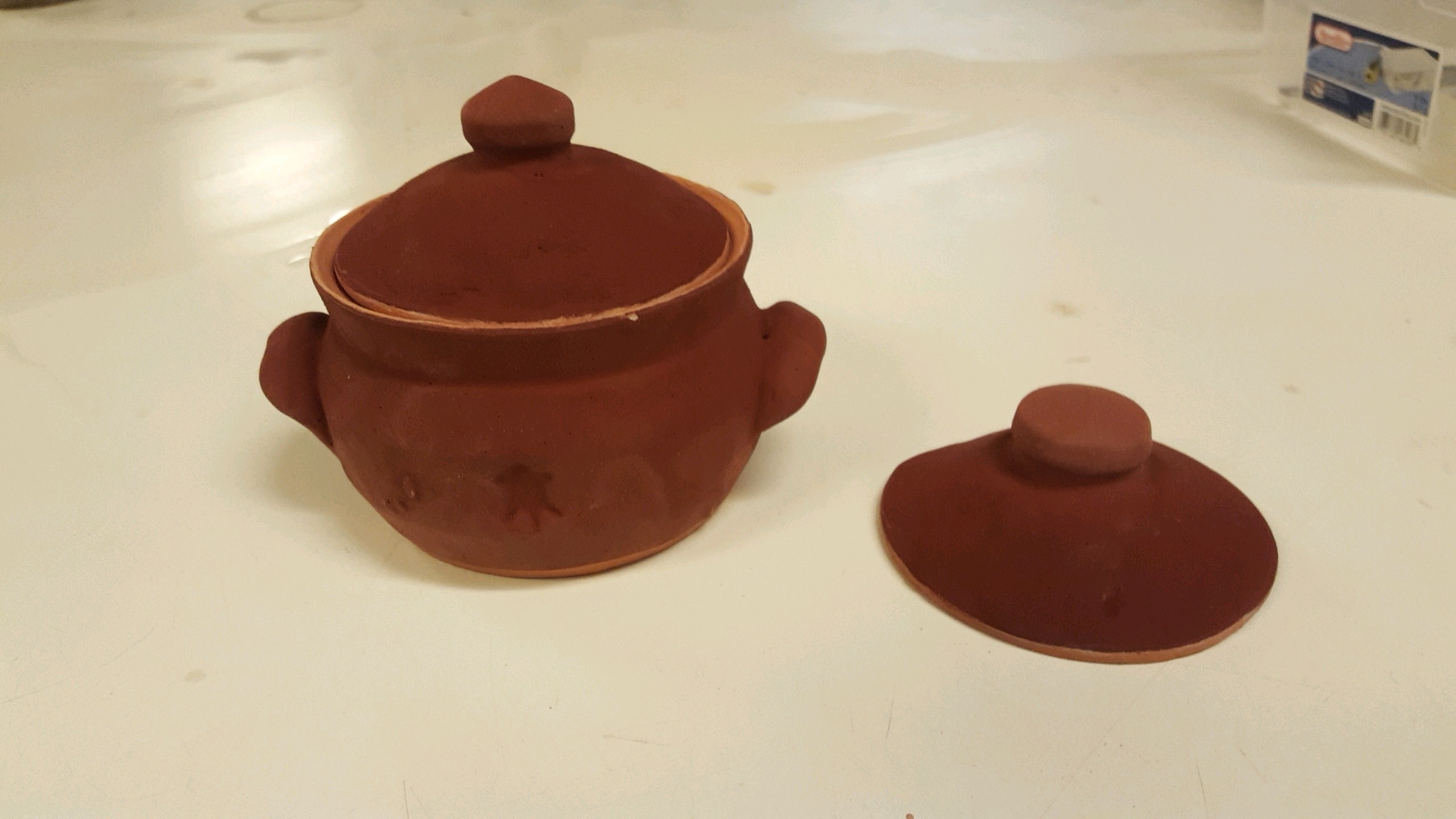
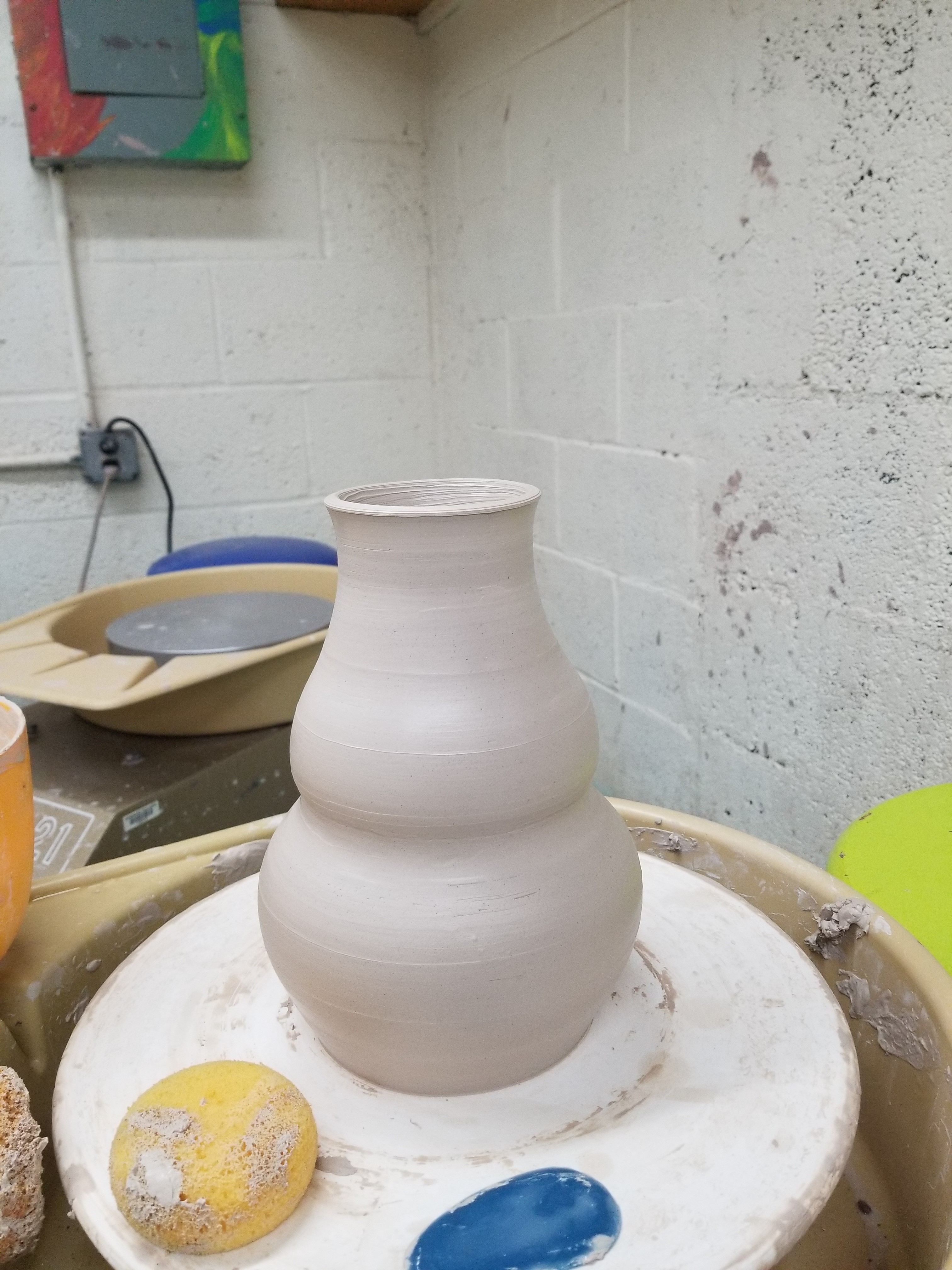
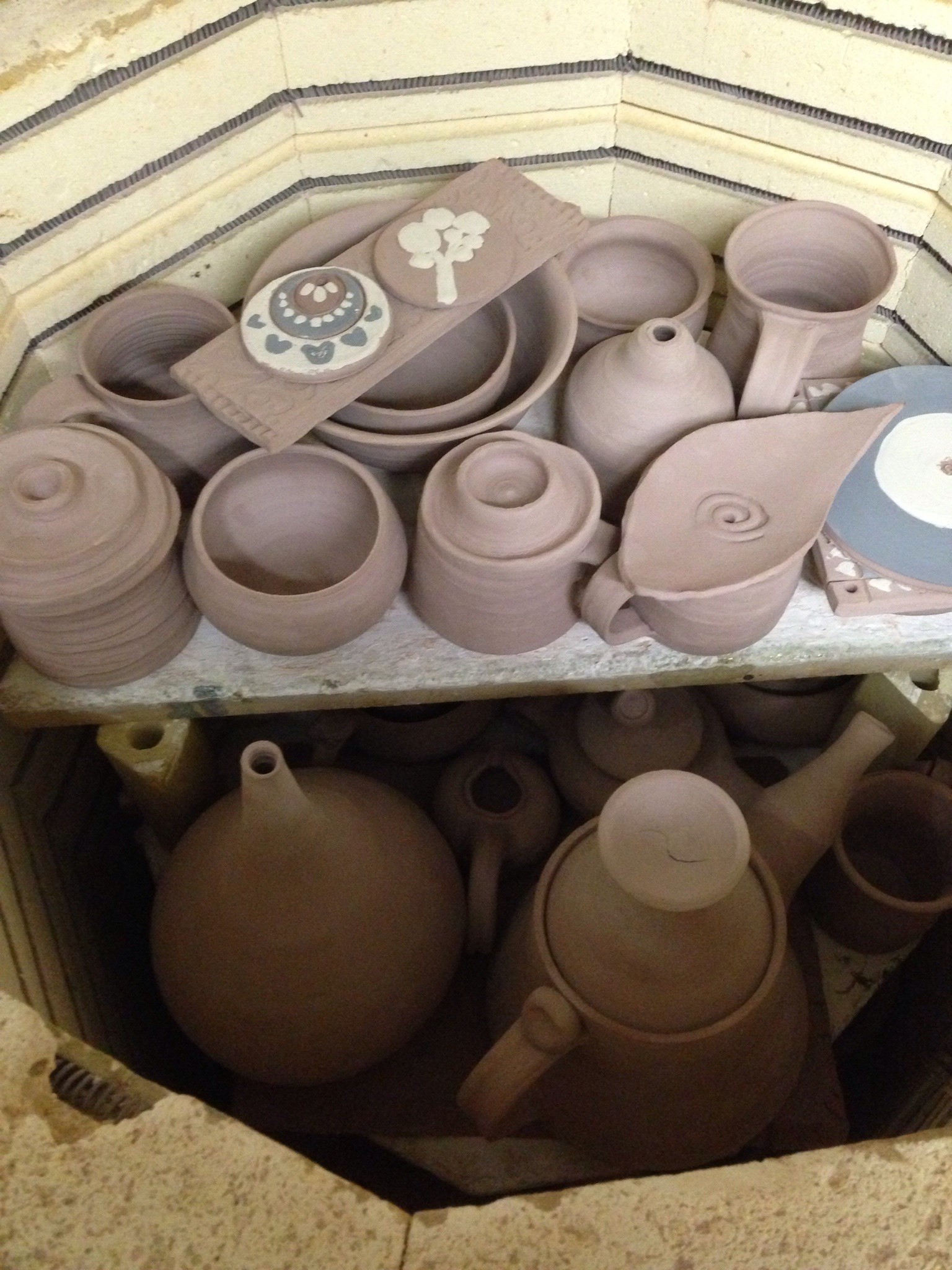
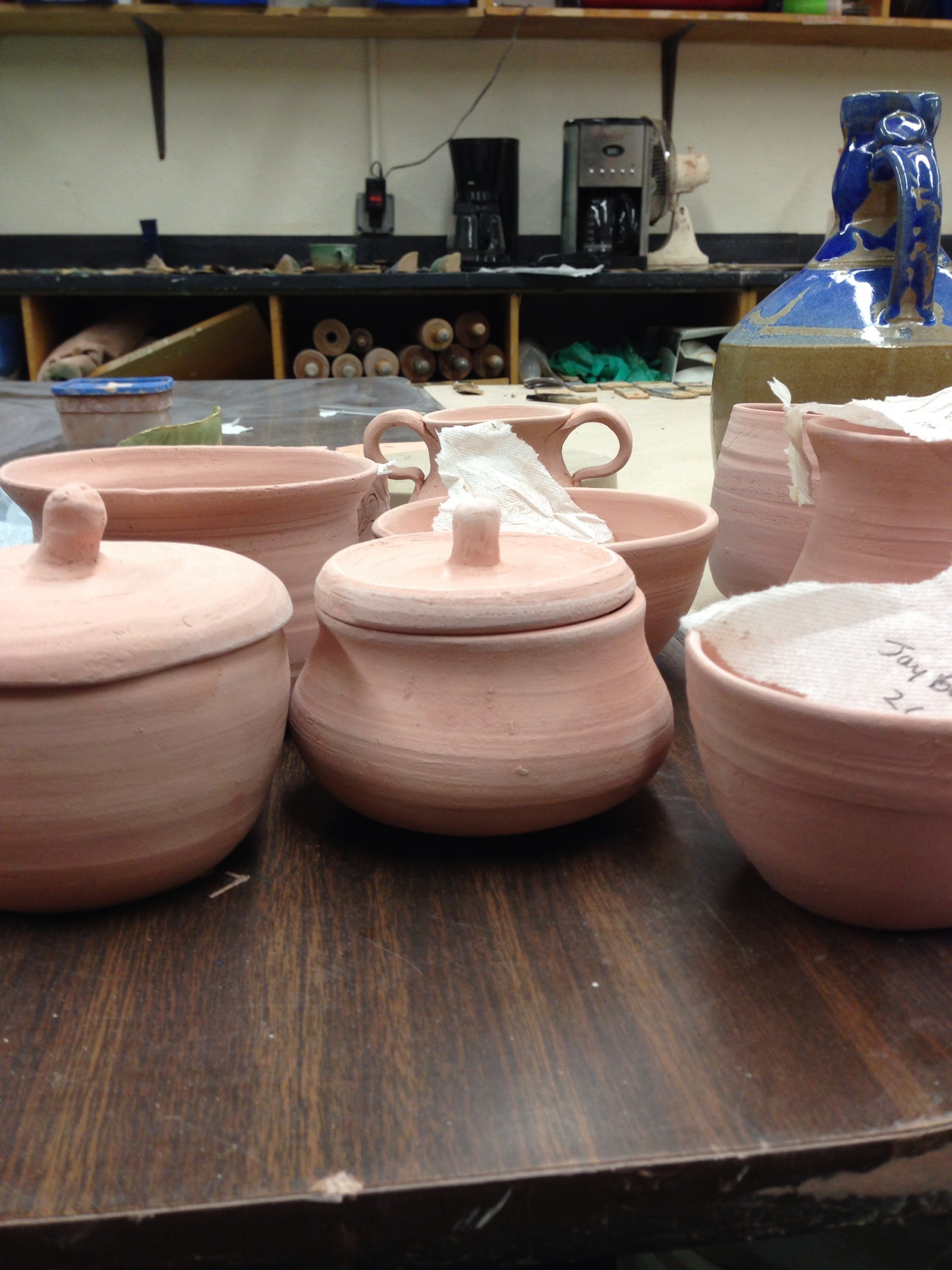
    All pots start as unfired clay (greenware). When a pot is first formed it is wet. When it has stiffened slightly, it is leather-hard. When it has thoroughly dired, it is bone dry. Once bone dry, the clay is ready to be fired.

    Bisqueware

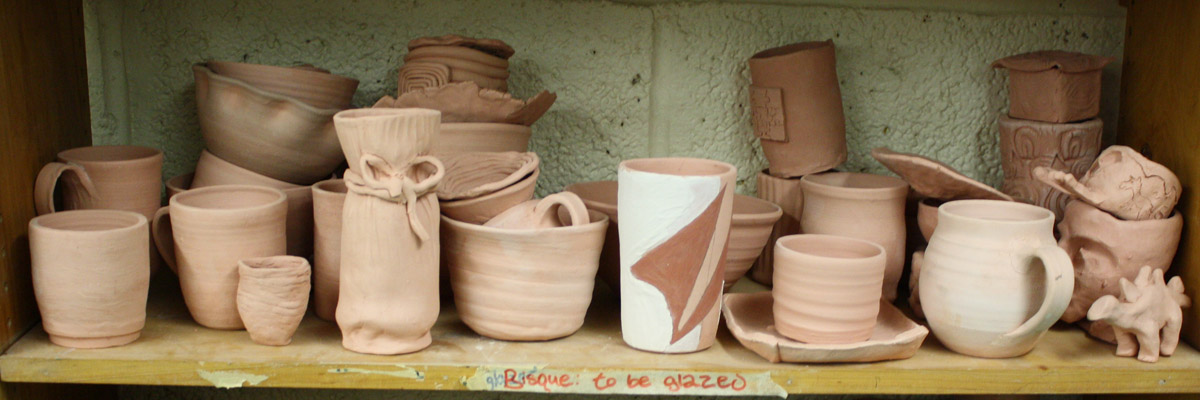
    Once a pot is done-dry, it is bisque fired to a brittle, porous state. We bisque to cone 08, around 1750F. During a bisque firing, the chemically combined water is driven out of the clay, causing the pot to shrink slightly. At this stage, the clay has been chemically altered and cannot be reprocessed. It is still porous and will absorb glaze but is stronger than bone dry so it may be handled more easily.

    Glazeware

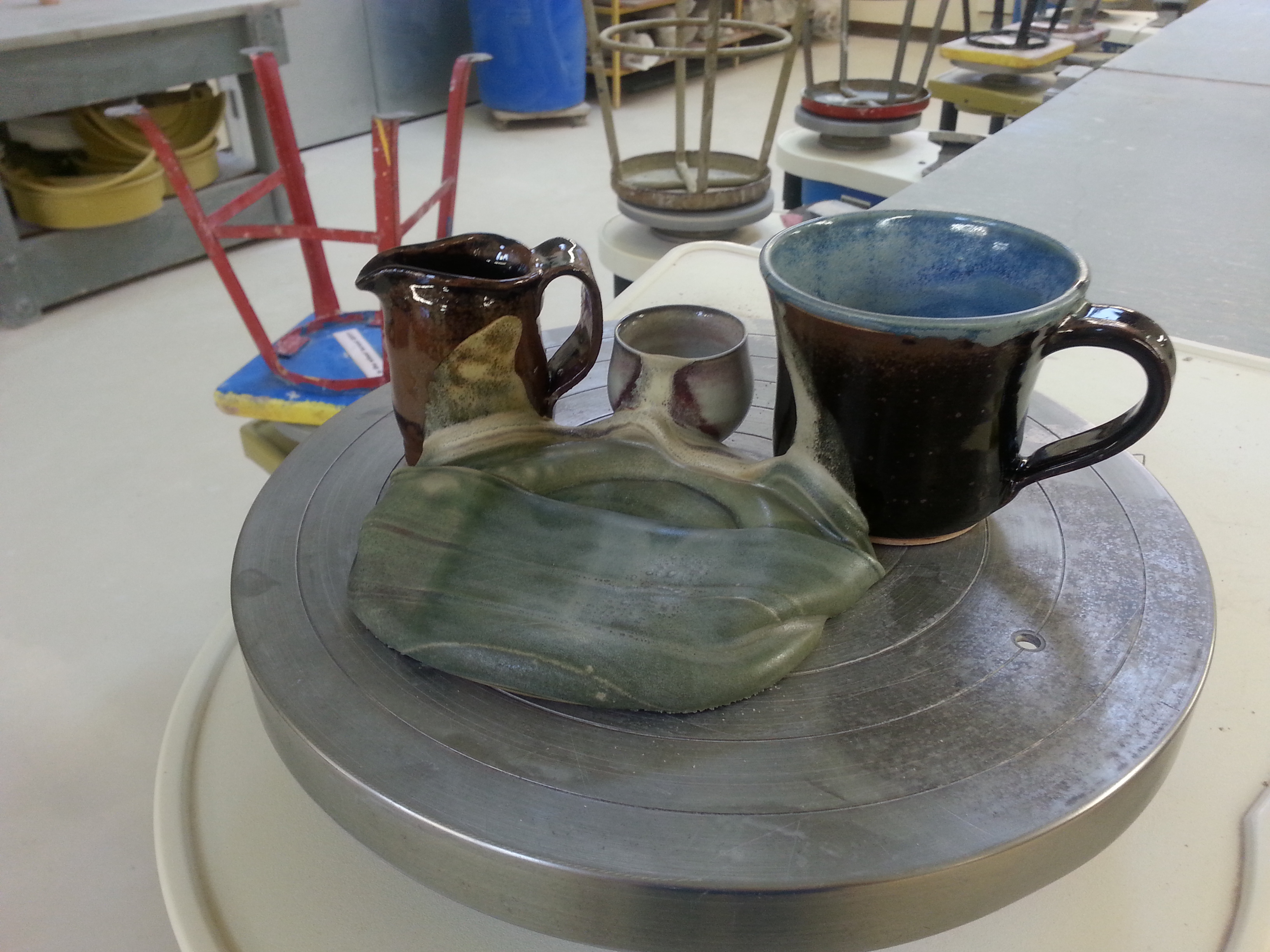
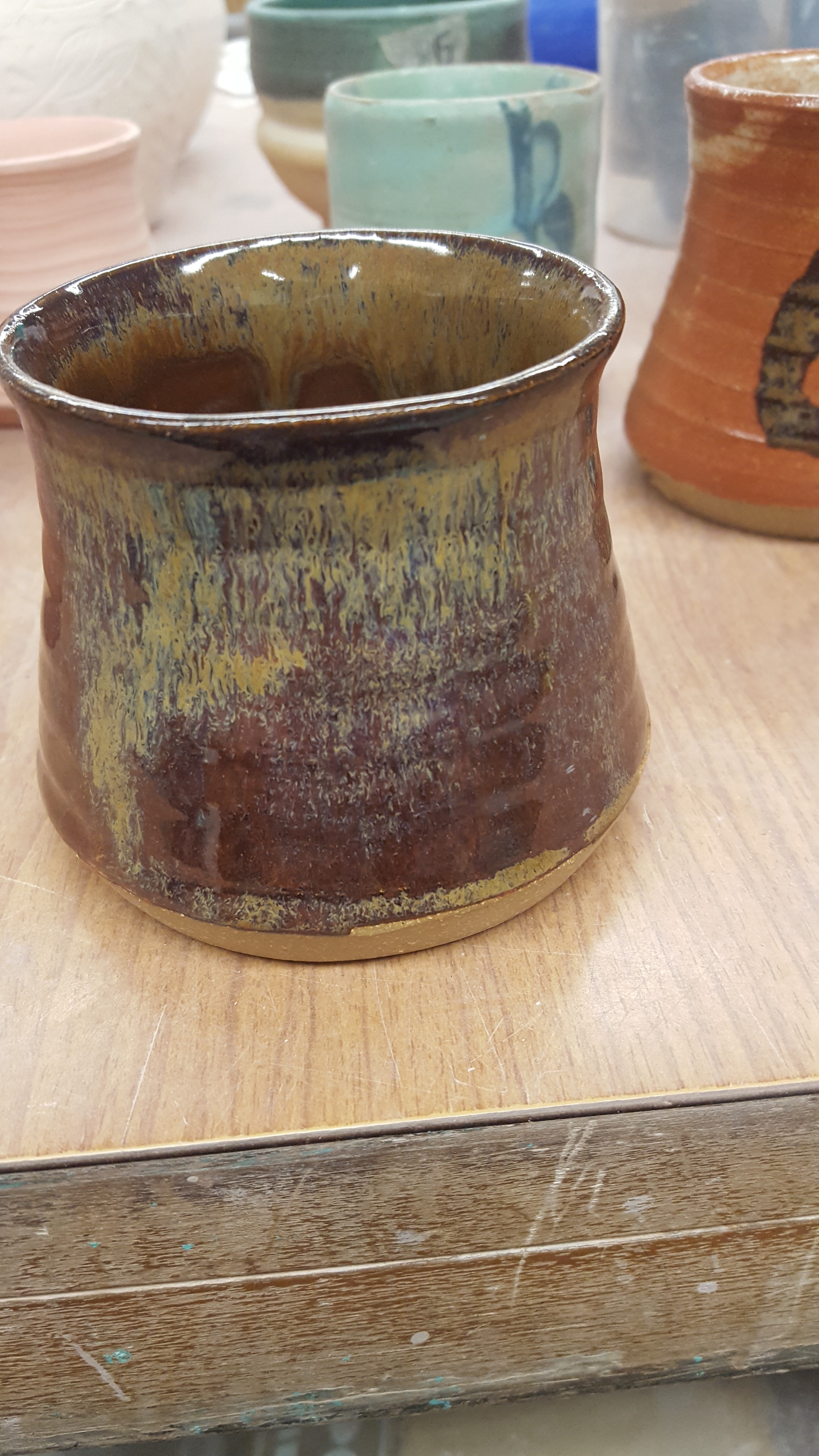
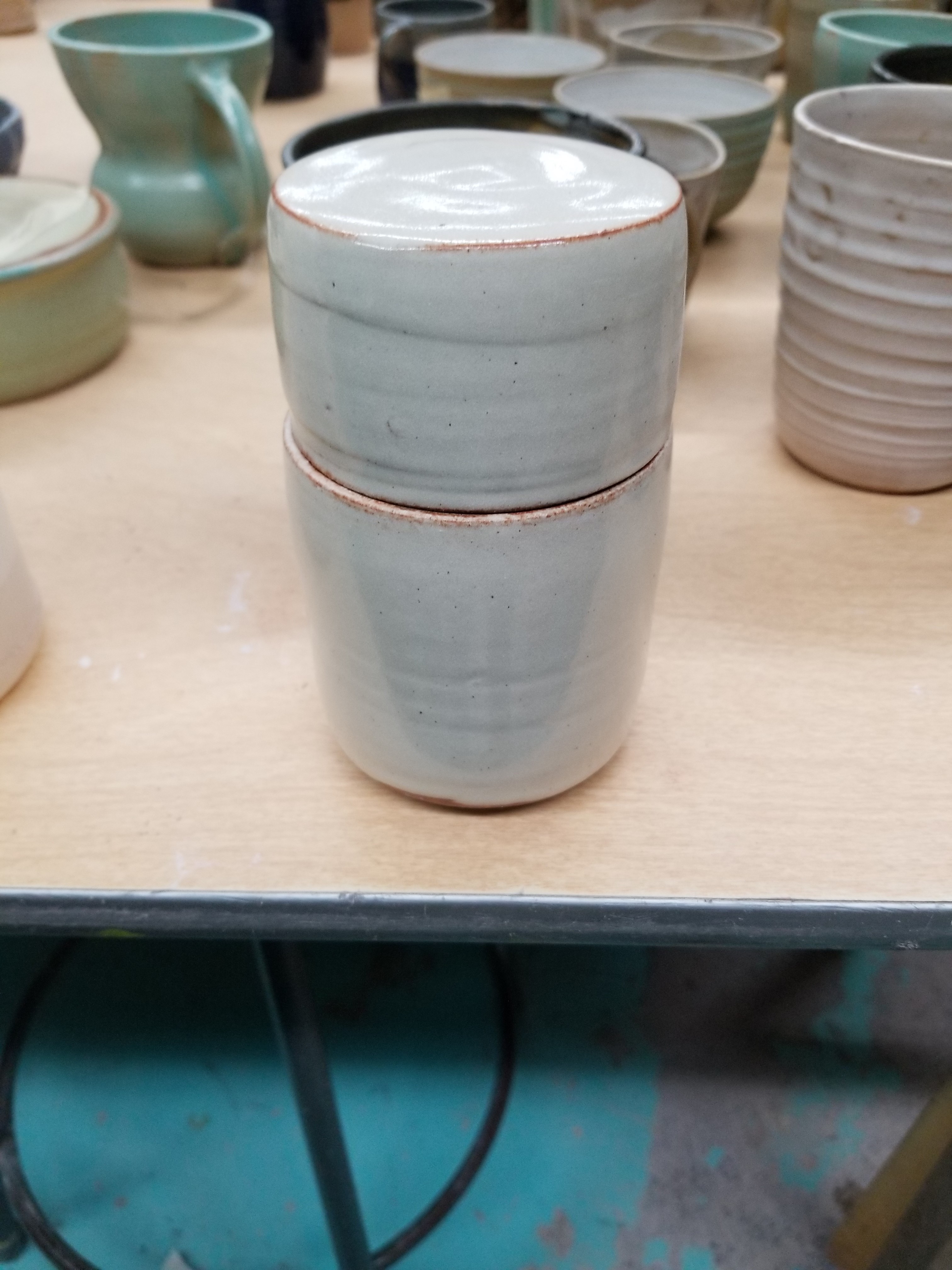
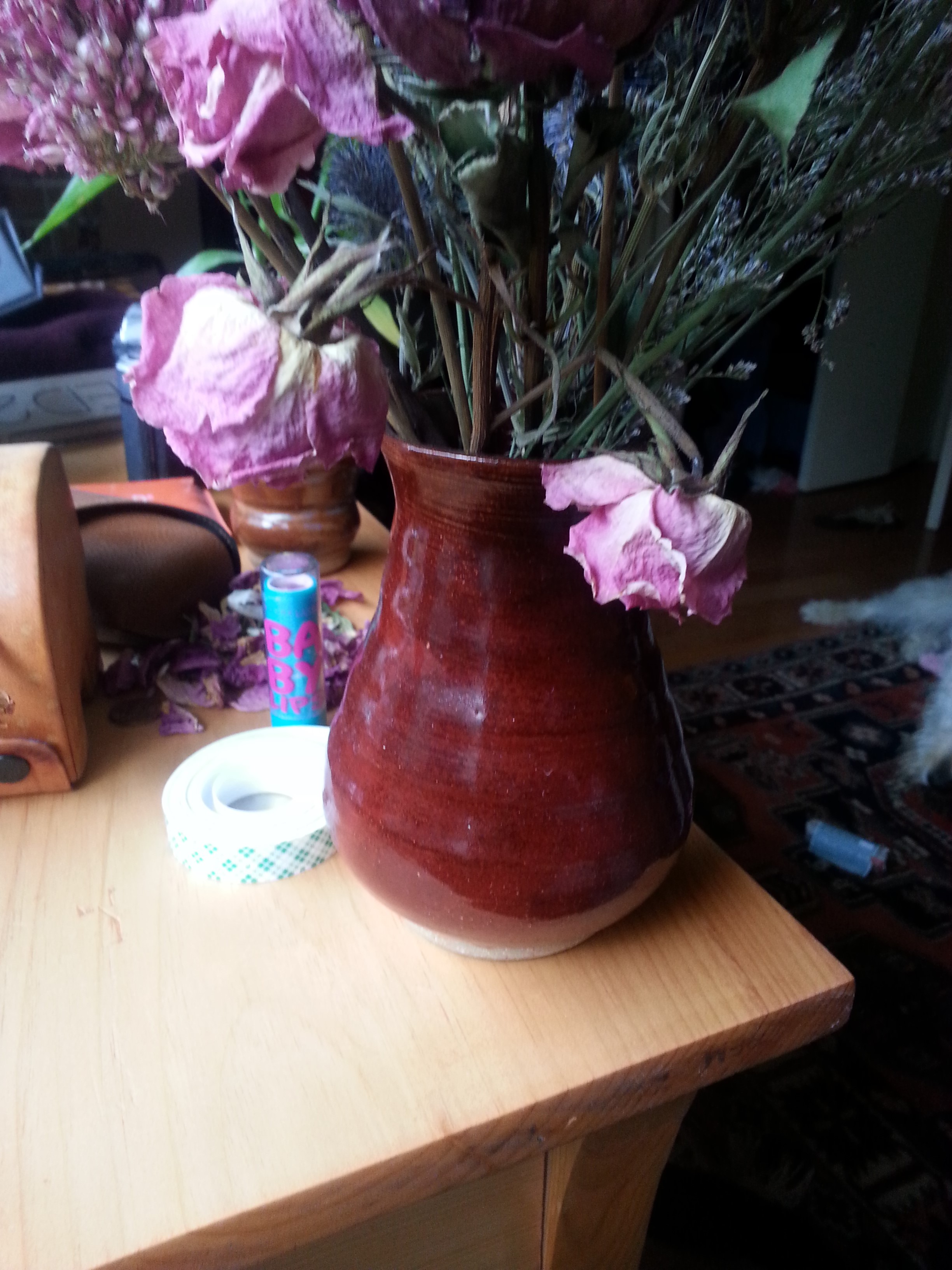
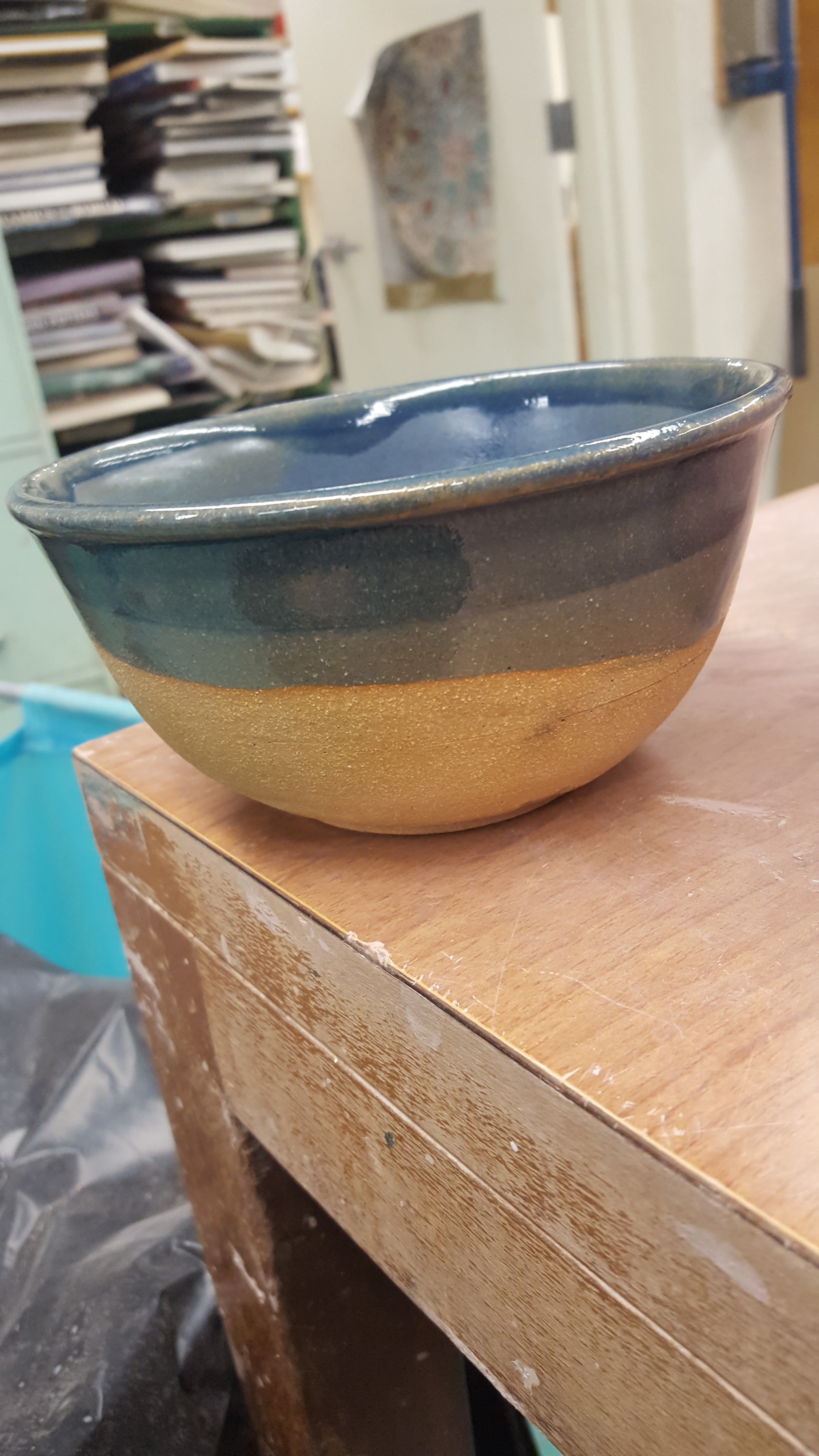
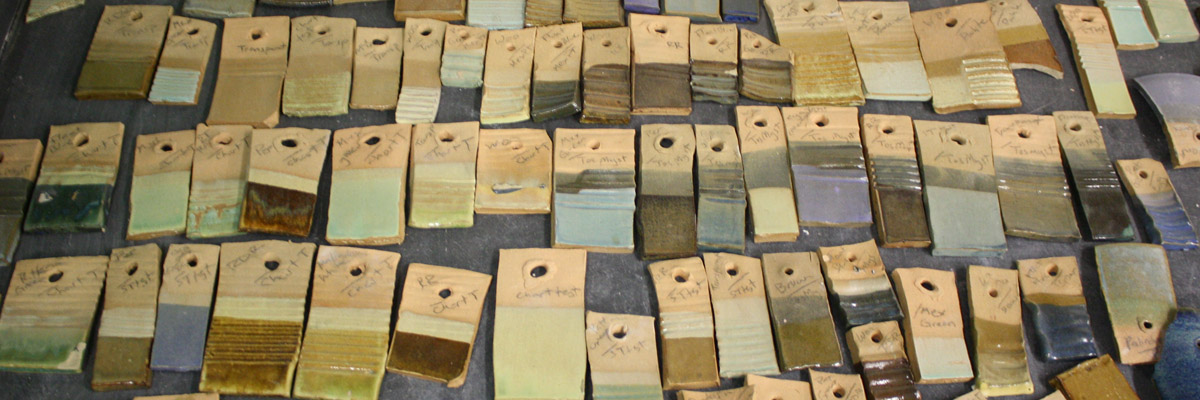
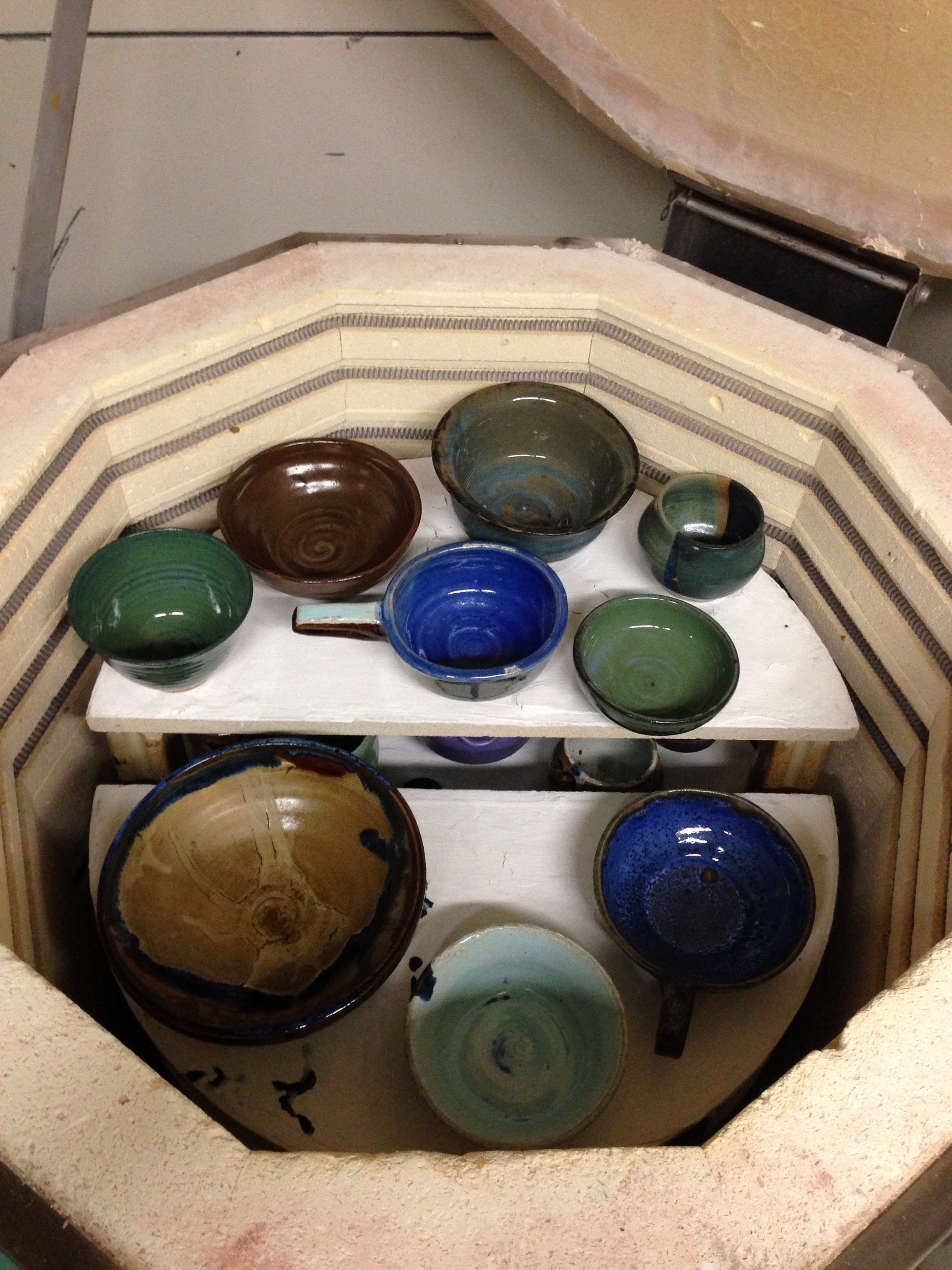
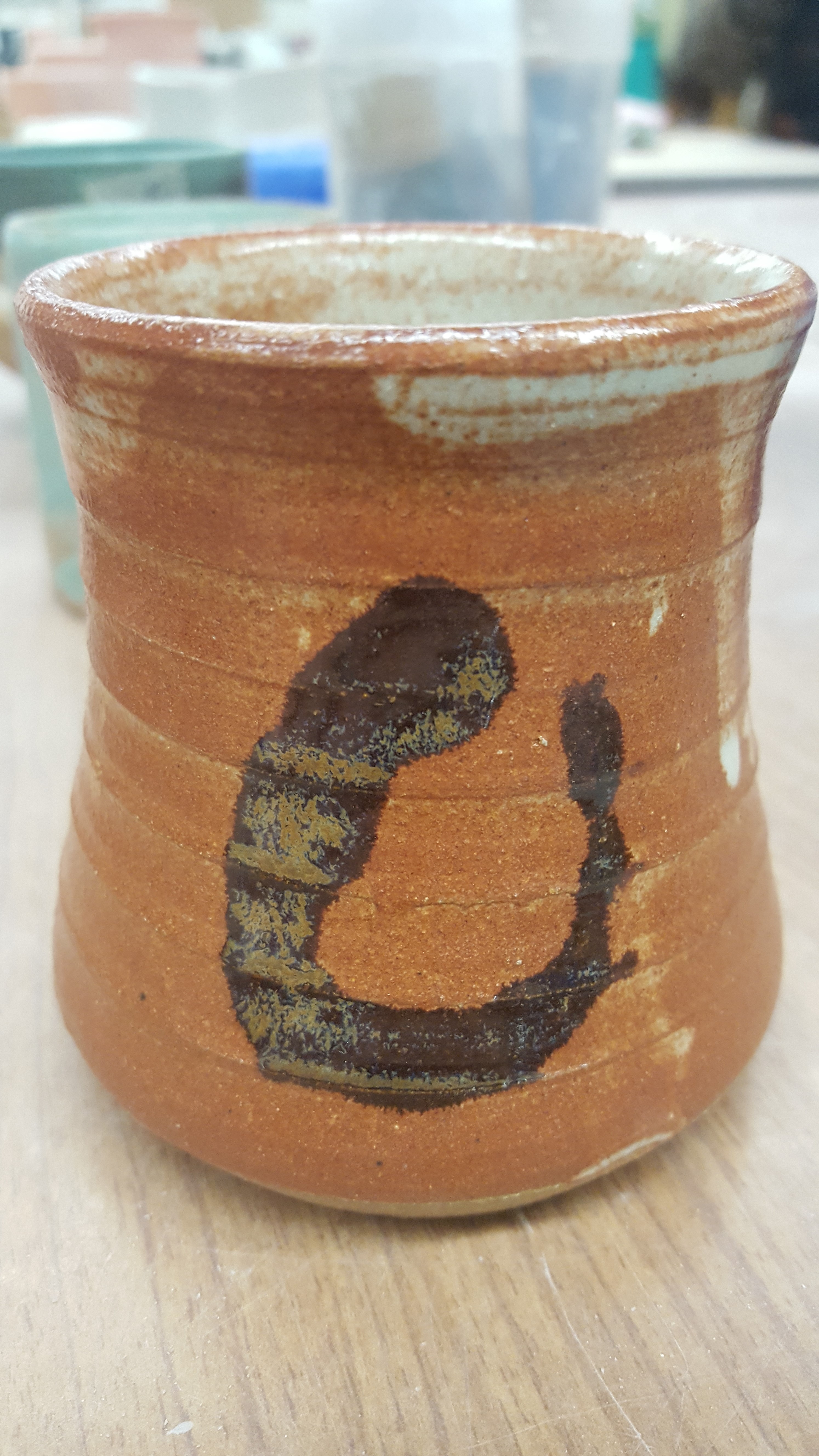
    Bisqueware is glazed and glaze-fired to make a final ceramic pot. Glazes are made of alumnia and silica plus fluxes and other chemical that add texture, opacity and color to the glaze. Glaze ingredients are mixed dry and water is added to liquefy. Glazed pots can vary based on glaze as well as clay body, temperature profile of the firing cycle, atmosphere during firing, etc. We do cone 6 (2300F), electric firing.

  • Image
    Image
    Image
    Image
    Image
    Image
    Image
    Image
    Image
    Image
    Image
    Image
    Image
    Image
    Image
    Image
    Image
    Image
    Image
    Image
  • Join

    The class schedule is as follows and runs the duration of a semester:

    Beginners: Wednesdays, 5:30-7:30
    Beginners: Thursdays, 5:30-7:30
    Int/Adv: Wednesdays, 7:30-9:30
    Int/Adv: Thursdays, 7:30-9:30

    Enrollment in a class is required for membership, and we are currently only accepting undergraduate students due to overwhelming demand. The cost for the semester class, all materials, and full 24/7 access to the studio is $250, and registration happens in the first week of the classes. Contact the coordinators (barnardclaycollective@barnard.edu) with any questions.

Barnard Clay Collective | Design: Tooplate