Barry Bergey
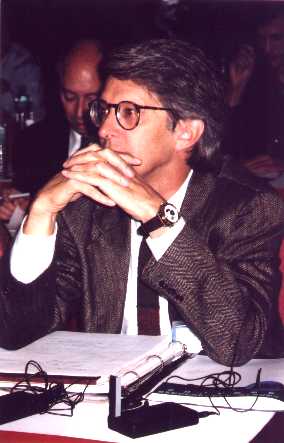
Coordinator, Heritage and Preservation Division, National Endowment for the Arts
Cultural Conservancy and Development
PAPER SUBMITTED TO THE LEADERSHIP CONFERENCE ON CONSERVANCY AND DEVELOPMENT
September 1999, Yunnan Province, China
Barry Bergey
Coordinator, Heritage and Preservation Division, National Endowment for the Arts
Cultural Conservancy and Development
PAPER SUBMITTED TO THE LEADERSHIP CONFERENCE ON CONSERVANCY AND DEVELOPMENT
September 1999, Yunnan Province, China
I. Introduction
I work in a governmental cultural institution, the National Endowment for the Arts, so while I do not speak in an official capacity at this conference, I will draw on my experience working at a governmental institution to speak to issues of policy and cultural conservancy. When it comes to culture, governmental policy is a rather blunt instrument - policy and programs do not act with the precision of surgical scalpels, nor with the fluidity or grace of the calligrapher’s brush. Enacting cultural policy is more akin to using gardening tools. The gardener is likely to see results long after tools are employed and long-term success is dependent on a variety of factors, many beyond human control, such as the vagaries of weather, the unique characteristics of the plant stock, and the richness of soil. At least in my case with gardening, my aspirations in the spring hardly ever match my harvest in the fall, but that never seems to discourage my dreaming at the next vernal equinox. Neither the worker in culture nor the worker in agriculture can be shy of patience or promise in their endeavor.
Governmental bodies have cultures of their own. The culture of a particular governmental agency is something to be considered when discussing development and implementation of any policy. As cultural specialists we realize that governmental systems project and reflect deeply embedded cultural qualities and those are manifest in the ideas and attitudes of individual workers, the processes and mechanisms of administrative structures, and the goals and ideals of those with political or administrative power.
Artistic expression and cultural heritage play a central role in national legacy, ethnic and regional character, community spirit, and individual and familial identity. Development can have several meanings when it is applied to culture. Development may constitute a natural evolutionary process of refinement and growth, or it may mean that external mechanisms are brought to bear on a fragile system that could result in a depletion of intrinsic resources. To return to the horticultural metaphor, living cultures are organic and dynamic and thus require ongoing nurturance and sustenance as would any ecosystem.
In a historical context, changes in cultural traditions most often occur gradually and on multiple levels over long periods of time. During periods of rapid growth or change, all cultural systems experience stress - this stress can be a vehicle for innovation, adaptation, and inspiration or an agent of enervation, co-optation, and despair. Development insensitive to artistic heritage and cultural context, motion without memory, often results in depletion of artistic resources, diminution of cultural diversity, and disorientation with regard to community and ethnic identity. Loss of cultural memory has the potential to induce something akin to a grieving process on a broader social scale in a community and that can manifest itself through a number of the stages and symptoms similar to those that occur when we experience deep personal loss, including denial, anger, disillusionment, etc. On the other hand, balanced growth, informed by cultural memory, that recognizes the intrinsic ecologies of cultures, respects and acknowledges diverse ethnic heritages and legacies, and nurtures artistic and creative potential can lead to healthy, sustainable development and an enriched cultural landscape.
II. Principles of Cultural Conservancy and Development
In trying to distill my own thinking about cultural policy into a few succinct principles, four came to mind: 1) A community, a region, or a nation will benefit from the identification, documentation and conservation of its cultural and natural resources; 2) Artistic, linguistic, social and ecological diversity will contribute to vibrant, sustainable development; 3) Transmission and nurturance of artistic skills, local knowledge, and community-based values are key to conserving cultural memory and to building a sustainable future; and 4) Respect for individual ways of knowing, doing, and being, as reflected in community consultation and local collaboration on conservancy issues, will most effectively sustain cultural heritage, ensure social health and protect environmental wealth.
While principles provide a map to follow, to me the more important question is how these ideas might be applied, either through individual practice, organizational programs or governmental policies. In the United States currently there is a large body of theory and practice developing surrounding the public or applied realms of folklore, anthropology and historic preservation.
III. The Practice of Cultural Conservancy and Development
What follows are a few strategies for the practical application of cultural conservancy and development principles. Note that in most cases I use the term support in my strategies for conservancy. That is because at the National Endowment for the Arts we are a funding agency, not a policy making body such as a cultural ministry, so we tend to express our priorities through the projects and programs that we support in our own modest way financially. Effective governmental strategies for cultural conservation and development might include:
A. Discovery -
2. Support of research aimed at understanding and analyzing the key dynamics, both intrinsic and extrinsic, in a nation’s multiple cultural ecologies.
2. Through the formal educational system, from elementary through higher education, support of programs that include both curriculum-based sequential education and exposure to and appreciation of traditional arts and artists.
3. Support of the formal training of cultural specialists and community-based scholars to develop workers and administrators with expertise in traditional arts and culture.
4. Support for lifelong tradition-based learning to achieve continued appreciation of and skills in traditional arts and cultural heritage.
2. Support of exhibitions that present and interpret traditional arts, traditional artists, and cultural legacy.
3. Development of media productions - recordings, film and video, radio productions and web sites - that document and present traditional artists.
4. Provision of marketing assistance for traditional artists and support of the development of programs and materials related to heritage tourism that present and foster traditional arts.
5. Recognition of exemplary traditional artists through honorific awards and ceremonies sponsored by national, state and local governments.
2. Support for the protection and preservation of culturally significant objects and landscapes.
3. Provision of protections for the intellectual property rights of artists and the institution of mechanisms to insure economic benefits for traditional artists and communities.
4. Assurance that traditional artists, members of ethnic groups, and citizens of local communities participate in decision-making processes concerning issues of cultural conservation and development.
2. Development and support of organizations and programs aimed at providing traditional artists with access to a broader marketplace.
3. Organization and support of meetings of artists and cultural specialists to address targeted issues related to traditional arts and cultural conservation.
This menu of possibilities includes a number of strategies for supporting cultural heritage. We have found that multiple approaches to conservation best address the complex ecology of cultural systems. Flexibility and responsiveness to unique situational needs seem to have served our agency best in supporting cultural legacy. Ultimately governments, national, regional and local, can be partners in conservancy and development, but culture will in the end be determined by people and communities.
IV. Messages in Miniature
I am carrying with me three objects that serve to remind me of various aspects of cultural life and legacy. First, a fetish, a small stone (serpentine) sculpture of a frog, is from the Native American pueblo of Zuni. This village of around 9,000 people is located in a fairly dry and desolate area of the southwestern United States. It is estimated that there are at least 1,000 active craftspeople in the pueblo with the artistic skills passed down largely within the family and that there is hardly a household in the village that doesn’t receive a major part of its income from crafts objects. This small carved object reminds me that art has the potential to play a central role in a community’s economic and cultural life.
In fact, in Zuni when you take into account all of the other artistic practices of the people - dancing, singing, storytelling, ceremonial activities - it would be safe to say that art is central to the life of the community and is inseparable from the identity of the people. An exhibition catalogue about fetishes remarks on the Zuni attention to detail and to craftsmanship and says: "Zuni is not a village of a thousand craftspeople because the outside market desires its jewelry; rather it is a village of a thousand craftspeople because its everyday life and traditional practices demand the perfection of its forms." In this case beauty in art and in life appear to be of one piece, shaped holistically as part of one process.
The second object is a small turtle made of pipestone (catlinite). This stone is quarried in only one place in the United States and that is Pipestone National Monument in southwestern Minnesota. It is called pipestone, because it is the material used to make the sacred effigy pipes used by Native Americans of the Northern Plains in the United States. This object reminds me how closely linked artistic expression is to the natural resources of a region. The material used for these purposes, found at only one quarry site, was protected in the 1930's and only Native Americans have the right to quarry this stone. Without this protection, I’m sure that these resources would by now have been depleted and craftspeople of future generations would be denied the opportunity to work with this material.
This object also reminds me how important it is to respect the privacy and beliefs of culturally-grounded artists. While this turtle was made by a Native American artist from a scrap of pipestone probably left over from the carving of a pipe, it would be inappropriate for me to be walking around with a sacred pipe made of this material. Only certain people within tribes have the authority to possess and to smoke the sacred pipes. Although we often, as cultural workers, have a seemingly insatiable curiosity about things, sometimes it is important for us to be comfortable with not knowing and not owning. Secrecy or privileged knowledge has been a strategy of conservation within cultures for ages. Respecting and protecting both scarce natural resources and privileged knowledge can be key to conservation in the face of development.
Finally,
I have this small basket, no larger than a thumbnail, made out of horsehair.
This basket was made by a Tohono O’odham artist. This Native American tribe
lives on a large reservation along the Arizona-Mexico border and many of their
artists are skilled basketmakers. However, they are most well known for their
coiled baskets woven with yucca cactus fiber. I can only imagine how a basketmaker
might have gotten the idea to start weaving these miniature baskets with horsehair.
Perhaps the basketweaver was alone on a horse in this wide-open country and
took up the challenge of working with the materials available. Perhaps an especially
facile basketweaver wanted to show off her skills in a new way by accomplishing
the seemingly impossible task of weaving these miniature baskets. In any case,
the horsehair basket illustrates the ingenuity, the creativity, and the adaptability
of the traditional artist. Baskets are containers of things, but they also can
contain ideas and meaning. An object smaller than the tip of a finger can contain
concepts as large as artistic imagination, individual identity, and cultural
resilience and adaptation.
V. Conclusion
Yunnan Province, with its rich and diverse lifeways and natural landscapes, offers significant opportunities for sustainable cultural, ecological and economic development. No scientist, no economist, no government official can measure the impoverishment we suffer if we lose our sense of beauty and meaning in life. As development occurs, it would be wise to pay particular attention to the conservation of the traditional and ethnically-specific heritages of Yunnan’s many people.
Development, economic or otherwise, will occur in the context of culture and will be defined by cultural attitudes and beliefs. Cultural conservation and development are not antithetical. Balanced growth, inspired by artistic imagination and informed by community knowledge, will sustain and enrich Yunnan’s diverse cultural landscape. Cultural conservancy will be enhanced by the active engagement of government, business, educational systems and cultural institutions but it will be sustained by people and communities. The conservation of cultural legacy is an ongoing process. Its success will be determined as much by the path it takes as by its ultimate destination.
Expanded
text of talk given at Leadership Conference on Conservancy and Development,
Lijiang, Yunnan Province, China, September 16, 1999.