URBAN DESIGN STUDIO/ FALL - 95
PROBES
LOWER MANHATTAN
Michael Sheridan
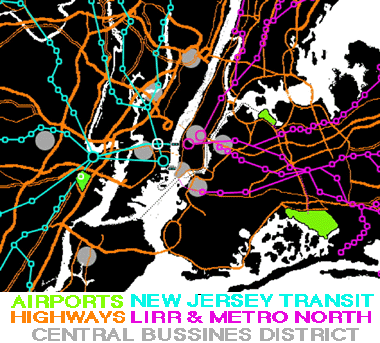
Michael Sheridan notes by Grahame Shane.
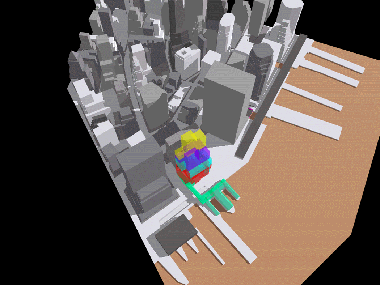
At a regional scale Michael proposed to extend the L.I.R.R. down to the
a new ferry terminal on the waterfront in Brooklyn.
This terminal would
link to another new terminal at the end of Broad Street, as well as
other locations.
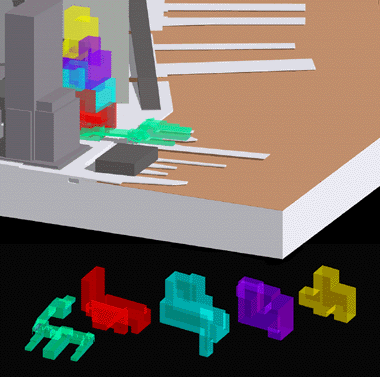
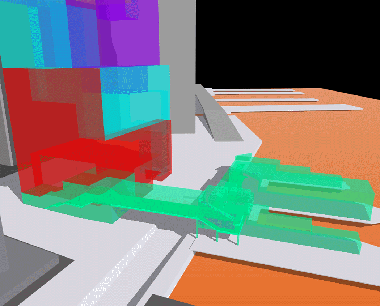
Beside Broad Street his project called for the
comprehensive remodeling of the waterfront with new slips cut in to
accommodate other ferries and taxis.
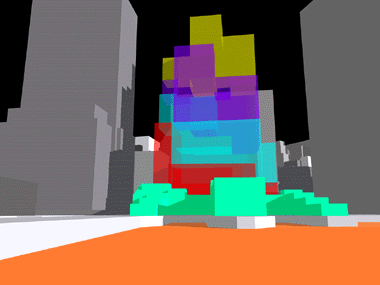
His design concentrated on the new
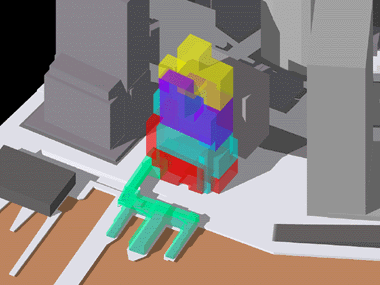
ferry terminal at the base of a largely vacant 1960's tower, which he
proposed to convert into several blocks of multi-use space. He showed
these blocks of as a series of interlocking pieces which sculpted the
tower, remodeling its exterior massing so that it turned the street
corner and stepped down in response to changed interior and exterior
situation.
As a result the edge of the city was articulated as in the
nearby Eli Kahn Building at the end of Wall Street, with its layered
facade facing the harbor.
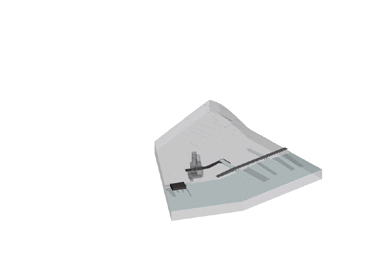
Final Jurors; Irena Latek, Sharon Haar, Mark Robbins, Audrey Matlock, Lauretta Vinciarelli, Claus Herdeg, Scott Marble, Richard Plunz, Modjeh Brataloo.
Scott Marble began the Final Jury by asking why not demolish the tower?
Mark Robbins admired the way in which the various blocks of the project tried to give form to the various blocks of the program.
Lauretta Vinciarelli noted the interior recoding interacted with the exterior. Audrey Matlock added that the old buildings set backs had been based on the zoning regulations for light and air, which no longer applied.
Sharon Haar thought the sculpting was positive, but pointed out that there were already many such old buildings vacant there. She felt that the ferry terminal was a key, dynamic element of the project.
Irena
Latek praised the "clever" examination of the edge of the island,
responding formally and flexibly, learning from the past/rich
structures.
She wished the project had investigated the buildings as
miniature, vertical cities in themselves, revealing more of the
complicated hierarchies, theatricality and compositional moves that
constitute that reality.
Joan Ockman questioned the frontal compression
of the scheme, which was generated by the model of the street based
zoning setbacks as applied on the edge of the island.
Was this an
appropriate location, or would the modernist cliff/confrontation work as
well on the edge (in this context she also questioned the canals).
James Sanders welcomed the canals and slips, saying that more space was needed at the waterside for water taxis, ferries as services expanded to meet demand.
Lauren Otis agreed, ferries needed a lot of room to maneuver, adding that this should be part of the regional transportation proposal with wider links, not just to Brooklyn.