
INTRO
The heart of East Harlem revealed extreme conditions of social and economic disintegration. The community has been subjected to imbalance distribution of economic aid throughout the years. A combination of ambitious visions from the African American community north of Central Park and the Hispanic community west of the park, had reinstated the purpose of creating a cultural linkage.
PROPOSAL
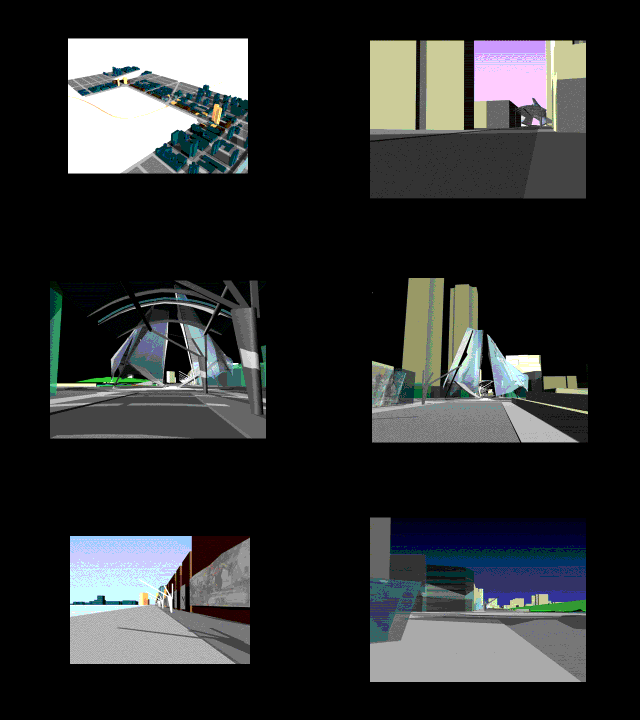
The intention of this project is to create the theme of a parade which would unite the two communities. This bond would create and unite the African American Day Parade and Puerto Rican Parade at Duke Ellington Circle. The historical growth of two cultures suggested a common bond in music that through the years have further strengthened. Through generations of cultivated jazz communities, from the music of the Cotton Club to Latin Jazz Festival, resulted two cultures deeply rooted in the arts and music. Therefore, a cultural corridor of symbolic implication would provide the appropriate linkage between the two communities.
An event does not occur without the support of pedestrian gathering and the result of that created a crater where an urban intervention is needed as the spine of the whole. As Johan von Goethe wroted "When something worth seeing taking place on level ground and everybody crowds forward to look, those in the rear find various ways of raising themselves to see.. in no time they form a crater. Should the spectacle be often repeated in the same spot, makeshift stands are put up.. To satisfy this universal need.. he (the urban designer) creates as plain a crater as possible and the public itself supplies its decoration."
CULTURAL CORRIDOR
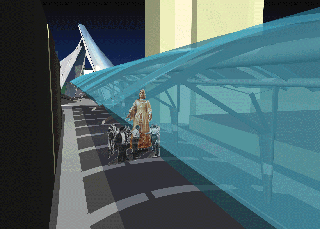
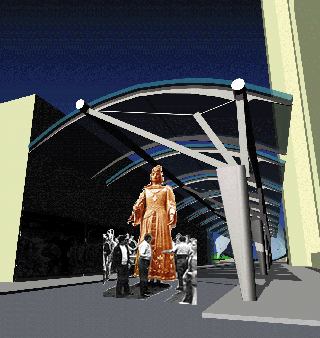
The reduced in width along 110th St. between 5th Ave. and
Madison generates tensions which permit creation of outdoor
arts gallery supporting pedestrian activities; canopy
enclosed corridor marking inter-relationship between two
cultures.
CULTURAL / COMMUNITY
CENTER
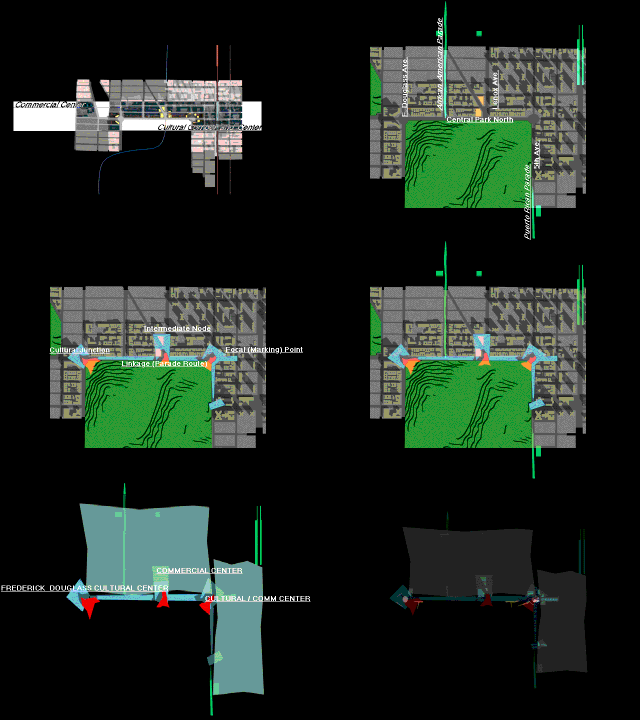
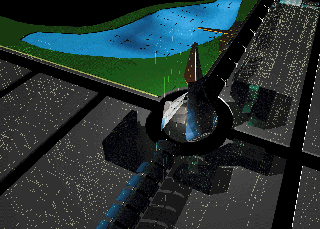
Intersection of 5th Ave. and Central Park North at Duke
Ellington Circle formulates prominent location for jazz
clubs and parade clubhouses complimented with art galleries
(museums); the transparant canvased circle symbolizes the
spine of the parade and a cultural monument (icon).
COMMERCIAL CENTER
Intersection of Central Park North and Lenox Ave. represents
a vital economic base of Central Harlem providing a business
center with banking institutions, entertainment area, and
local retail enterprises.
REVITALIZING CENTRAL PARK
NORTH
This stretch of public spaces is reorganized by installation
of temporary transparent glazing on existing facades to
reflect the natural image of Central Park; also outdoor
public art display platforms breaking wall barrier along
edge to bridge park activities with Central Park North.
FREDERICK DOUGLASS CULTURAL
MUSEUM
Intersection of Central Park North and Frederick Douglass
Ave. symbolizes the junction of cultural linkage by
terminating with a cultural museum. The two monolithic
housing towers are preserved by facade resurfacing to
integrate and increase social and cultural activities of the
community.