

A New Urban Edge for the East Harlem Arts Corridor
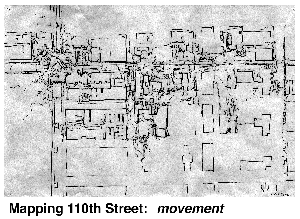
Moving energies abound the East Harlem District. Movements
defined by existing conditions, such as pedestrian walkways
or other trails, and areas of congregation or the
culmination of recreational activities, create the flowing
and changing boundaries of the urban fabric. By mapping
these existing conditions, I am proposing to define a new
typology of an Urban Edge that will help to organize the
existing urban fabric with the fabrics in motion in order to
create a viable link into East Harlem from a community
proposed Cultural Music Center.
Transformations:
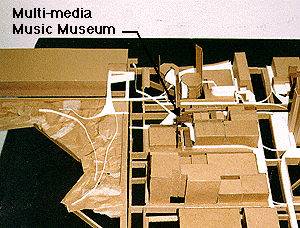
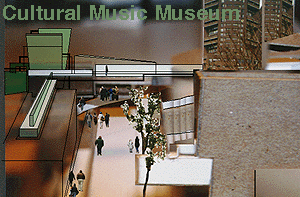
The proposed Cultural Music Center at Duke Ellington Circle
will create a local, metropolitan, regional, and global link
in terms of multi-media music or other interpretations of
performance art. My intention is to make this a feasible
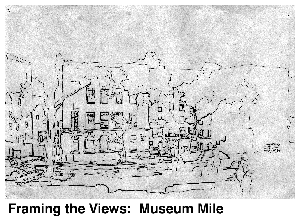
link by mapping and defining the growth and erosion of the
landscape and street wall as seen through continually
changing framed views of the motions and energies of the
neighborhood. These are ephemeral forces, physical and
perceived - for example, activities changing from day to
night, movements or paths people choose because of the
change in weather or season, empty lots children might play
in one afternoon only to find fenced off the next week,
areas chosen in which to play dominos or chess, etc.
Energies and activities such as these create conditions and
transformations for interminable change along 110th Street
and can be organized to help establish a boundary that will
determine how the area, or edge, is developed. This edge of
transformation will support the influx of new residents,
locally owned businesses, and visitors alike.
Urban Edge:
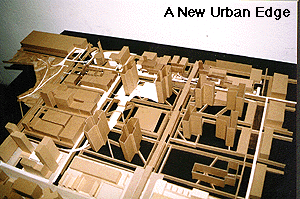
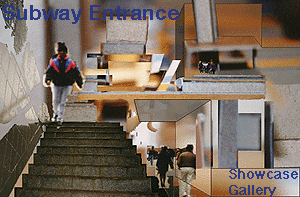
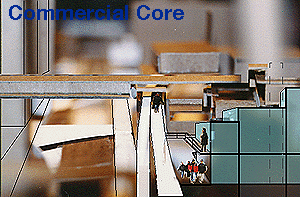
The New Urban Edge will grow with the changing conditions
and needs of the community. With a direct connection from
the Lexington Avenue subway into a new commercial core,
residents and visitors will move on multi-levels through a
community showcase gallery toward the new businesses, cafes,
and the Metro North Railroad. Through a condition that
allows this vertical movement to change into an edge that
supports the horizontal movements and congregation of
community activities, the public housing projects between
Park Avenue and Madison Avenue are presented as a new urban
community center for East Harlem. The movement, then into
the public housing towers and the new Cultural Music Center,
defines a pedestrian edge that filters through it the
fabrics in motion while combining it with the existing
structure of the city. The connection into the residential
fabric at the tower housing projects from the Cultural Music
Center creates a gateway into East Harlem and the Arts
Corridor.