 Front cover
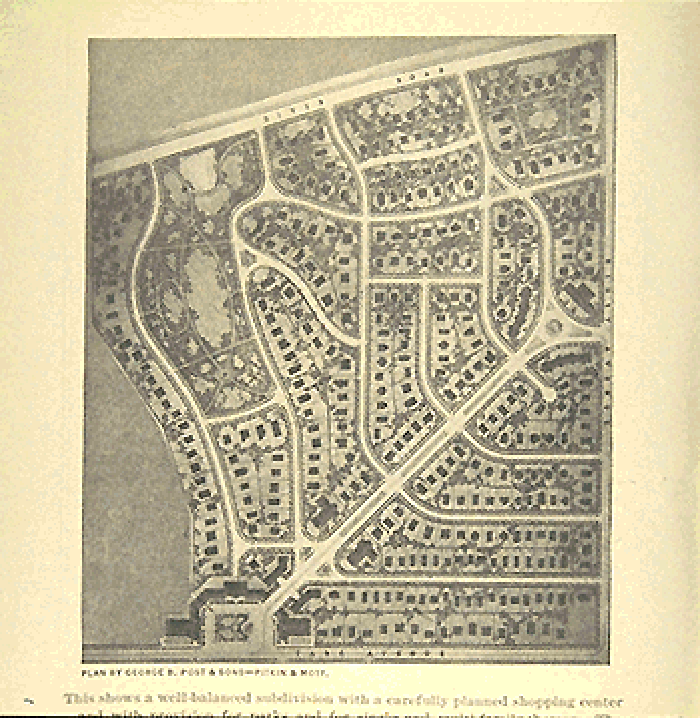 Subdivision plan
by George B. Post and Sons showing mixed use, use of the
cul-de-sac, and a hierarchical street system. Excerpt from
caption "... a well balanced subdivision..."
Subdivision plan
by George B. Post and Sons showing mixed use, use of the
cul-de-sac, and a hierarchical street system. Excerpt from
caption "... a well balanced subdivision..."
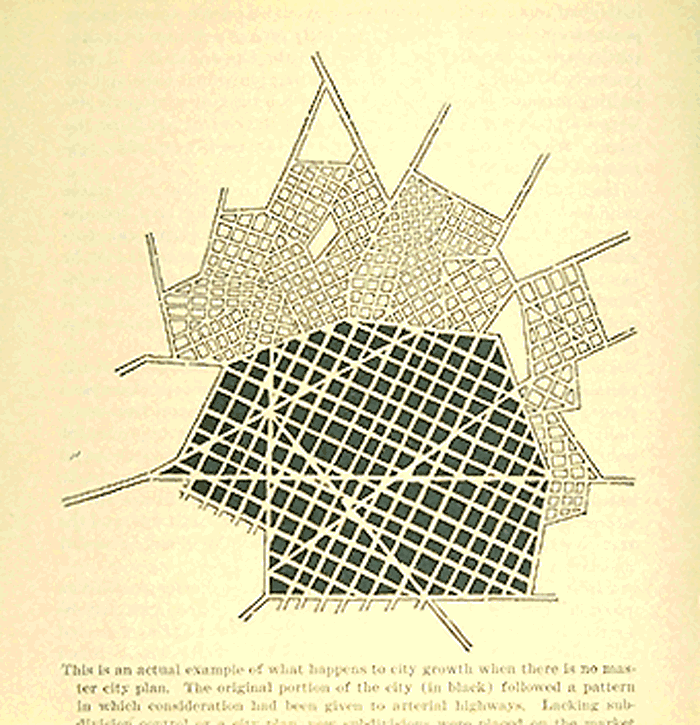 Plan diagram of
urban peripheral growth. Caption excerpt: "This is an actual
example of what happens to city growth when there is no master
city plan. The original portion of the city (in black) followed
a pattern in which consideration had been given to arterial
highways. Lacking subdivision control or city plan, new
subdivisions were placed on the market without reference to the
existing arterial highways and thefuture traffic needs of the
community or the street plan of adjoining subdivisions...."
Plan diagram of
urban peripheral growth. Caption excerpt: "This is an actual
example of what happens to city growth when there is no master
city plan. The original portion of the city (in black) followed
a pattern in which consideration had been given to arterial
highways. Lacking subdivision control or city plan, new
subdivisions were placed on the market without reference to the
existing arterial highways and thefuture traffic needs of the
community or the street plan of adjoining subdivisions...."
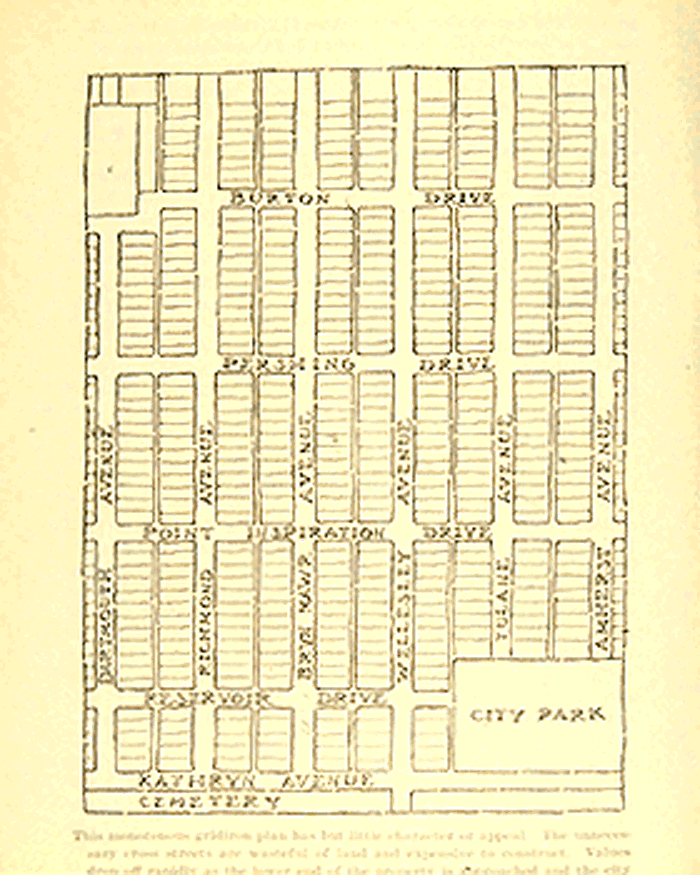 Gridiron
subdivision plan seen as part of the the city fabric. Caption
excerpt: "This monotonous gridiron plan has but little character
or appeal...."
Gridiron
subdivision plan seen as part of the the city fabric. Caption
excerpt: "This monotonous gridiron plan has but little character
or appeal...."
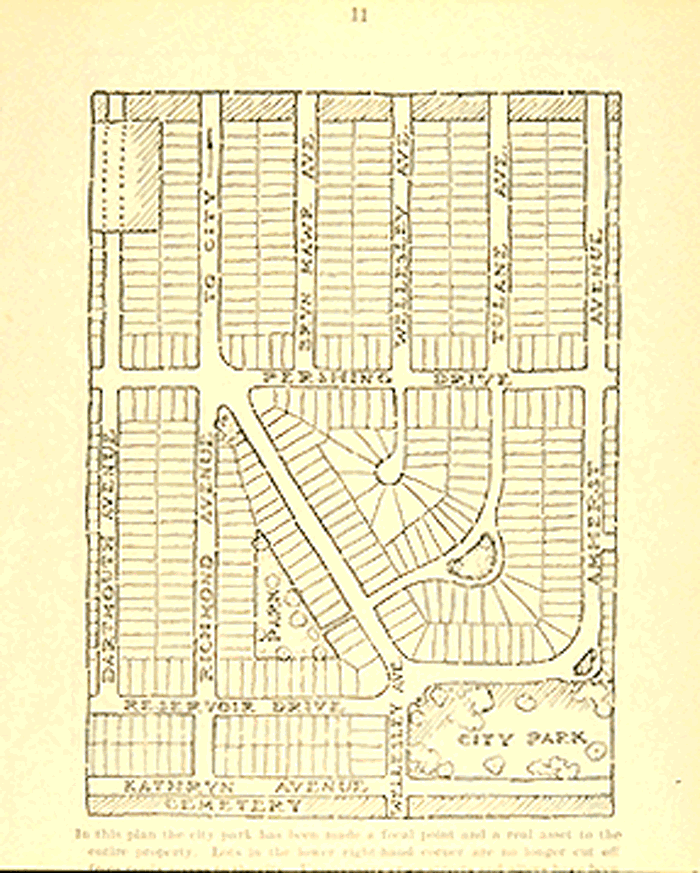 Modified
gridiron subdivision seen as part of the city fabric now
eliminates unnecessary and wasteful cross streets, providing more
private residential streets and public access to the park.
Modified
gridiron subdivision seen as part of the city fabric now
eliminates unnecessary and wasteful cross streets, providing more
private residential streets and public access to the park.
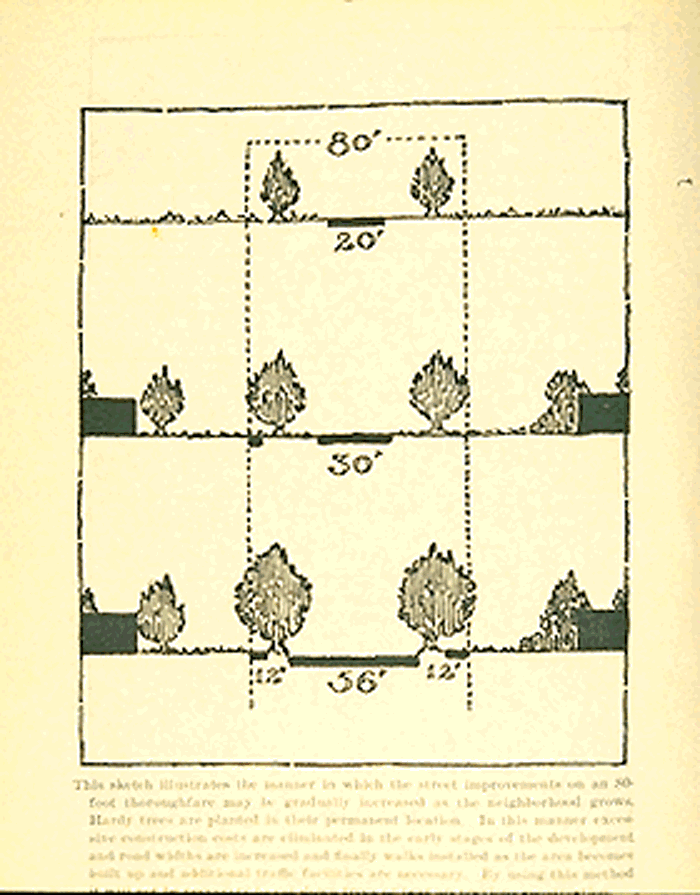 Caption excerpt.
"This sketch illustrates the manner in which the street
improvements on an 80 foot thorough fare may be gradually
increased as the neigborhood grows...."
Caption excerpt.
"This sketch illustrates the manner in which the street
improvements on an 80 foot thorough fare may be gradually
increased as the neigborhood grows...."
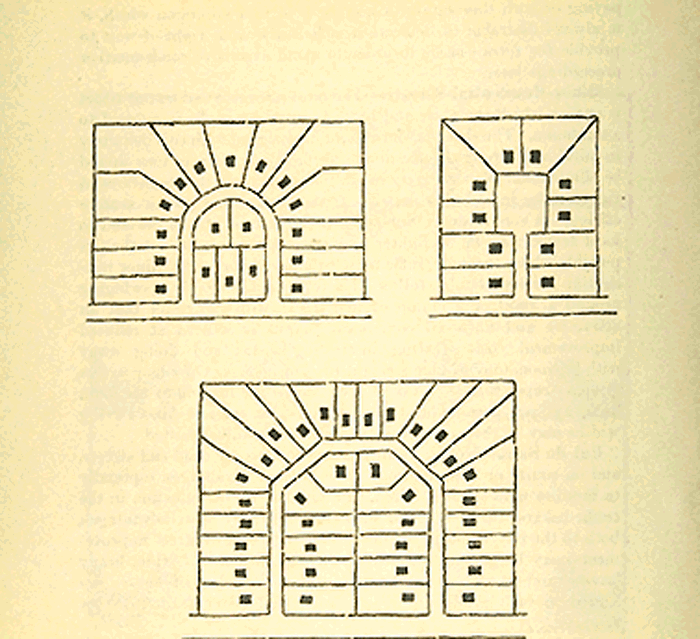 Plan diagrams
showing FHA's endorsement of courts and cul-de-sacs. Caption
excerpt: "..It is possible to group small homes much more
interestingly in locations of this kind than along straight
streets. A skillful planner will find that by the use of
cul-de-sacs many odd-shaped remnants may be plotted into valuable
sites."
Plan diagrams
showing FHA's endorsement of courts and cul-de-sacs. Caption
excerpt: "..It is possible to group small homes much more
interestingly in locations of this kind than along straight
streets. A skillful planner will find that by the use of
cul-de-sacs many odd-shaped remnants may be plotted into valuable
sites."
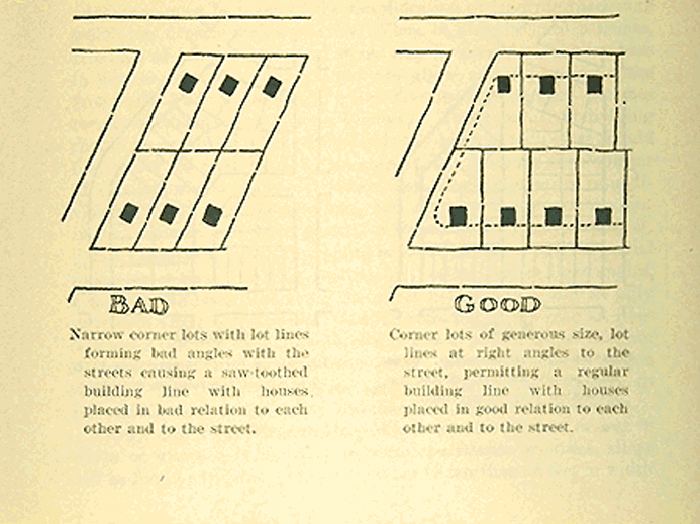 Plan diagram
showing use of cul de sac to develop "odd shaped remnant of land"
and "good" and "bad" treatments of corner conditions according to
lot size.
Plan diagram
showing use of cul de sac to develop "odd shaped remnant of land"
and "good" and "bad" treatments of corner conditions according to
lot size.
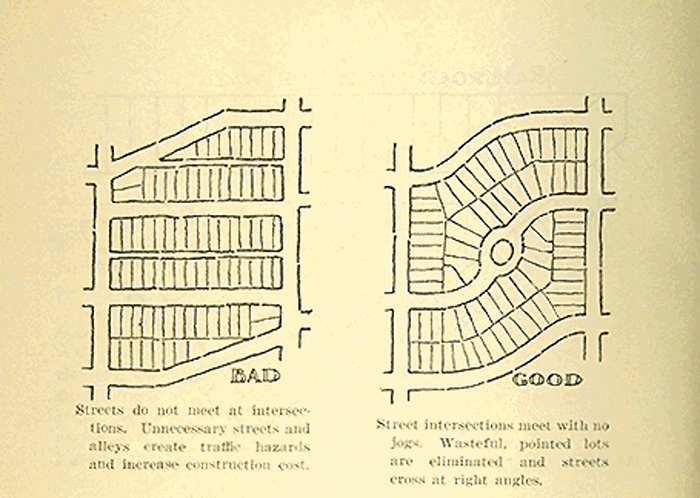 Plan diagrams
showing "good" and "bad" subdivision design with particular
attention to intersection safety.
Plan diagrams
showing "good" and "bad" subdivision design with particular
attention to intersection safety.
 Plan diagrams
showing "good" and "bad" subdivision design with particular
attention to street area and traffic safety.
Plan diagrams
showing "good" and "bad" subdivision design with particular
attention to street area and traffic safety.
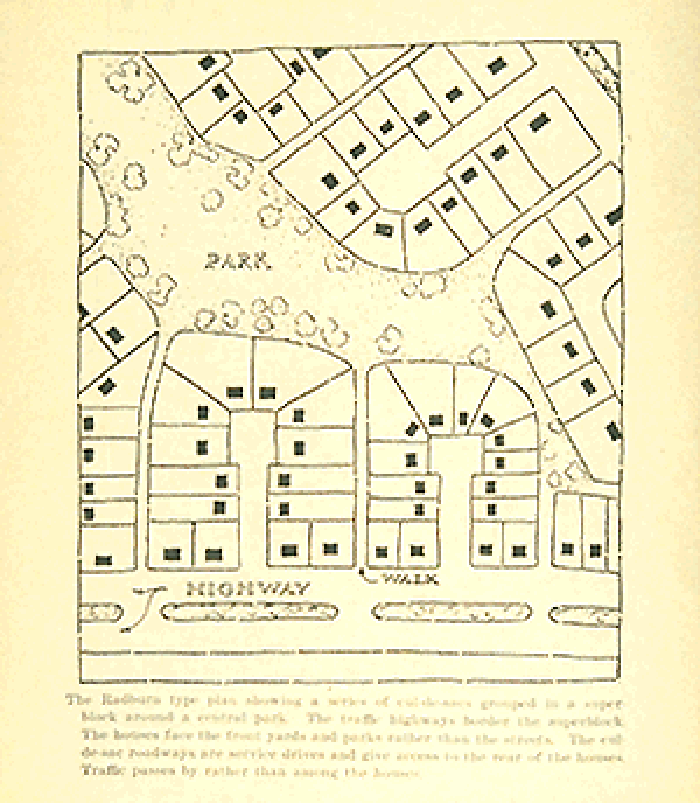 The FHA's
quotation of Radburn as a possible model of subdivision design.
Caption: "The Radburn type plan showing a series of cul-de-sacs
grouped in a superblock around a central park. The traffic
highways border the superblock. The houses face the front yards
and parks rather than the streets. The cul-de-sac roadways are
service drives and give access to the rear of the houses. Traffic
passes by rather than among the houses.
The FHA's
quotation of Radburn as a possible model of subdivision design.
Caption: "The Radburn type plan showing a series of cul-de-sacs
grouped in a superblock around a central park. The traffic
highways border the superblock. The houses face the front yards
and parks rather than the streets. The cul-de-sac roadways are
service drives and give access to the rear of the houses. Traffic
passes by rather than among the houses.
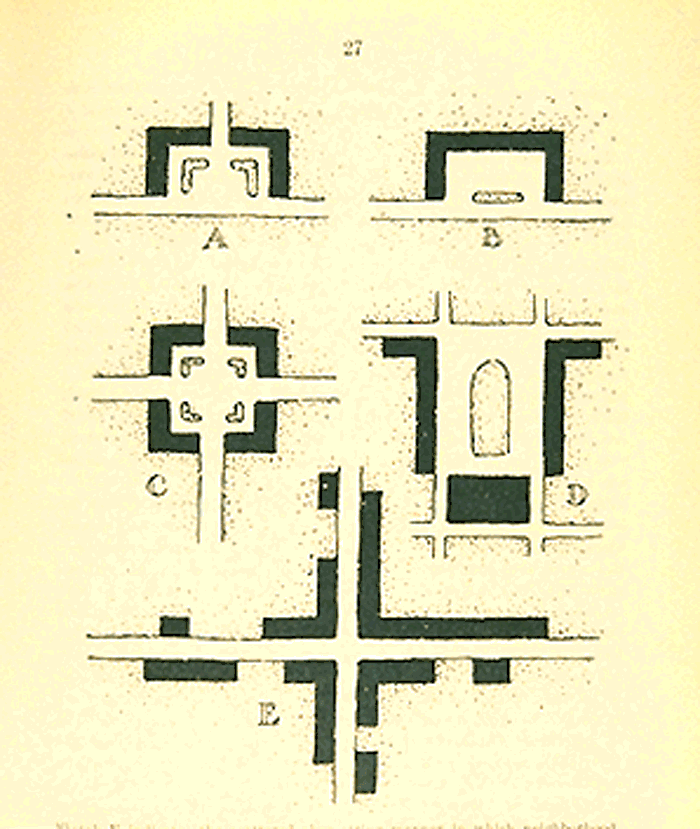 Diagrams to
accompany FHA's discussion of commercial areas as part of
subdivisions. Sketches A,B, C, and D as alternatives to E showing
methods of developing shopping centers with "proper zoning and
deed restrictions...Plan B placed midway in the block eliminates
traffic dangers."
Diagrams to
accompany FHA's discussion of commercial areas as part of
subdivisions. Sketches A,B, C, and D as alternatives to E showing
methods of developing shopping centers with "proper zoning and
deed restrictions...Plan B placed midway in the block eliminates
traffic dangers."