

The poor in great cities.
(London : K. Paul, Trench, Trübner & Co., 1896.)
|
||

 Click here and hold to drag menu around
|





|
|
|
|

|
Page 101 | 
|
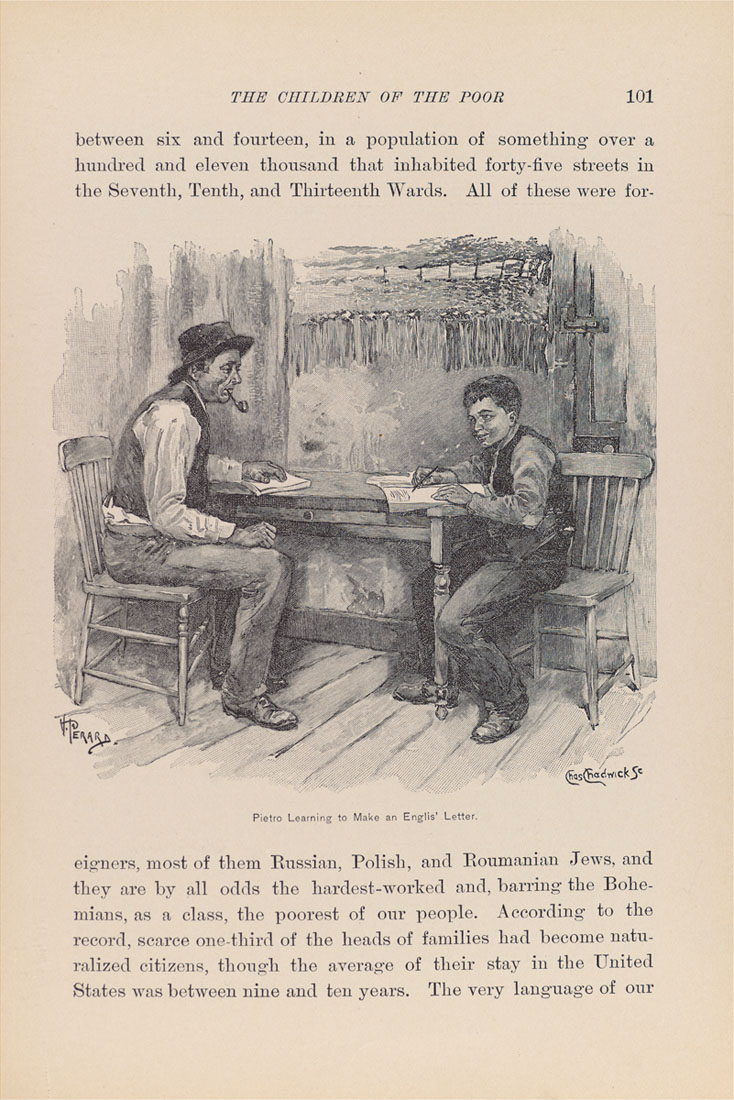
THE CHILDREN OF THE POOR 101 betAveen six and fourteen, in a population of something over a hundred and eleven thousand that inhabited forty-five streets in the Seventh, Tenth, and Thirteenth Wards. All of these w^ere for- (W(^,TVick5^ Pietro Learning to Make an Englis' Letter. eigners, most of them Russian, Polish, and Roumanian Jews, and they are by all odds the hardest-worked and, barring the Bohe¬ mians, as a class, the poorest of our people. According to the record, scarce one-third of the heads of families had become natu¬ ralized citizens, though the average of their stay in the United States Avas between nine and ten years. The very language of our |
|
|
Page 101 |
|