



 |
|
Wynton Marsalis
|
 |
|
Stanley Crouch
|
 |
|
Robert O'Meally
|
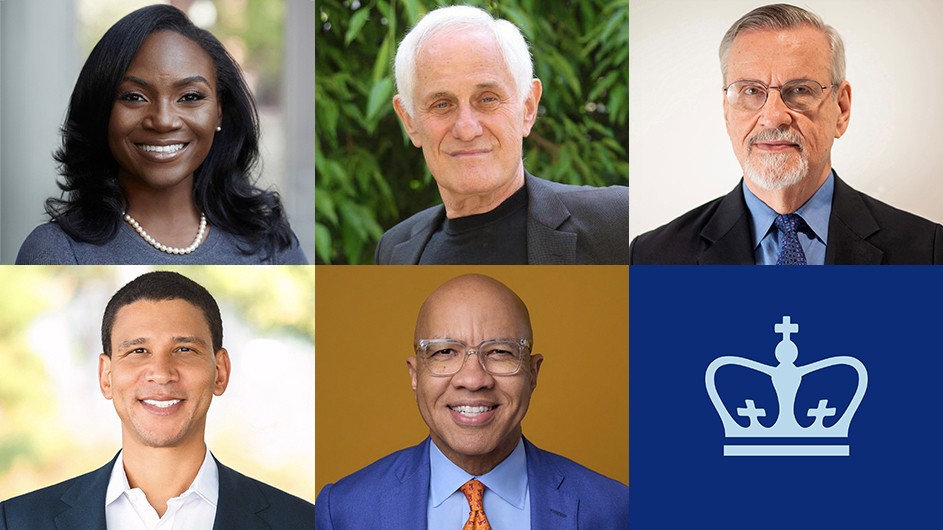
Opening its inaugural "Jazz and American Culture" series for 2000 with a celebration of Louis Armstrong in his centennial year, Columbia's Center for Jazz Studies will present a conversation about the jazz great's legacy with acclaimed trumpeter Wynton Marsalis and critic Stanley Crouch on Tuesday, Feb. 1 at Columbia's Miller Theater.
The program, "The Artistry of "Pops": Louis Armstrong at 100," will be moderated by Professor Robert O'Meally, a leading interpreter of the dynamics of jazz in American culture, editor of a seminal textbook for jazz studies and founder and director of The Center for Jazz Studies at Columbia. Marsalis, one of the leading jazz musicians of our time, will have his trumpet on stage to demonstrate elements from Armstrong's repertoire. Crouch, the playwright, essayist, and newspaper columnist, is a founder of Jazz at Lincoln Center, where he serves as artistic consultant. The conversation, which begins at 8 P.M., will be followed by questions from the audience, who will include musicians, educators and critics from Harlem and the larger New York jazz community. Tickets are $15 ($5 for Columbia students), available through the Miller Theater box office: (212) 854-7799.
The "Jazz and American Culture" lecture series, which opened in November with a talk by Brent Edwards on Duke Ellington's literary influences, is the centerpiece of the jazz center's inaugural year at Columbia. The center opened in September with $300,000 in funding from the Ford Foundation.
The series is focused on Ellington, whose centennial was celebrated last year, and on Armstrong, the seminal figure in American jazz who was the first great instrumental soloist and jazz singer. The program on Feb. 1 kicks off Black History Month observances and a year-long celebration of Armstrong's music.
Assessing Armstrong's greatness, O'Meally says: "With the end of the 20th century, as we reviewed our great achievements in science through Einstein's work, and our important political leadership, from FDR and others, our masterpieces of modern art through Matisse and Picasso, we had to think that nothing sounds more like the American century than 'West End Blues,'" Armstrong's rippling conversation between trumpet, clarinet and rhythm.
"During the years following World War II, the sound of Satchmo came to have more world-wide appeal than the image of Yankee Doodle Dandy ever did," says O'Meally, a literary scholar who holds the Zora Neale Hurston Professorship of American Literature at Columbia and is the author of Lady Day: The Many Faces of Billie Holiday and The Craft of Ralph Ellison. O'Meally was nominated for a Grammy award last year as co-producer of "The Jazz Singers: A Smithsonian Collection."
Armstrong's genius at improvisation seems to have extended to his own birth date. The centennial of his birth will be celebrated in concert halls and clubs worldwide on the date he chose, the Fourth of July, 1900, although military conscription records of 1918 list his birth date as Aug. 4, 1901.
Through the work of these two great musicians and that of others, including Thelonious Monk and Billy Eckstine, the lecture series examines the impact of jazz on 20th century America -- how jazz and American art, culture, society and politics have influenced one another in unexpected ways and by unexpected means.
Incorporating music, dance and film clips, as well as photographs and readings from rare manuscripts, the series has featured Scott DeVeaux, author of The Birth of Bebop; John Szwed, biographer of Sun-Ra; and Mark Tucker, the noted Duke Ellington historian. The series is being filmed and produced for the World Wide Web by Columbia University.
Upcoming lectures include Krin Gabbard of the State University of New York at Stonybrook (Feb. 15) on "Paris Blues: Ellington Meets Armstrong" about the 1958 film in which the two musicians communicate their understanding of jazz and American culture; Jacqui Malone of Queens College (March 21) with guest dancers on the role of dance and big bands; Robin Kelley of New York University (March 28) on Thelonious Monk's Challenge to Bepop; and Mark Tucker of the College of William and Mary, the noted Ellington historian, who will demonstrate jazz composition on piano (April 18).) The lectures begin at 8 P.M. in 301 Philosophy Hall on the Columbia campus. They are free and open to the public.
Miller Theater is located on the Columbia University campus at Broadway and West 116th Street. Take the No. 1 or 9 subway train to 116th Street. The theater adjoins the main gates to Columbia along Broadway.
|