



 |
|
Charles Barry Osmond
|
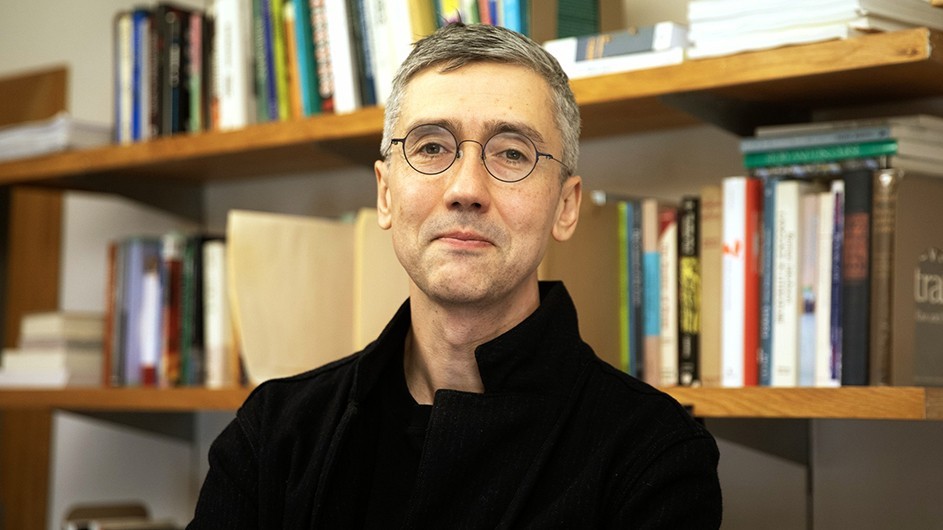
Charles Barry Osmond, a world-class plant biologist who has led cutting-edge academic programs in Australia, the United States and Great Britain, will become President and Executive Director of Columbia University's Biosphere 2 Center (B2C) in Arizona, it was announced by Columbia's Executive Vice Provost Michael M. Crow. A Fellow of the Australian Academy of Science and The Royal Society of London, Osmond has devoted his career to advancing the understanding of environmental plant physiology and ecology.
"Barry is a system-level thinker who will lead Biosphere 2 to its next level of development in becoming a top-tier research and education institution," said Crow. "Columbia University will greatly benefit from the intellectual leadership that Dr. Osmond will bring to B2C."
Columbia has managed the research, education and public programs at the 250-acre campus since 1996. Last December Columbia announced plans to expand its Biosphere 2 campus to accommodate 350 students, to continue developing Biosphere 2's research capability, and to increase public programs and initiatives. With the educational and outreach components well in hand, Osmond's appointment will solidify the center's research capability.
"Barry is a broad thinker who is innovative in his approach to research," said Wallace Broecker, professor of earth and environmental sciences and science coordinator at B2C. "He is a visionary with a reputation for being thoughtful and collegial. Barry is without doubt the best person in the world for this position."
Harold Mooney, professor of environmental biology at Stanford University, added, "Barry Osmond is an outstanding scientist and leader who has all of the qualities and credentials needed to lead Biosphere 2 to the highest level of excellence in research."
Osmond said he is eager to assume his new position. "Biosphere 2 is well on its way to becoming an important research center, a remarkable prototype apparatus for determining how plants sustain our planet," he said. "With our growing education and outreach programs, the next step is to strengthen our research program with key faculty appointments and by attracting institution-wide research projects."
Osmond is considered one of the world's leading experts on water-use efficiency. Focusing on cacti, he discovered how the desert plants pack carbon at night so using less water in the day and found a way to index water efficiency by measuring stable carbon isotopes. His other work has focused on the interaction of light with high temperature, water and nutritional stresses. Most recently, he studied the readily reversible processes of photoprotection that plants use to waste excess light as heat, and thereby minimize slowly reversible processes of photo damage.
A distinguished professor at Duke University from 1986 to 1991, and currently adjunct professor, Osmond is at present on the faculty of the Research School of Biological Sciences in the Institute for Advanced Studies at The Australian National University. He was the School's director from 1991 to 1998.
Biosphere 2 is part of the Columbia Earth Institute, a broad network of research centers and faculty who are collaborating in an effort to understand Earth's processes and the role humans play in them. The multi-disciplinary approach to sustaining the planet focuses on earth systems science, policy and management. Columbia is one of the first universities in the world to develop this approach to the field of environmental and earth sciences at the university-level. One of the largest living laboratories in the world, Biosphere 2 is a sealed greenhouse covering 3.15 acres and enclosing a volume of 7.2 million cubic feet. Within the facility are several different biomes -- a rainforest, a million-gallon salt-water ocean, a coastal fog desert, and four other wilderness ecosystems -- which researchers use to do controlled experiments on Earth systems on a relatively large scale.
Osmond will begin his new duties in April 2001 and plans to live with his wife, Cornelia Buchen-Osmond, on the Oracle campus about 20 miles north of Tucson. Dr. Buchen-Osmond is curator of the universal virus database on the web, ICTVdB.
|