



 |
|
The view from behind one of five cameras in Room 535 of the S.W. Mudd Building. Lectures are recorded in seven different classrooms for distance learners to watch on demand from any Internet-accessible computer.
|
If it sounds unbelievable that a young mother living in a Shanghai suburb can obtain a master's in engineering without ever leaving her village, then you haven't heard of Columbia Video Network, the University's only distance learning degree program.
Nearly 1,000 students are taking courses or pursuing degrees at the Fu Foundation School of Engineering and Applied Science through CVN. Most have never even been to New York City, let alone set foot on College Walk. The number of distance learners at CVN is growing exponentially, with enrollment nearly tripling in the past three years.
CVN's Executive Director Grace Chung can be credited with quadrupling the courses offered annually, from 40 to 160, during her tenure, which began in 1997. Chung has also helped change attitudes; a large portion of engineering professors now teach online courses--a far cry from her first few months on the job when many instructors were uncomfortable with the idea of appearing before a camera.
"We'll be here for a long time," says Chung, proud of the prestige and profits CVN has come to generate. Chung says that now that she and her small staff have "worked like dogs" to make CVN technologically competitive with the best online degree programs in the country, she still issues the challenge: "Let's prove to everyone we are worthy of being here."
And prove it they have. CVN was featured in Forbes magazine's "Best of the Web" profile on higher education and in a Grok magazine story about Columbia's online business relationships. According to Chung, the best students are choosing to come, electronically that is, to study in Morningside Heights. "We have top-notch engineers in this program," she says. "We get a lot of students from the major companies in Silicon Valley and the technology hubs in Texas, Arizona and New York."
Chung credits Engineering School Dean Zvi Galil with making CVN a major competitor in distance learning education. "One hundred percent of our success comes from him," she says. "Mentally, physically and psychologically, he supports us. He cares about his students and his faculty."
The majority of CVN students watch lectures that are broadcast online via video streaming. This enables them to view the class on demand, asynchronously, from any Internet-accessible computer, practically anywhere on the planet. "There are no boundaries," says Chung. "The whole world becomes a theatre." A few students still prefer to view classes on videotape, the program's original communication tool; however this method has been substantially phased out over the last two years.
Distance learners can obtain a Master of Science (M.S.) or Professional Degree (P.D.) in computer science, electrical engineering, engineering and management systems, materials science and mechanical engineering. Exams are posted online by professors for students to take within their company's office space and are proctored by a designated human resources representative. Degrees earned online are the same as those received by students attending classes on-campus. Backed by a staff of twelve full-time employees and more than a dozen part-time camera operators who work furiously--sometimes seven days a week--to meet the demands of a multiplying online student body, Chung proudly boasts that CVN is the "best at what we do" because of the personal attention paid to students.
 |
|
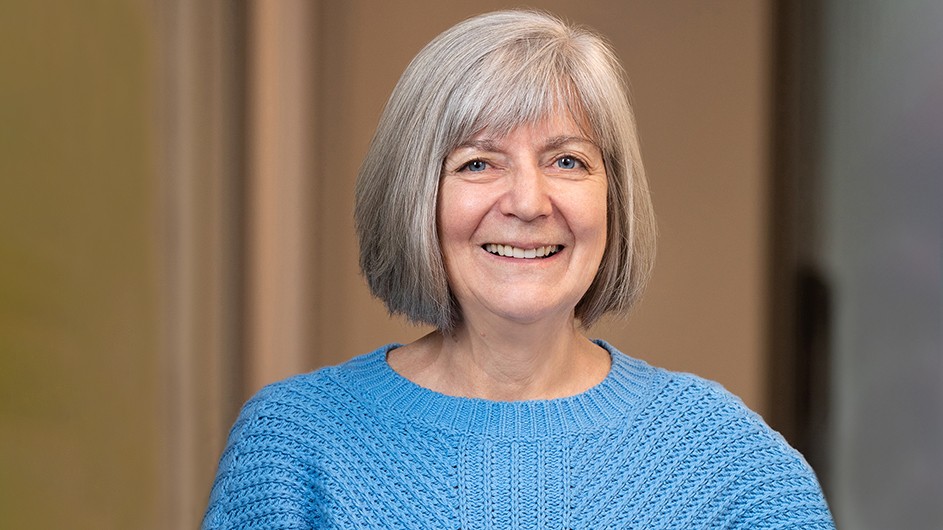
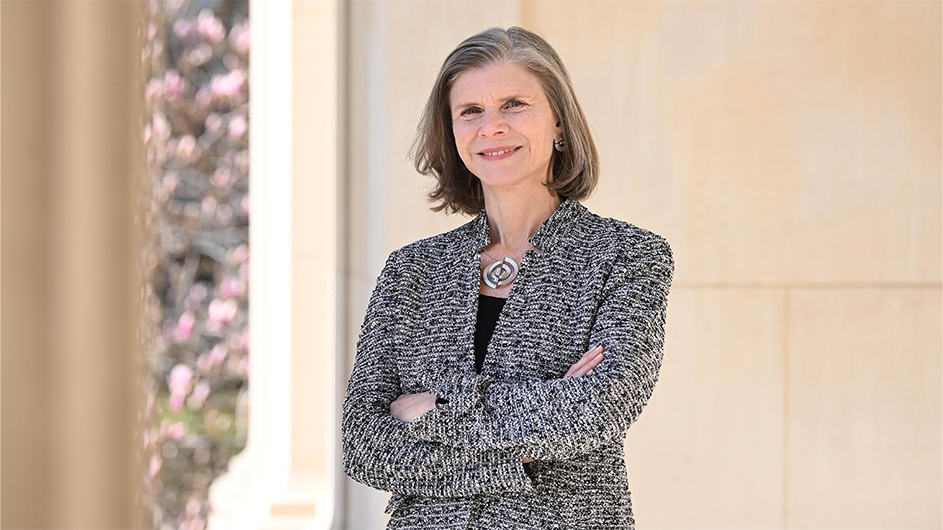
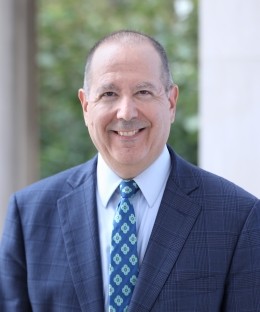
Fu Foundation School of Engineering and Applied Science Dean Zvi Galil, left, with CVN Executive Director Grace Chung.
|
"We have the best communication channels," says Chung. "We listen to students. We believe the customer is always right." Online students are promised responses within 24 hours to questions they e-mail instructors. Students receive messages almost daily regarding program news and procedure. Chung says that CVN makes it a priority to walk students comfortably through the experience of being a distance learner.
Occupying a small space on the fifth floor of Engineering's S.W. Mudd building, CVN functions as a full-service school unto itself. The program provides students with all financial, accounting and registration services. The staff also does its own marketing and Web development. It seems the only thing CVN does not offer students is a meal plan.
Ninety-nine percent of the students enrolled through CVN are sponsored by the companies they work for, including Lucent, Verizon, IBM and Telcordia. Chung says that distance learning is a perfect opportunity for full-time employees--many supporting families--who want an education but can't afford to take time off. "We live in a day and age where everyone is mobile," says Chung. "Through distance learning, anything is possible."
Chung admits critics might say that online classes are a second-best alternative to learning in a conventional, on-campus environment. But, she says CVN is trying to make distance education feel as close to the real thing as possible. In fact, CVN is working on a patent right now for a new technology that will enable remote students to interact more than ever with instructors and each other. "We want to create a real classroom environment," she says. "Our developing technology will keep CVN at the forefront of distance learning."
|