





 |
|
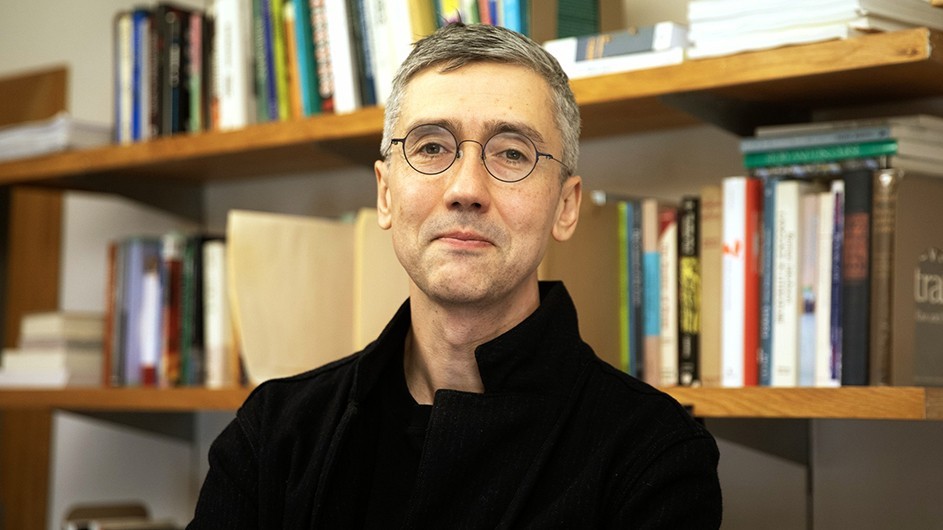
Professor Nolan McCarty
|
As President-elect George Bush seeks to make approximately 4,000 appointments to his administration, his campaign promise to "change the tone in Washington, D.C." will be met head-on by partisan polarization in the nation's capital, predicts Columbia Political Science Professor Nolan McCarty.
"The atmosphere in Washington has become increasingly partisan over the past 25 years," said McCarty, a member of the University's political science department since 1996. "The change-the-tone thing is kind of an enigma. There's almost no evidence this can occur. Before Republicans held up President Clinton's nominations, there were Democrats doing it to George Bush's and Ronald Reagan's appointments, too. It's really the process, not the senators confirming the nominees, that creates this condition."
McCarty added that obsession with scandal has slowed down both the nomination and confirmation process and contributed to the polarization between the major political parties.
"In general, presidents are taking longer to make their appointments and the Senate is taking longer to confirm them," McCarty said. "The significance of personal scandal has increased, so there's typically a longer vetting process on potential nominees before they are named. Meanwhile, senators have figured out that scandal is a sure-fire way to defeat a nominee. A scandal can defeat a nominee more easily than ideological differences in policy."
As recent examples of this phenomenon, McCarty pointed to Zoe Baird, Clinton's 1993 nominee for attorney general, and John Tower, George Herbert Walker Bush's 1989 nominee for secretary of defense.
Baird's failed nomination was hindered by charges that she did not pay Social Security taxes for her nanny. Accusations of excessive drinking and womanizing contributed to Tower's defeat. The withdrawal of Linda Chavez as Bush's nominee to head the Department of Labor is the latest instance of this dynamic. She withdrew her name on Jan. 9--prior to the Senate confirmation hearings--after revelations that she provided shelter to an undocumented alien.
McCarty's observations are based on his study, "Hitting the Ground Running: The Politics of Presidential Appointments in Transition," which appears in Presidential Power: Forging the Presidency for the Twenty-first Century (Columbia University Press, 2000). McCarty and co-author Rose Razaghian, a Columbia doctoral student, analyzed nearly 1,000 presidential appointments made during presidential transitions from 1961 to 1993. They concluded that newly elected presidents do not enjoy "honeymoon" periods during the confirmation of their nominees. Rather, they strategically anticipate opposition to their appointments and seek to avoid confirmation battles by nominating individuals unlikely to generate opposition in the U.S. Senate. McCarty predicts this pattern is likely to hold under George W. Bush, largely because the Senate is evenly divided between Republicans and Democrats.
"The composition of the Senate will make it difficult to shepherd nominations through committees," said McCarty. "But that's going to be compensated by more moderate appointments. The hurdles for confirmation will be higher, but Bush will generally make appointments to try to get over the hurdles."
In fact, McCarty contends that Bush is more likely to face stronger opposition to his appointments from members of his own political party than from Democratic senators.
However, many of these battles won't be over prominent names, such as Colin Powell, Bush's nominee for secretary of state, or Donald Rumsfeld, his choice for secretary of defense. The confirmation process for such high-level appointments is relatively expeditious, McCarty's research shows. Rather, it is nominations for lower-level appointments, such as those for under secretaries and deputy assistants, that get bogged down in the increasingly polarized confirmation process. However, as the Chavez nomination showed, there are exceptions.
"Given the lack of cohesion in the Senate, it's going to be hard to placate everyone," said McCarty. "I suspect we'll see some filibustered nominees and some defeated nominees."
McCarty also predicts that Bush will take a cautious approach in appointing Supreme Court justices should vacancies arise during his administration.
"There's a high probability Bush will get three appointments," said McCarty, alluding to the possible retirements of Justices John Paul Stevens and Sandra Day O'Connor and Chief Justice William Rehnquist. "He could conceivably make the Supreme Court much more conservative. However, I think given the stakes, if he were to appoint very conservative justices, the Senate would most likely reject those appointments. He'll probably appoint judges whose ideological preferences are not well known."
McCarty added that Bush's father took this approach in nominating David Souter. Despite his selection by a Republican president, Souter has frequently voted in opposition to the court's conservative wing since his confirmation in 1990.
|