








Low Plaza

Spanish Professor Diana Sorensen Analyzes Latin America's Social, Political and Cultural Shifts

By James Devitt

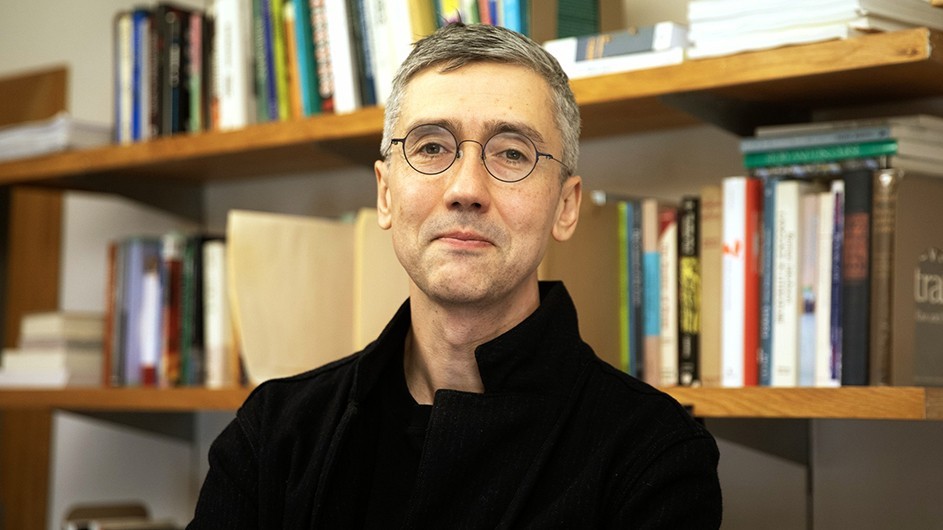
Professor Diana Sorensen

The 2000 election of Vicente Fox as president of Mexico marked the end of a 71-year reign by the incumbent party, the PRI. While political observers have sought to understand the immediate significance of his election, Spanish Professor Diana Sorensen said Fox's election is the culmination of decades of political transformation in Latin America.

"In many ways the political tragedies of Latin America come out of this tension of the drive to civilize and to destroy that which is considered barbarous," said Sorensen, MA'76 Ph.D.'81, GSAS. "Fox is cognizant of this conflict, which is one of the many origins of the neo-liberal movement to transform politics in Latin America."

Explaining his plan to increase education spending to close the nation's income gap, Fox told the BBC in September that "We were the losers in the 20th century, but we are learning from our mistakes." Describing his plans to technologically revolutionize Mexico, Fox said, "We must inundate the country with computers."

Sorensen's perspectives are based, in part, on her research for two forthcoming books: a selection of writings by former Argentinian President Domingo Faustino Sarmiento and an analysis of Latin American culture in the 1960s.

The Sarmiento work gathers some of his well-known writings about nation-building and citizenship. President of Argentina from 1868 to 1874, Sarmiento developed the nation's education system and defended civil liberties.

"Sarmiento wanted to construct a utopian future for Argentina, but he had a blindness to the contemporary needs of his citizens," said Sorensen, an Argentinian native. "Like other Latin American leaders of his time, Sarmiento modeled the nation after European civilization. He sought to annihilate 'barbarous' obstacles to his modernizing drive to create a nation with an education system and cultural institutions that would promote his normative ideas of citizenship."

In studying Latin America in the 1960s, Sorensen is exploring other factors that have influenced Latin America's politics and culture, notably the 1959 Cuban revolution.

"What interests me about this decade is that it signifies a period of cultural transformation," Sorensen said. "It is characterized by the advent of youth culture and minority identities, which led to a transformation in Latin American politics and culture. This period also coincides with the rise of consumer culture and new, modernized cultural forms—both high brow and low brow."

Sorensen's analysis—the working title is Latin American Culture and Society in the Sixties: The Last Utopia? — examines the relationship between the decade's major historical events and how these events influenced the writing of contemporary Latin American texts. Sorensen cites Gabriel Garcia Marquez's One Hundred Years of Solitude (Harper and Row, 1970) as a prime example of the rise of a continental imagination in Latin American literature.

Sorensen arrived at Columbia in 1975 as a graduate student. She returned to campus this semester, after a 19-year stint at Wesleyan University in Middletown, CT.

"It's a very dynamic time for Columbia," Sorensen said. "It was a very vibrant place to be when I was a student here as well, but now even more so. The multi-ethnic character of New York City has had a very productive effect on the study of Latin America at Columbia."

Published: Feb 23, 2001
Last modified: Sep 18, 2002


Search Columbia News    Advanced Search  Help

Phone: 212.854.5573    Office of Public Affairs