





Low Plaza

Philosopher Philip Kitcher on Scientific Challenges to Religion, March 28

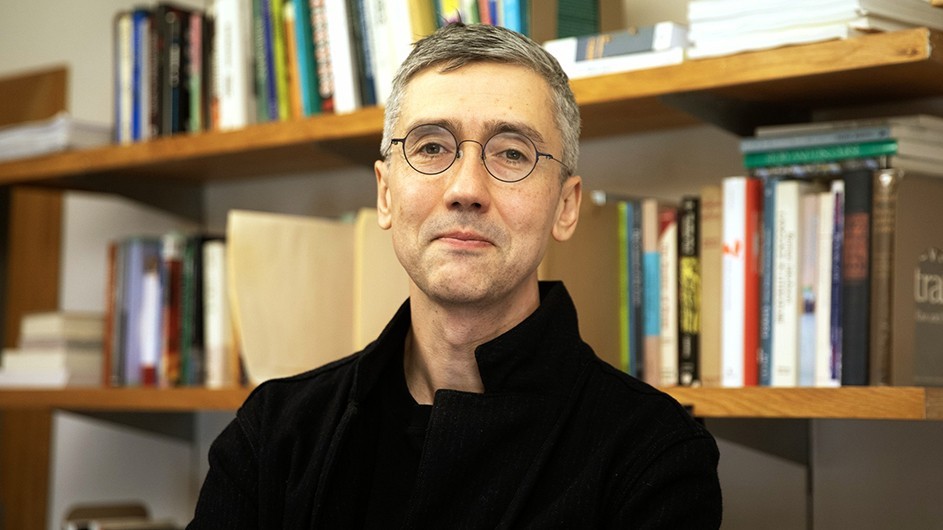
Professor Philip Kitcher of Columbia's Philosophy Department will discuss the scientific challenges to religion on Wednesday, March 28, in the second of four lectures this spring on the Columbia campus on the relationship between scientific inquiry and the nature of religious or spiritual experience.

Kitcher, whose scholarship has focused on the apparent conflict between science and religion, the ethical and political constraints on scientific research and the evolution of altruism and morality, will speak on "The Many Sided Conflict between Science and Religion" at 6 P.M. in Davis Auditorium of the Schapiro Center for Engineering and Physical Science Research. Professor Ryichi Abe, chairman of the Columbia Religion Department, will make introductory remarks.

"Champions of religion offer ways of reconciling Judeo-Christian doctrines with Darwinism, or of validating religious texts against archaeological and sociological criticism, or of defending the insights culled from religious experience," Kitcher wrote in describing his lecture. "I suggest that the real difficulties of reconciliation can only be appreciated when we see the debate as analogous to large controversies that have occurred with the history of science, controversies that were resolved through the recognition of global difficulties for one point of view … I shall try to show that the scientific challenge to religion is much more serious than those who seek comparability typically appreciate."

Born in England, he was educated at Cambridge and earned the doctorate at Princeton. He is the author of many books on the philosophy of science, including "The Lives to Come: The Genetic Revolution and Human Possibilities" and "Abusing Science: The Case Against Creationism."

Hosted by Columbia's Center for the Study of Science and Religion, the lecture series, "Experiencing the Mysterious," has brought together world class scholars to promote dialogue between the humanistic disciplines and the physical, biological and human sciences. This spring's series and others to follow over the next two years are supported by a $100,000 grant from the John Templeton Foundation.

The series resumes on April 3 with a talk by Professor Robert Thurman, the leading interpreter in the West of Indo-Tibetan Buddhism," who will speak on "Manjushri's Wisdom Sword: A Buddhist View of Religion and Science." Roald Hoffman, a Nobel laureate in chemistry, will deliver the final lecture in the series on April 17: "Old Wine, New Flasks: Reflections on Science and Jewish Tradition."

The lectures are free and open to the public.

Published: Mar 27, 2001
Last modified: Sep 18, 2002


Search Columbia News    Advanced Search  Help

Phone: 212.854.5573    Office of Public Affairs