






Low Plaza

Earthquake Data from the Former Soviet Union Can Now Reach LDEO in Near Real Time

By James Devitt

Seismological data from earthquakes as far away as the former Soviet Union can now reach scientists at Columbia's Lamont-Doherty Earth Observatory (LDEO) in near real-time due to a new joint research effort between Columbia and Borovoye Geophysical Observatory, a former Soviet monitoring station in northern Kazakhstan.

The near real-time capability for signals at Borovoye to be received at LDEO has the potential to speed up the process of interpretation of earthquake and explosion activity. For example, signals have been recorded at Borovoye from small earthquakes near the Russian nuclear test site at Novaya Zemlya, and from the accident on the Kursk submarine in the Barents Sea in August 2000. With the new connections, such signals to reach scientists in western nations will be available within a few seconds of being recorded.

Collaboration between LDEO and Borovoye began in 1991 when the Russian institution that operated the station in Kazakhstan invited Columbia seismologists to Borovoye to undertake joint research using de-classified archive data. After the Soviet Union fell apart in 1992, a Kazakhstan agency invited the seismologists to install western instrumentation at the site, which provides high-quality signals from seismic activity around the world.

This month, seismologists at LDEO released an archive of digital seismograms gathered by the Borovoye Geophysical Observatory, which began operation in 1965 and monitored underground nuclear explosions at the Nevada test site in the United States. The site has captured seismological data from explosions and earthquakes around the globe. The observatory made digital recordings of 695 underground nuclear explosions from several nations, including China and France, and thousands of earthquakes.

Michael Purdy

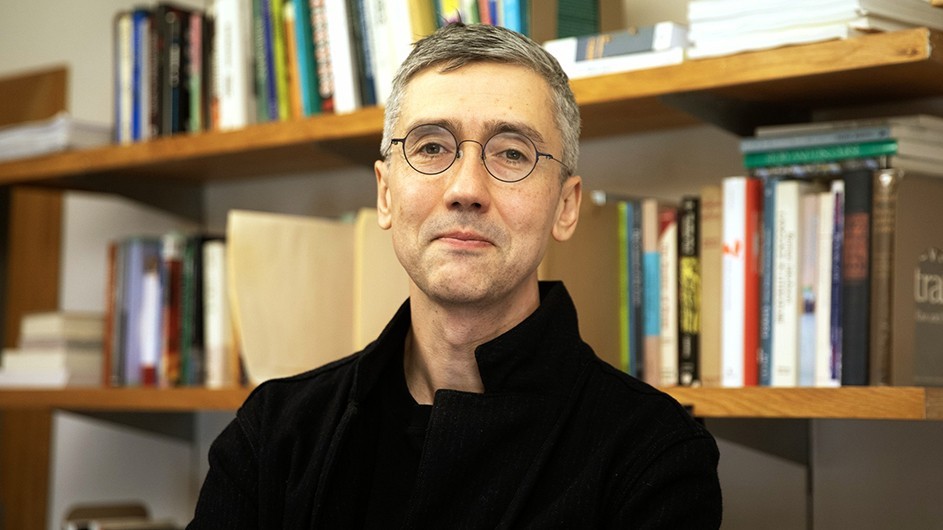
"The earthquake archive is important for studies of seismic hazard in central Asia—a region with a long history of damaging and sometimes catastrophic earthquake activity," said LDEO Director Michael Purdy, former division director of ocean sciences at the National Science Foundation. "Data recorded at Borovoye are of remarkably high quality because of geological conditions that favor strong signals and low noise."

LDEO seismologists Paul Richards and Won-Young Kim, in conjunction with the Moscow-based Institute for Dynamics of the Geosphere and the National Nuclear Center of the Republic of Kazakhstan, have worked to save the archive of signals acquired since 1966. They also upgraded the facility to capture future seismic activity and established radio, satellite and Internet connections between stations around Borovoye and LDEO, a part of Columbia's Earth Institute, in order to deliver near real-time seismic readings to the Columbia facility. The project has been funded by grants from the National Science Foundation and the International Science and Technology Center in Moscow.

Published: May 01, 2001
Last modified: Sep 18, 2002


Search Columbia News    Advanced Search  Help

Phone: 212.854.5573    Office of Public Affairs