




Low Plaza

Social Science Renaissance Continues With New Institute for Social and Economic Research and Policy

By James Devitt

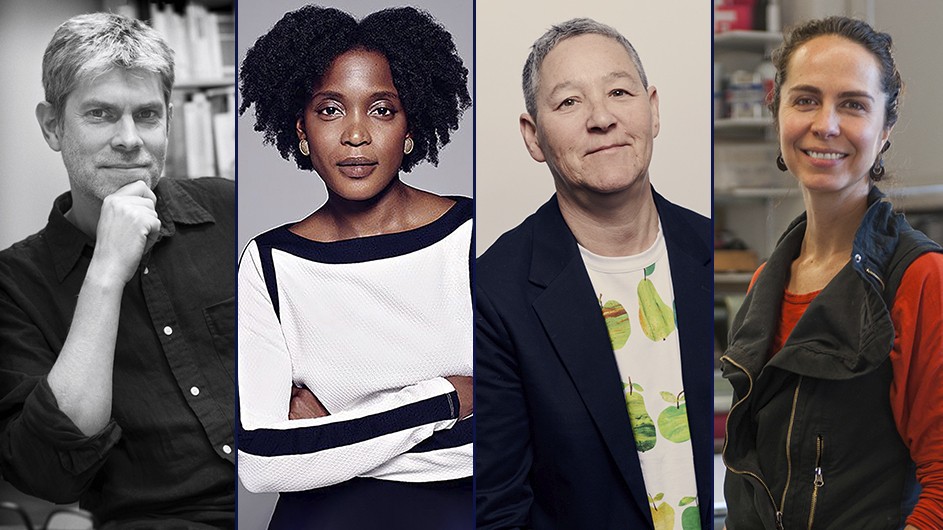
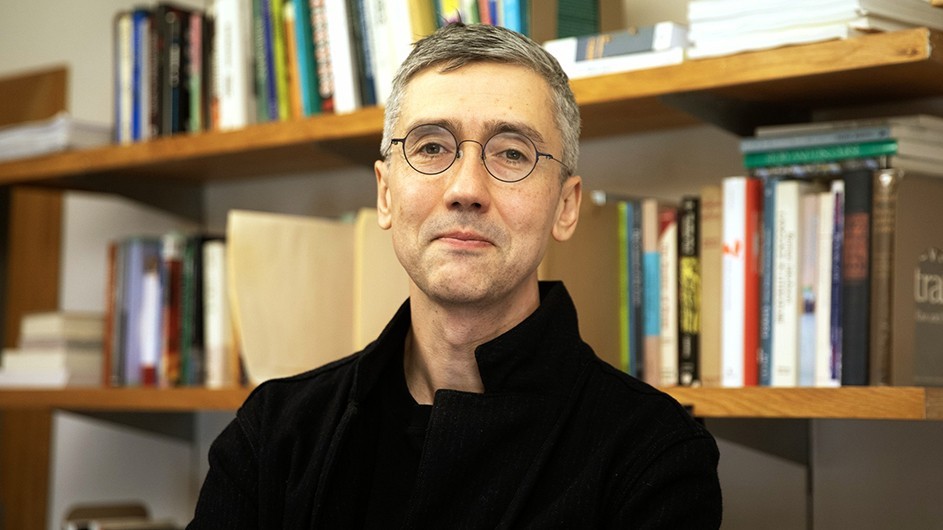
ISERP Director Peter Bearman (left) and Associate Director Robert Shapiro

The University Senate approved the establishment of the Institute for Social and Economic Research and Policy (ISERP) during the spring 2001 semester, marking the most recent chapter in Columbia's long history in social science research. ISERP—a merging of the Institute for Social and Economic Theory and Research (ISETR) with the Office of Sponsored Research (OSR) at the School of International and Public Affairs—is part of an effort to re-invigorate Columbia's research in the social sciences.

The initiative began in 1995, with the arrival of Vice President for Arts and Sciences David Cohen on the Columbia campus. In addition to endowment funds, ISERP's programs are expanding through internal investments from the Strategic Initiative Program, the Academic Quality Fund and Arts and Sciences.

Both Provost and Dean of Faculties Jonathan Cole (CC '64, Ph.D. '69) and Cohen noted that ISERP is an absolutely essential component of the renaissance in the social sciences that we are trying to create at Columbia.

The 1996 establishment of ISETR was part of a drive of Arts and Sciences to enhance Columbia's work in the social sciences. ISETR's founding also coincided with an effort to expand the research presence of the School of International and Public Affairs (SIPA). Because of significant overlap in the research infrastructure between SIPA and ISETR, the two combined forces under ISETR. ISERP's name reflects both the social science and policy research that has developed under this relationship.

"There's been widespread university support for the resurgence of the social sciences," said ISERP Director Peter Bearman, a professor of sociology. "The original methods used in social science research are now routine. We're trying to develop interdisciplinary research that will have an impact on what social science will look like 30 years from now. For years, people have talked about interdisciplinary work. But we're trying to be ahead of the curve at ISERP. Columbia is one of the only institutions that is seriously trying to break down boundaries between academic disciplines."

Columbia's track record in social science research extends back to World War II. The Bureau of Applied Social Research, headed by sociologist Paul Lazarsfeld, was established in 1944 and helped make Columbia a pioneering institution in the social sciences.

"The Bureau of Applied Social Research was one of the major social research organizations in the mid-20th century," said Cole. "The Bureau was designed to develop theoretical ideas that were tested with empirical evidence and research. There was a close linkage between theory and research. In those days, it was about legitimizing the field as well as pursuing discoveries in research."

The ground-breaking studies conducted by Lazarsfeld and his colleagues blended several fields of scholarship, such as sociology, social psychology, psychology and political science. Among the most prominent inquiries dealt with the impact of radio and television on the American public, helping the Bureau become the "birthplace" of mass communication research, according to communication historian Everett Rogers.

Innovative studies coming out of the Bureau of Applied Social Research included The People's Choice (Columbia University Press, 1944), which analyzed how Americans made their voting decisions during the 1940 presidential campaign, and Personal Influence (Free Press, 1955), which examined the relationship between the mass media and interpersonal communication in the process of opinion leadership.

"The foundations of much empirical social science research, especially research centered on surveys, were developed out of Columbia within the Bureau," said Bearman. "The university's contributions included development of theories on public opinion and voting, which have had an enormous impact in political science," said ISERP's Associate Director Robert Shapiro, who chairs Columbia's political science department.

Beyond conducting ground-breaking research, Lazarsfeld and his colleagues introduced methodologies that are commonly used today: the focused interview (now known as focus groups) and panel interviewing methods, in which the same sample of individuals is repeatedly surveyed to measure changes in opinion over time. The Bureau was eventually succeeded by the Center for the Social Sciences (later re-named the Paul F. Lazarsfeld Center for the Social Sciences), which is now part of ISERP. ISERP is currently planning a fall conference in honor of Paul F. Lazarsfeld's centenary. The conference will highlight developments across the social sciences that reflect Lazarsfeld's broad contributions.

Shapiro said that ISERP is geared to forming a "social science/public policy relationship. Central to that is a vision for the social sciences and how it relates to the policy world."

To help achieve this, ISERP awards small grants, or seed money, to cultivate preliminary research projects. ISERP annually provides approximately $175,000 to Columbia faculty in the social sciences for support of innovative projects through seed grants. Such research can generate larger, external grants needed to conduct larger studies. In the past year, external funding for ISERP research has grown from less than $200,000 to more than $1.2 million.

Among the studies supported by seed grants are an analysis of strategic partnerships within Manhattan's Silicon Alley, the impact of the Internet on voter participation and an archaeological study of Seneca Village, a 19th-century African-American and Irish community in what is now Central Park.

Columbia faculty associated with ISERP, and its predecessor, ISETR, have already captured awards for their research. Sociology professor Sudhir Venkatesh won an Association of American Publishers award for his co-authored book, American Project: The Rise and Fall of a Modern Ghetto (Harvard), which was judged best book in 2000 in the fields of sociology and anthropology. Both Venkatesh and sociology professor Duncan Watts won National Science Foundation (NSF) Faculty Early Career Development (CAREER) Awards.

The awards are NSF's most prestigious honor for junior faculty members. Elliott Sclar's You Don't Always Get What You Pay For: The Economics of Privatization (Cornell University Press), an analysis of privatization of government services, recently won the Louis Brownlow Book Award from the National Academy of Public Administration. Sclar is director of Urban Planning Programs at the School of Architecture, Planning and Preservation and at SIPA.

In addition, Shapiro won the Goldsmith Book Prize for his co-authored work, Politicians Don't Pander: Political Manipulation and the Loss of Democratic Responsiveness (University of Chicago Press, 2000).

The award, given by the Joan Shorenstein Center on the Press, Politics and Public Policy at Harvard University's John F. Kennedy School of Government, honors books aimed at improving the quality of government or politics through an examination of the press and government or the intersection of press and politics in creating public policy.

A number of previously established and newly created research centers are now part of ISERP's enterprise. They include the Center for the Study of Wealth and Inequality, the Center for Urban Research and Policy (CURP) and the Center for Science, Technology and Environment Policy.

"Research at these centers formalizes the research relationship between the social sciences and public policy at Columbia," said Shapiro. Shapiro also noted that ISERP is investing in human capital to help build and ensure the strength of the social sciences at Columbia for the long run. ISERP has contributed to bringing both junior and senior faculty to the social sciences at Columbia.

"Columbia has recruited a new generation of faculty which ISERP wants to help support in the hopes of creating a world-class research environment for years to come," Shapiro said. "We are also supporting research by graduate students so they have the opportunity to develop credentials in scholarship and learn from the researchers here."

This cultivation of the faculty and graduate student relationship at the Bureau of Applied Social Research was one of its hallmark traits, said Cole. "When the Bureau was at its peak, people would often spend 14 to 15 hours a day there, of which three or four hours were devoted to deep conversation with colleagues about the direction of research," Cole said. "It was an exciting place to be. That's what we want to re-create now at ISERP."

"The sense of intellectual energy is what ISERP has helped to re-create throughout the social sciences at Columbia today," said Bearman.

Published: Jun 01, 2001
Last modified: Sep 18, 2002


Search Columbia News    Advanced Search  Help

Phone: 212.854.5573    Office of Public Affairs