








 |
|
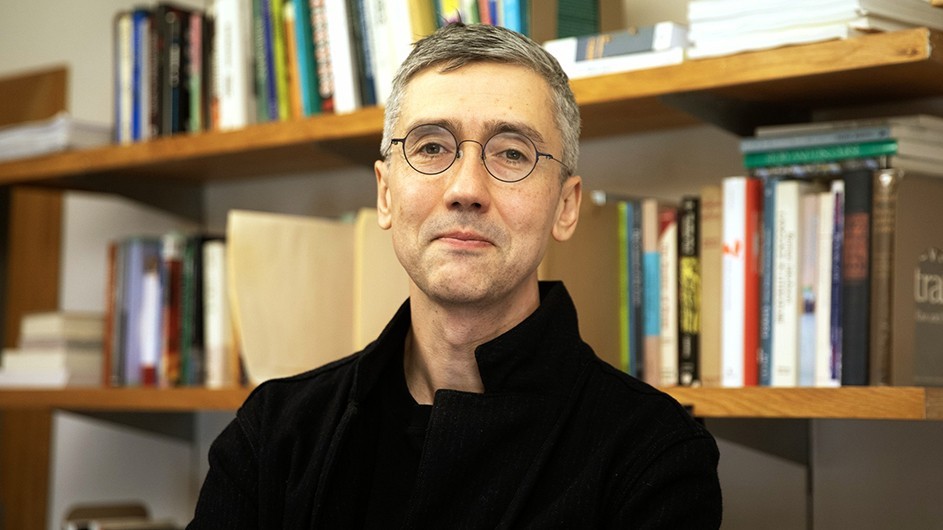
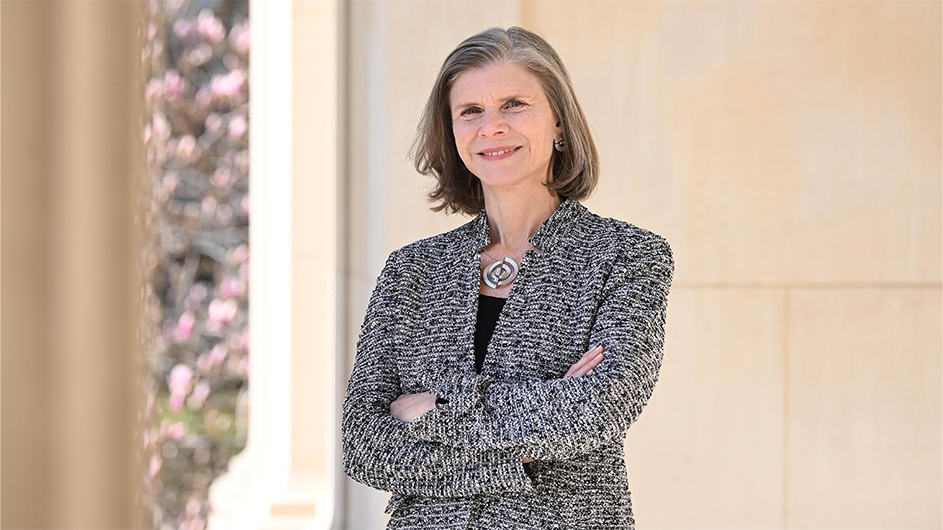
Marina Cords
|
A new Department of Ecology, Evolution and Environmental Biology has been created within Columbia's Arts and Sciences to expand the University's capacity for research and training in these important fields in the natural sciences, David Cohen, vice president and dean of the Faculty of Arts and Sciences, has announced. In its developing stage, the department will be led by Marina Cords, a zoologist and expert on primate social organization, who will become chairwoman on July 1.
The new department is intended to expand the range of the biological sciences at Columbia by reestablishing a presence in ecology and evolutionary biology, fields in which Columbia enjoyed a distinguished past. Environmental biology, an area of strong current interest and need, is a responsibility of the department. The department will assume stewardship of Columbia's current degree-granting programs that include an undergraduate major in environmental biology; a master's degree in conservation biology; Ph.D. in ecology and evolutionary biology and two certificate programs, in conservation biology for graduate students in the social sciences and in environmental policy for doctoral candidates in ecology and evolution.
"This new department represents an important expansion for Columbia of both the biological sciences and environmental sciences," said Cohen.
The training of scientists in these disciplines is important to advancing understanding of the Earth's biological systems and the alteration of its ecosystems. While growing ecological concerns have raised demand for courses and programs that focus on the natural and social science dimensions of the problem, universities have confronted a critical shortage of scientific leaders in these areas as a result of the trend in the biological sciences toward research in cell and molecular biology.
Through the efforts of Professor Don Melnick, Columbia in 1995 joined with a group of prestigious partners, including the American Museum of Natural History, the New York Botanical Garden, the Wildlife Conservation Society and the Wildlife Trust to create the Center for Environmental Research and Conservation. With a research and training faculty of more than 70 members, CERC's primary goal has been the education of a new generation of scientists and practitioners in ecology, evolution and population biology. The activities of CERC were instrumental in the development of three new degree programs and two certificate programs that now enroll nearly 75 students, including 30 undergraduate majors, 16 master's degree students and 27 doctoral candidates. Overall, 155 students are enrolled in classes in these fields.
"The new department will provide long-term stability and a platform for further curricular development of these academic programs, and it will establish a core research presence in selected areas of ecology, evolution and environmental biology," said Cohen.
The department will begin with an initial core faculty of six, including Professors Cords and Melnick, who will transfer from the Anthropology Department to the new department while maintaining joint appointments in anthropology. Professor Ralph Holloway will be actively involved and jointly appointed in the new department but will continue to have his primary appointment in anthropology.
Cords, a behavioral ecologist who specializes in primary social behavior and socioecology, studies East African guenons in the field, in addition to macaques in captivity. Holloway studies the evolution of the human brain, including the timing of major reorganizations in the brain at various stages of primate evolution. Melnick studies the genetics of natural primate populations, in particular how individual behaviors and social organization affect the distribution of genetic diversity.
Vice President Cohen is appointing an advisory committee made up of two or three Arts and Sciences faculty and two distinguished scientists in ecology and evolution from outside of Columbia. This committee will be important in guiding the early development of the new department, including the recruitment of a senior faculty member, with funds provided by the Earth Institute, and two additional junior faculty members.
|