




 |
|
Simon Schama
|
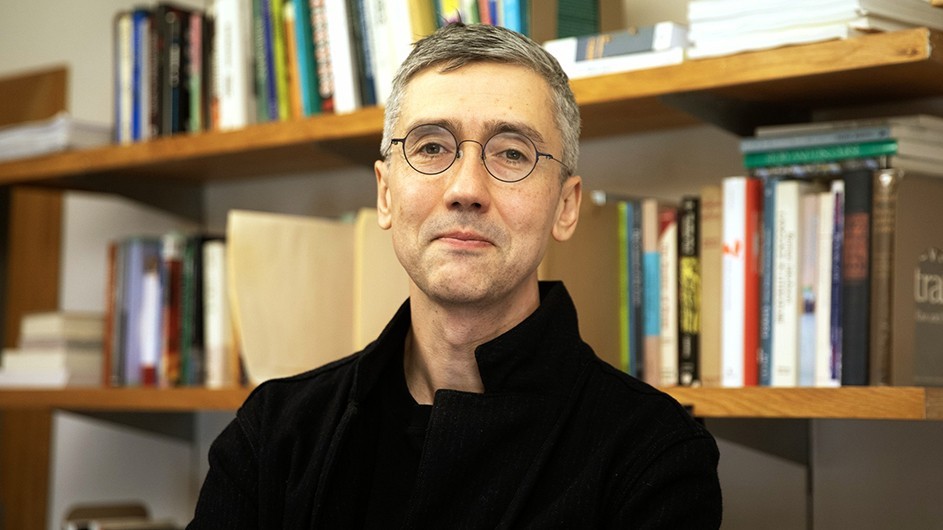
Over the past few weeks millions of British families have tuned in nightly to lessons delivered by Columbia's Simon Schama, professor of history and host of the BBC's hit TV series "History of Britain."
Now audiences everywhere can also log on for an Internet lesson on the British Empire taught by Schama, the academic who has brought the history of the U.K. alive for millions around the globe. The online seminar offers audiences on both sides of the Atlantic an in-depth study of the 17th and 18th century British Empire, its dependence on the slave trade and the pursuit of liberty in the American colonies.
The seminar, accessible on Fathom.com this summer from June 11 through July 23, will be available again when the "History of Britain" series airs in the U.S. on the History Channel this fall.
"In our 18th-century course we've tried to capitalize on the contemporary hunger for images to build a genuinely scholarly and question-raising approach to issues that still matter—power, profit, race and war," said Schama. "If I weren't teaching this course, I would be the first to take it."
The seminar's six chapters cover topics discussed in the eleventh episode of the BBC series—"The Rise of the British Empire." The tale begins with the ideals of the empire later brought to Jamestown, where the first settlers in America struggled to create an economically viable colony. With the success of the tobacco trade, British settlers then ventured into the Caribbean, where sugar plantations took root. But the demand for manpower to support these industries resulted in the slave trade, a sub-human experience both on slave ships and often in plantation life.
Each chapter is based around video lectures of Schama and supporting primary sources, including historic images, art, music and interactive maps. Online chat rooms on various subjects allow students to interact with Schama and each other during the seminar. Students can enroll in the online seminar now at Fathom.com and have six weeks to complete it, working at their own pace. The seminar cost is $45.
The three-to-five-hour online learning experience brings to a global audience the dynamism of one of Columbia's most acclaimed history professors. "Columbia students flock to Simon's courses because he uses gripping stories to bring history to life," said Jonathan Cole, provost of Columbia. "This is an era that is not only of interest to the English but also to American audiences and we are pleased that both can experience the teaching of one of Columbia's best."
It is through Schama's work that the BBC, Britain's largest broadcast network and a premier source for educational TV, and Columbia came to be collaborators in the creation of a quality online learning experience. As co-producers of the seminar, both institutions pooled resources working with Fathom to create a learning environment that would reflect Schama's ideas and personality.
"We are extremely pleased with the final product. It's exciting to be creating a new online resource that appeals to the specific interests of today's lifelong learners," said Ann Kirschner, president and CEO of Fathom.com.
The learning seminar is the first of a series of Columbia faculty-centered short courses to be developed by Columbia Interactive, a new Web site under development that will showcase the University's interactive online learning opportunities to Columbia audiences and those beyond the gates. This summer a number of courses featuring leading Columbia scholars are under development and will become available this fall on Fathom.com and on Columbia Interactive.
Simon Schama is a professor in the departments of art history and history at Columbia. He frequently contributes to the New Yorker magazine as an art critic and cultural essayist, and has won a number of prizes for his history books. Schama is currently writing and presenting a 16-part "History of Britain" television series for the BBC and an accompanying three-volume book entitled, "A History of Britain: At the Edge of the World?" The first segment of the series aired in fall 2000. The second book will be published this year.
|