












Low Plaza

Rodolfo de la Garza, Expert on Latino Political Behavior, Joins Faculty

By James Devitt

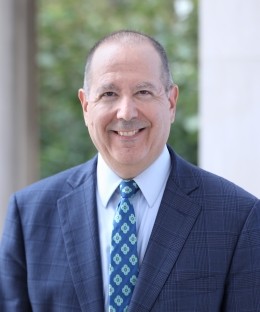
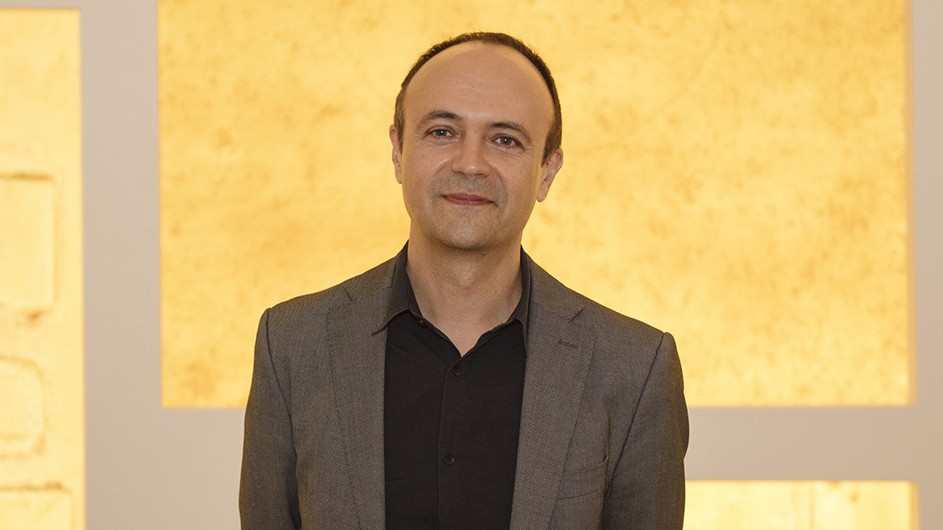
Rodolfo de la Garza

Columbia has named Rodolfo de la Garza, an expert on Latino political behavior and immigration, as a full professor in its Department of Political Science. De la Garza, most recently at the University of Texas, Austin, begins his tenure at Columbia in the fall 2001 semester.

"Professor de la Garza has an outstanding record of scholarship in both Latino political behavior and immigration," said President George Rupp. "He is a welcome addition to the Columbia community."

"With the growth of the Latino population in the United States, Professor de la Garza's research is vital to the field of political science," said Provost Jonathan Cole. "He will undoubtedly add to the stature of the Department of Political Science and the University as a whole."

In addition to his appointment in the Department of Political Science, de la Garza will continue his work for the Tomas Rivera Policy Institute, a think tank housed at California's Claremont Graduate University that conducts policy research on issues affecting Latino communities. De la Garza is vice president of the Institute, which will now have affiliations with Columbia, Claremont and the University of Texas, Austin. He will also form a center to study immigration and immigrants, which will be part of Columbia's Institute of Social and Economic Research and Policy

"We are delighted Professor de la Garza will be joining the Columbia faculty," said David Cohen, vice president for arts and sciences. "His well-known research on Latinos' views and activities in political and policy spheres will bring an important new dimension to Columbia's distinguished Department of Political Science. In addition, the center he will establish for the study of immigration will enhance ISERP."

"Part of my work continues to be examining whether Latinos have a political agenda that is different than the so-called American agenda," de la Garza said. "And if so, does it undermine or does it broaden it? The fact that Latinos may have a different political agenda doesn't mean it's threatening to the nation as a whole. In foreign policy, I am studying to what extent do Latinos have foreign policy concerns that broaden or undermine the standard definition of the national interest."

De la Garza, named one of the 100 Most Influential Hispanics by Hispanic magazine in 1998, has been an election observer for contests in the Dominican Republic and Mexico. His co-authored works include "Awash in the Mainstream: Latinos and the 1996 Election" (Westview 1998), "Making Americans, Remaking America: Immigration and Immigrant Policy" (Westview 1998) and "Barrio Ballots: Latinos and the 1990 Elections" (Westview 1994). He has also co-edited "Latinos and U.S. Foreign Policy: Representing the Homelands" (Roman and Littlefield 2000), "Bridging the Border: Transforming Mexico-U.S. Relations" (Rowman & Littlefield 1997) and "Ethnic Ironies: Latino Politics in the 1992 Elections" (Westview 1996).

De la Garza noted the foreign policy implications of the Bush Administration's consideration of a proposal to grant selected undocumented immigrants from Mexico and other nations legal status in the United States. "It is clearly in American interests to support the Vicente Fox regime in Mexico," he said."And central to that is helping Fox to deal with the needs of those illegally crossing the border. Unlike prior presidents of Mexico, Fox is unwilling to let the U.S. keep the issue off the table. He put it on the table, and it's the centerpiece of his foreign policy agenda."

In studying Latino political behavior, de la Garza has found common threads among this heterogeneous population.

"It is a linguistically homogeneous population that is essentially Catholic and whose countries of origin have a common history of an antagonistic relationship with the United States," de la Garza said. "There are some issues uniting them. What they really share is an immigrant agenda: they want the opportunity to work and to advance for themselves and for their children. They also support democracy in their homelands and favor U.S. economic development in their homelands.

"However, once you get past some broad issues, you begin to run into some differences," he added. "The Cuban Americans have a more conservative agenda on foreign policy, which is central to them. The Mexicans are the dominant group because they make up two-thirds of Latinos in the U.S. But Mexico is not very important to most Mexican Americans. Mexican Americans celebrate Mexico but they don't engage Mexico on policy issues. The country is more important to the Bush Administration than to Mexican Americans."

Published: Aug 02, 2001
Last modified: Sep 18, 2002


Search Columbia News    Advanced Search  Help

Phone: 212.854.5573    Office of Public Affairs