

Low Plaza

Doris Duke Clinical Research Fellows Begin Work at Columbia's Medical School

By Bernard Goldstein

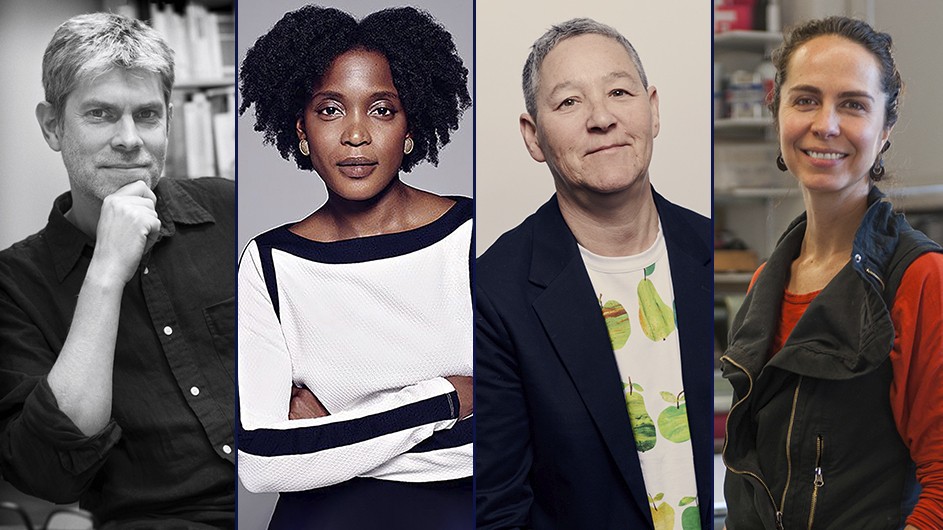
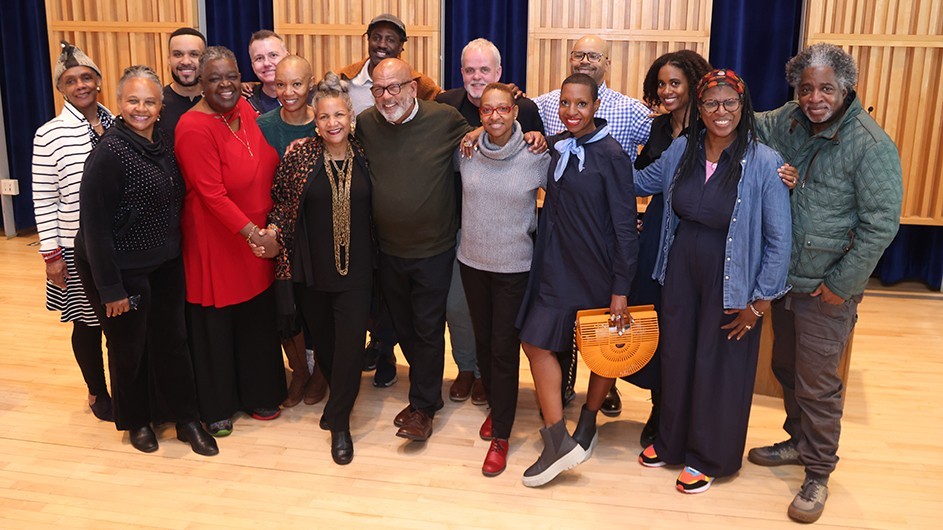
Top Row: (From Left) Alexander Optowitsky, Brian Su, Alexander Coon and Daniel Sahlein.
Bottom Row: (From Left) Elizabeth Gerrard, Grace Kim, Micelle Denburg and Stephane Conte.

For medical student Brian Su research has always been a passion. As an undergraduate at Duke University, he co-founded the National Journal of Young Investigators, which provides a forum for young researchers to publish their findings. He also interned at the National Institute for Child Health and Human Development at the National Institutes of Health. Even as a medical student he has found some time to work on some short-term laboratory projects.

But his rigorous medical school schedule leaves little room for full-time research, and that's what makes Su the perfect candidate for the Doris Duke Fellowship program that begins this summer at Columbia University's College of Physicians and Surgeons. The Doris Duke Fellowship in clinical research, a national program based at seven medical schools across the United States, gives medical students the opportunity to spend a year away from medical school classes to focus on clinical research- the kind of research that develops and tests new cures and treatments for disease. Clinical research is vital because it helps separate the efficacious cures and treatments from junk science, and the program helps cultivate the next generation of physician-scientists who will do that work.

"The idea is to take lab discovery and translate it into real cures," said Joan Spero, Columbia Trustee and president of the Doris Duke Charitable Foundation, "and hopefully have the fellows consider clinical research as a career." Among these cures could be the cutting-edge treatment for hand lacerations that Brian and his mentor Dr. Melvin Rosenwasser will test in clinical trials this year.

The fellowship process began when the foundation invited 25 medical schools to apply for fellowships in clinical research. The foundation looked for schools with exceptional faculty to mentor the fellows and a strong funding commitment to clinical research. Columbia was selected along with Washington University in St. Louis, the University of California at San Francisco, the University of Iowa, Harvard University, the University of North Carolina at Chapel Hill, and the University of Texas Southwestern Medical Center. In addition to the Duke funding, which supports four students, Columbia has added funds to support an additional five fellows, making this the largest program in the country.

This year, six students from Columbia's medical school will join three other medical students from peer institutions for a year of intensive research involving human subjects. The six Columbia students involved in the program are David Horgan, Brian Su, Grace Kim, Alexander Optowitsky, Stephane Conte and Alexander Coon. They are joined by Daniel Sahlein (Albert Einstein College of Medicine), Elizabeth Gerrard (Mount Sinai Medical School) and Michelle Denburg (Cornell University).

The participants have all finished their third year of medical school and will take a year off from classes to concentrate on research. They will be paired with mentors--physician- scientists in the medical school-- based on their interests. Donald Landry, associate professor of medicine and director of clinical pharmacology and experimental therapeutics, will oversee the program, and Jaime Rubin, assistant dean of research administration, is the program administrator.

The group will be working on an array of projects, from osteoporosis in the Asian American community to a cutting-edge treatment for aneurysms.

For example, Brian Su and his mentor Melvin Rosenwasser are testing a new device to treat hand lacerations. The Teno-Fix device, which was developed by the Ortheon Corporation, will reduce the risk of post- operative rupture of the tendons, allowing patients to mobilize their hands faster after surgery. Faster mobilization of the hand can increase the odds of regaining full movement.

Others, like Alexander Optowitsky, are using technology to research disease on a broader scale. Optowitsky is working on developing a database to identify risk for osteoporosis in the Asian American community. The current database is based on the bone mass of post-menopausal white women and does not provide an accurate benchmark for other groups. Studies have shown that Asians have a lower bone mass density, but also a lower risk for fracture. This phenomenon seems to refute the current standard which associates low bone mass with a high risk for fracture. The database will help doctors accurately identify members of the Asian American community at risk for osteoporosis. Optowitsky added that similar research was needed in other minority communities as well.

Grace Kim, who is working with Professor E. Sandor Connolly in the nuerosurgery department, will be researching ways to control brain damage in patients who have had aneurysms. They will be administering a drug, previously used for kidney stones, which should neutralize a neurotoxin responsible for the damage. This will help control a good deal of the brain damage that results from an aneurysm.

Also involved in research related to aneurysms is Alexander Coon, who is working alongside Professor Connolly investigating the efficacy of a new treatment to prevent vasio spasms in patients with aneurysms. Vasio spasms, which are contractions of the central nervous system, are the leading cause of death in aneurysm patients.

Two fellows, David Horgan and Stephane Conte, are examining various methods for treating tumors. Horgan's study focuses on tumors in the pineal region of the brain. He will be analyzing case studies to determine the most effective method of diagnosis and treatment of these tumors. Conte will be researching treatments for tumors in the colon. His study will try to find ways to prevent post-operative immune system suppression with a vaccine and an immune stimulator administered before the operation. This pre-operation injection could help patients fight off any remaining tumors and prevent recurrence of the cancer.

The fellows will present their findings to the group at the conclusion of their year and submit them for publication.

It is the combination of innovative research and patient interaction that attracts these students to clinical research. Su noted that while lab work is certainly important, "clinical research is less theoretical and more hands on."

Horgan added, "The research helps you to see larger patterns in the disease, while the human interaction makes you conscious of the patient and the seriousness of their conditions."

In addition to the extensive research, the fellows will take several courses during the year designed to introduce them to all aspects of clinical research. They will take biostatistics and epideimiology at Columbia's Mailman School of Public Health. In addition they will follow residents on rotations at the Columbia's Irving Center for Clinical Research and they will learn about grant writing, research ethics and the protection of human participants.

"This is a wonderful opportunity that will provide medical students with invaluable training and experience in clinical research," Dr. Landry said, "The pool of physician scientists has been declining, while at the same time, demands on clinical researchers are increasing. We are grateful to the Doris Duke Foundation for having the insight to foster programs that will encourage students to consider clinical research in its most sophisticated form."

Published: Aug 22, 2001
Last modified: Sep 18, 2002


Search Columbia News    Advanced Search  Help

Phone: 212.854.5573    Office of Public Affairs