


Low Plaza

Columbia Assists with Expertise, Equipment, Supplies in World Trade Center Relief

By Suzanne Trimel

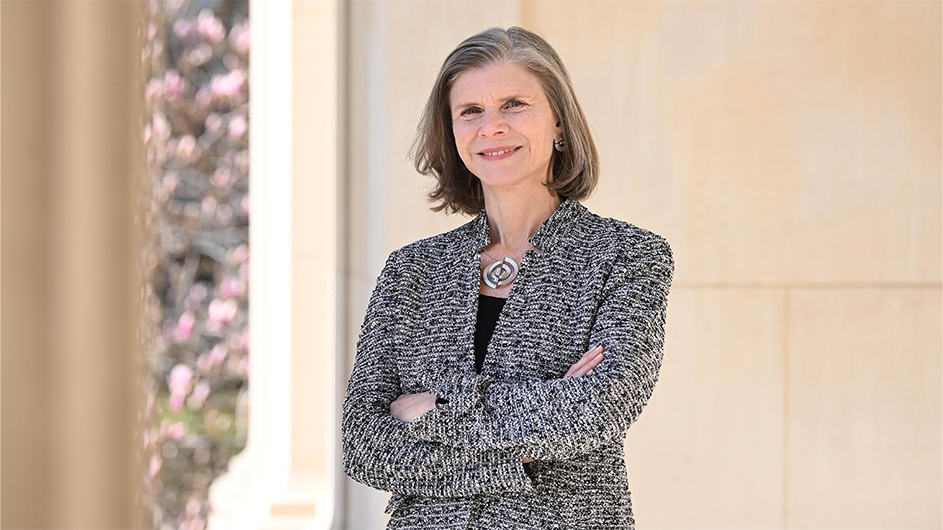
Within an hour of the terrorist attack on the World Trade Center, Columbia convened a crisis management group to assess the situation and mount the University's response. Led by President George Rupp, the group included Barnard President Judith Shapiro, Provost Jonathan Cole, Executive Vice President Emily Lloyd, Chaplain Jewelnel Davis, the school deans and representatives of many administrative areas, including security, facilities, health services, the counseling service, student affairs, telecommunications and AcIS.

Classes were cancelled on Tuesday as faculty, staff and students, like all New Yorkers, coped with shock and sorrow over the devastation seven miles away. The decision was made to resume classes on Wednesday to help restore structure to campus life, although many classes turned to discussion of the tragedy.

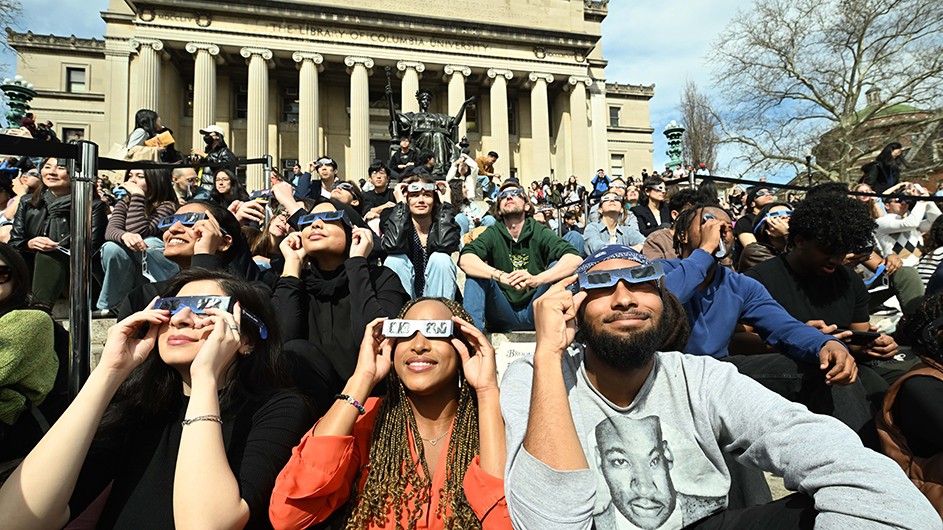
In a statement issued Tuesday, Rupp stated:"We are shocked and saddened by the horrible acts of violence committed today in New York and across the nation We extend our deepest sympathies to those who have had family and friends touched directly by these cruel deeds. We will work as hard as we can to help each other through this very trying time." The Office of Student Services immediately established a clearinghouse for information in a tent on Low Plaza to direct students, staff and faculty to counseling, accommodations for those stranded by the emergency and volunteer opportunities to aid the rescue effort. Athletic contests and other student events, including the Columbia-Fordham football game on Sunday, were cancelled.

Students lined up to donate blood and began organizing donations of fresh clothing, towels and toiletries for rescuers while campus security officers quickly delivered the supplies to police command posts near the devastatation seven miles away from Morningside Heights. Campus operations lent special firefighting and heavy construction equipment of its own to fire and police units, then purchased new crowbars, rope, hard hats and other items to meet the increasing need at the attack scene. The athletic department opened its showers at Baker Field to state police troopers on special patrol duty around the financial district. Knocked off the air by the loss of a transmitter at the Trade Center, the student-run WKCR radio station offered its studios to New York City's National Public Radio affilialte, WNYC, whose own facilities near the crash site were temporarily without power. International affairs scholars who have devoted their lives to the study of terrorism, the Middle East and related fields held briefings and symposiums to try to help the country understand what one of the scholars called "the largest, best-organized terrorist incident in world history."

Two ecumenical services led by the University Chaplain, Rev. Davis, were held at St. Paul's Chapel, one on Tuesday and another on Friday, the National Day of Prayer and Remembrance At Friday's service, Rupp said:"No community in this country or in any other country is exempt" from the tragedy in New York City," said Rupp. "We have all been diminished by these terrible deeds. We are fearful as we see the full horror of how distorted human motivation and action can become. And we must go on guard that we do not in turn also become vehicles for self-delusion and hatred."

Clergy met with students who needed spiritual support. Students organized candlelight vigils on Low Plaza. On Thursday, Marcus Beleyer, an art history student, lined College Walk with a 50-foot butcher paper letter addressed to downtown relief workers. As students walked past Low Library on their way to and from classes, they penned their thoughts and thanks – and even poems – to the rescuers.

Zvi Galil, dean of the engineering school, sent an email to faculty urging that they accommodate students as they cope with the enormity of the tragedy. "With all efforts to keep on teaching, we should not overdue it," he said. "What happened is huge and most of us haven't comprehended it yet."

The University administration and many individuals in the community immediately responded by offering special equipment or expertise to the official rescue effort, along with concern and comfort to their colleagues, classmates and fellow New Yorkers. Doctors, nurses and other medical staff at many of the University's teaching hospitals were on special mobilization in the hours immediately after the attacks to receive the injured. Columbia doctors sped to the scene to tend to the injured.

More than 15 fourth year medical students at Columbia had volunteered at the rescue site and mental health professionals at Columbia Presbyterian Medical Center were organizing volunteers to assist relief agencies, such as the Red Cross. In addition, the Columbia Health Sciences campus was collecting bottled water, underwear, bandages and other items for the relief workers.

Throughout campus, conversations focused on the attacks as a variation on the question – "Are your family and friends okay?" – became a common greeting between friends and colleagues.

As Rupp met with his cabinet and other senior administrators to determine immediate security and other concerns, students were urged to call home to let family know they were allright. With telephone disruptions throughout the city and beyond right after the attacks, many students relied on email and some took advantage of a special internet phone connection set up by technology experts at Columbia's engineering school.

Dr. Rupp, in an email and voice mail to the Columbia community, said while classes would not meet, faculty and staff would be available throughout the day and into the evening to students who needed support during the crisis. "Many members of our community are hurting directly from this tragedy," Rupp wrote. "They have partners, other relatives and friends who worked in the Trade Center. Our hearts go out especially to them. But along with them all of us also are touched by these horrible acts. Whoever is behind them is intent on driving us apart, dividing us, turning us against each other. So this is all the more a time when we must come together. We are a community that encompasses and affirms diversity. Now more than ever we must hold fast to our ideals of inclusiveness and mutual support."

At the School of International and Public Affairs, Dean Lisa Anderson, Professor Richard Bulliet and Gary Sick, acting director of the Middle East Institute, convened a forum "After the Attack." Sick, who was near the World Trade Center and witnessed what he called the "largest terrorist incident in history," said the U.S. government had to be particularly cautious in its response and warned against any action that kills thousands of innocent citizens.

Although the numbers of casualties among students, their families, or alumni was not known campus wide, the Business School was feared to be the hardest hit. Over 100 Business School alumni worked in the twin towers and nearly 500 in the immediate area. The school was working to establish contact with these alumni and their families. Galil said a check of its alumni turned up 48 who listed their work address in the World Trade Center. He reached 20 who survived and found two missing.

Many expanded services were available to meet needs on campus: temporary housing on campus for staff, students and faculty who could not reach home as the city closed bridges, tunnels and other transportation links; special group counseling programs and sessions in dormitories to help students cope with the tragedy. "Every one of us is directly affected," said Dr. Richard Eichler, director of psychological counseling at the campus Health Service. "There are very few people who can shrug this off." He said while many found comfort in the community of friends, others needed time alone, while still others would rebound by throwing themselves back into their work or as volunteers in a community effort. "There is a feeling of helplessness and to find a way to feel we are in control is life-affirming and reminds us that we are part of a community."

In addition to individual counseling for students who lost loved ones or for those who witnessed the horrific attack first hand, Eichler and his staff reached out to students in residence halls and organized volunteers from the School of Social Work, and the Health Sciences campus to counsel staff, faculty and the community, as needed.

The security department remained in close contact with the Morningside Heights police precinct to guide its campus precautions.

Mark Burstein, vice president for facilities management, said at the request of the police and fire department, the University provided a stockpile of fire and construction equipment to the rescue effort including crow bars, flashlights, heavy rope and brooms and other items, and he was authorized by President Rupp to spend another $30,000 to supply additional items needed by the city. A University mechanic also joined the effort by fixing a diesel engine on city fire equipment and the University provided new office space to a city development agency in the World Trade Center.

Hundreds of students lined up at local hospitals to donate blood, business school students put up a crisis webpage to link students with volunteer opportunities and many approached administrative departments to see how they could help. But as the city organized its own efforts with skilled rescuers and other professionals, the hours passed with no clear way for many individual students to help the relief efforts downtown. One Columbia College senior took matters into her own hands. Talia Poy's uncle, aunt and other family members had escaped the attack unscathed and she said she had to help. She went to the Jacob Javits Convention Center, a command post for the relief effort, worked through the night and determined that the workers on the scene needed fresh clothing, work gloves, boots and other supplies, such as aspirin and eye drops, that were not available. Joined by classmates, she called local businesses, whose response was overwhelming, and with Facilities Management and Security personnel, delivered a steady supply of items to the command center.

"Talia did all this on her own," said Gene Awakuni, vice president for student services. "She is a testament to the commitment of our students who are willing to help out in this time of great need."

WKCR was knocked off the air when the Trade Center collapsed with transmitting towers atop the stricken building. As the station sought a new location for the signal, it opened its studios in Lerner Hall to WNYC, which has lost its broadcasting ability by the power disruption in the area near the attack.

At the School of General Studies, which enrolls older students, three students were directly involved in the rescue effort. Chris Rinn, a junior, works as an emeregency medical services tour chief at Jersey City Medical Center, where he coordinated search and rescue efforts at one of the city's command centers. Sophomore Wayne Thorsen was called up by his National Guard unit to assist in the rescue effort as was Tom Simmons, a junior who is a New York City firefigther.

Published: Sep 17, 2001
Last modified: Sep 18, 2002


Search Columbia News    Advanced Search  Help

Phone: 212.854.5573    Office of Public Affairs