







 |
|
Jingyue Ju
|
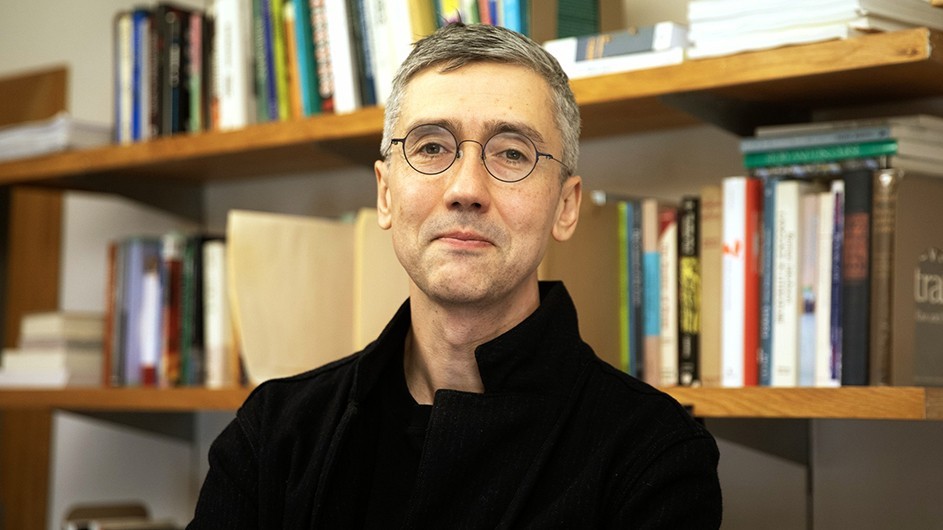
Jingyue Ju, associate professor in the Department of Chemical Engineering and Applied Chemistry and head of DNA Sequencing and Chemical Biology at the Columbia Genome Center, has received a $625,000 Packard Fellowship in science and engineering for his work in novel chemistry for sequencing the human genome. Ju is Columbia's sixth recipient of the Packard Fellowship since its inception in 1988, and is the only faculty member in chemical engineering nationwide to receive the prestigious award this year.
The five-year fellowships from the David and Lucile Packard Foundation support the most promising science and engineering researchers at universities across the United States. This year, 24 Packard Fellows were selected by a panel of nationally recognized scientists and engineers from 100 young faculty members nominated by their university presidents.
Ju's research is focused on the design and synthesis of novel molecular tags for biological labeling and imaging, and developing new technologies to study problems in bioscience, with a particular emphasis in the area of genomics. Ju tackles fundamental scientific problems with a unique combination of chemistry, engineering principles and experimental biology. He is the holder of 14 U.S. patents in the area of genomic analysis technologies. His work has led to major scientific and technological breakthroughs in biomedical sciences.
As a U.S. Department of Energy Human Genome Distinguished Postdoctoral Fellow at the University of California at Berkeley from 1994 to 1995, he was the co-inventor of the fluorescence energy transfer labeling technology which facilitated the development of the high-throughput capillary-array DNA sequencers. Both the fluorescence energy transfer reagents and the capillary-array DNA sequencers are the seminal technologies driving the high-throughput DNA sequencing projects worldwide. Science magazine recently cited this innovation as a landmark in the history of human genome research.
As a Senior Scientist and Director of Chemistry and Assay Development at Incyte Genomics from 1995 to 1999, Ju led a group for the research and development of new DNA sequencing chemistry and bio-analytical instrumentation, resulting in the issuing of five U.S. patents and the establishment of a state-of-the-art genomics technology platform. With Ju's effort, Incyte was the first genomics company to implement the use of the energy transfer reagents and the capillary-array DNA sequencers for high-throughput genomics research. These technology platforms were subsequently adopted by researchers in the Human Genome Project and the private sectors to complete the draft sequences of the human genome.
Since joining Columbia in 1999, Ju and his group have invented a Combinatorial Fluorescence Energy Transfer Labeling Approach for multiplex genetic analysis that uses a limited number of fluorescent molecules to create a maximum number of fluorescent tags. These novel fluorescent tags overcome a major limitation of the individual fluorescent molecules and have wide application in multiplex DNA sequencing, and genome-wide chromosome deletion and insertion analysis. The Ju group also invented a novel DNA sequencing chemistry that uses solid phase capturable dideoxynucleotides and mass spectrometry. This method produces accurate and digital genetic sequence information with rapid speed, solving the long-standing problems of using mass spectrometry for DNA analyses. Two other inventions from the Ju group involve the use of photochemistry, mass spectrometry and engineering microfabrication for high-throughput parallel imaging of DNA/RNA sequences in chip and nanoscale devices. One of the greatest challenges of the post-genomic era is the development of a high throughput approach to generate precise genotypes and detect differences in DNA sequences. The inventions from the Ju group contribute significantly to the efforts to meet this challenge, ultimately leading to detection, diagnosis and treatment of common inherited disorders.
At the Columbia Genome Center, Professor Ju has been engaged in several important biological and disease gene discovery projects in collaboration with Nobel laureate Professor Eric Kandel and other faculty members from the College of Physicians and Surgeons. Ju has developed two new courses in genomics for the genomic engineering education program at Columbia to introduce genomic science and technology to chemistry and engineering students, and chemical science and engineering principles to biology students.
|