



|
|
Donald Keene
|
When Donald Keene's anthology of Japanese literature was completed in 1956, there were, as poet and essayist Kenneth Rexroth observed at the time, only two similar collections available -- one published in 1899, the other in French -- both of which were no longer considered to be reliable translations.
Fifty years and an estimated 500,000 copies later, Keene's collection remains a classic in its field, the single-most important work in introducing Japanese literature to the English-speaking world.
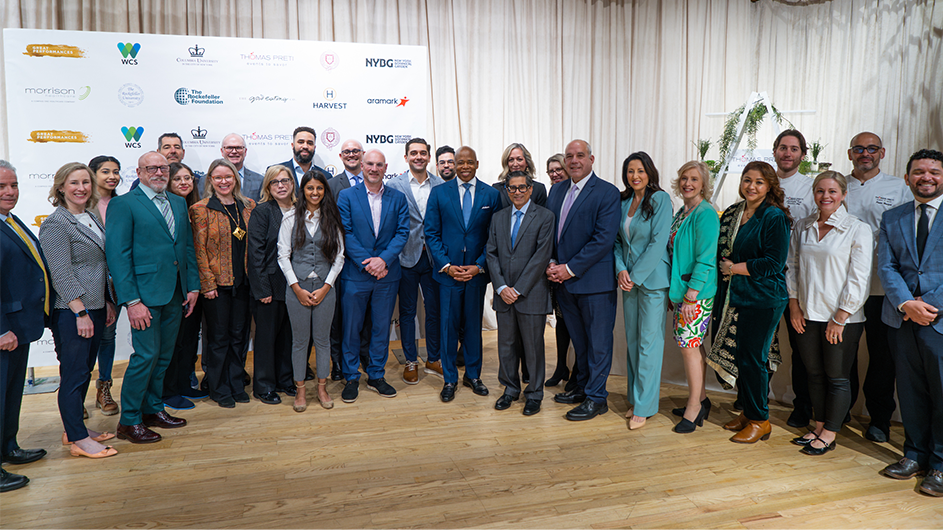
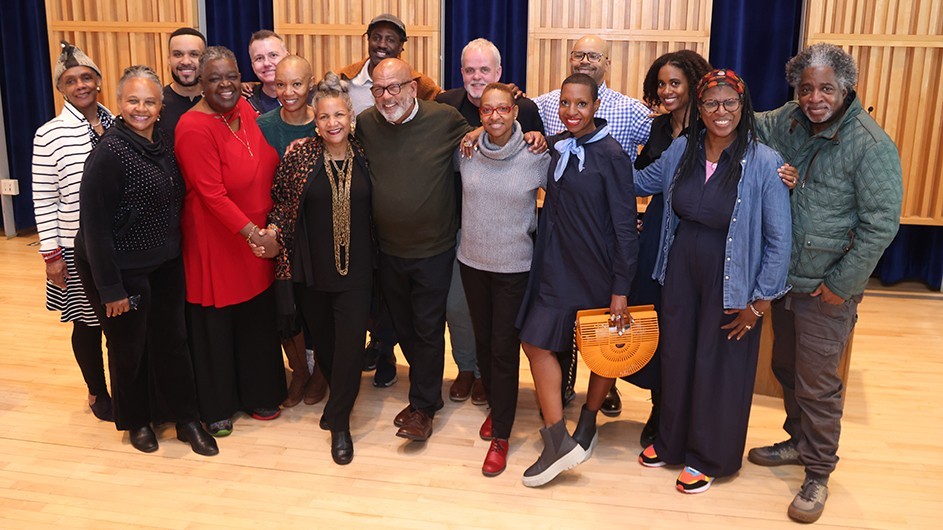
Last month, around 100 of Keene's colleagues and former students, Japanese diplomats and representatives of commerce gathered at the C.V. Starr East Asian Library to pay homage to Keene on the occasion of the 50th anniversary of his groundbreaking anthology and of the 20th anniversary of the center created and named in Keene's honor at Columbia, the Donald Keene Center of Japanese Culture (DKC).
At 83, with some 25 books in English on Japanese topics and some 30 books in Japanese (some translations from English), Keene is considered a living treasure on both sides of the Pacific.
In written comments provided at the reception, Kenzo Oshima, Japan's permanent representative to the UN, called Keene's scholarship "legendary": "Donald Keene is recognized as one of the greatest living interpreters of Japanese culture."
Keene's colleague and former student, Carol Gluck, the George Sansom Professor of History and a professor of East Asian languages and cultures, seconded the ambassador's words, enthusiastically declaring, "Everybody in Japan knows Donald Keene." By way of illustration, she reminisced about the time when she was scaling a remote mountaintop in northern Japan and her fellow hikers asked what she did for a living. She told them she worked at Columbia, to which they responded in an excited chorus: "Oh, Donald Keene!"
"There is no one like this man," Gluck said. "He is a living national treasure, as people say in Japan."
Delivering a short address at the start of the reception, UC Berkeley professor of East Asian languages and cultures Susan Matisoff told of coming across a secondhand copy of Keene's anthology when she was a high school student and aspiring chemistry major.
Drawn more to its red-and-black cover than its contents, she nevertheless discovered in its pages her true calling. As witness to that conversion, she brandished her original copy of the anthology, duct-taped and dog-eared -- evidence of a book well loved.
Keene's long association with Japan began during World War II, when he studied Japanese language at the U.S. Navy Japanese Language School in California and then served as an intelligence officer in the Pacific region.
Among the accolades showered upon him by the Japanese government are the nation's second-highest honor, the Order of the Rising Sun, and the title of Bunka Koro-sha, or Person of Merit -- awarded annually to individuals who have made outstanding contributions to the advancement and development of Japanese culture.
Keene, who received a B.A., M.A. and Ph.D. from Columbia, has been teaching at the University for more than 50 years. Currently, he is University Professor Emeritus and Shincho Professor Emeritus of Japanese Literature.
Additionally, he serves as president of the center that bears his name. Founded in 1986, the DKC aims to advance the understanding of Japan and its culture in the United States through university instruction, research and public education. Another, equally important aim is to encourage study of the interrelationships among the cultures of Japan, other Asian countries, Europe and the United States.
"We celebrate the Donald Keene Center on its 20th anniversary for its contributions and for its continued commitment to excellence in the study of cultural diversity and in fostering the exchange of global perspectives," wrote University president Lee C. Bollinger in a letter of tribute, adding that the center has been an important asset to both Columbia and New York City. "It enlivens the study of Japanese arts and culture by bringing renowned artists, experts, and scholars to our campus and hosting many artistic and cultural events that are free and open to the public."
In recent years, the center has hosted such diverse speakers as poet and literary critic Ooka Makoto, writer and photographer Fosco Maraini, Nobel prize-winning author Oe Kenzaburo, distinguished architect Taniguchi Yoshio, noted film historian Donald Richie, composer Takemitsu Toru, Noh actors Kanze Hideo and Umewaka Rokuro, and the late novelist Shiba Ryotaro.
At the close of the Feb. 16 celebration, a representative of the Japanese Chamber of Commerce and Industry presented the DKC with a permanent display case to be installed on Campus Walk, within sight of Kent Hall and the Starr Library -- not coincidentally, the very path Keene takes on his way to classes.
For more tributes to Donald Keene and the Donald Keene Center, go to: http://www.donaldkeenecenter.org/.
|