







Home Help
 Academic Programs
 Research
 Libraries
 Medical Center
 Athletics
 Arts
 Events Calendar
 Prospective Students
 Students
 Faculty & Staff
 Alumni
 Neighbors
 About Columbia
 A–Z Index
 E-mail & Computing


Columbia News
Search Columbia News
 
Advanced Search
News Home | New York Stories | The Record | Archives | Submit Story Ideas | About | RSS Feed
War Games: A Provocative Theory of War and Peace

It is wrong to dismiss all the evils of the world as irrational, claims Israeli mathematician and 2005 Nobel laureate in economics Robert J. Aumann. Suicide bombers, for instance, are very rational. "They have a goal and they are ready to sacrifice themselves for a common cause," he explained, and only by facing up to this can we develop realistic strategies for handling war and other forms of violence, he said.

Aumann, who received the Nobel prize with Thomas C. Schelling of the University of Maryland for their work to "explain conflict and cooperation through game-theory analysis," delivered these thoughts at a lecture (video) earlier this summer at the Fu Foundation School of Engineering and Applied Science (SEAS).

Introducing Aumann, Zvi Galil (video), dean of SEAS, observed that game theory can be applied to many fields, from animal behavior to political science.

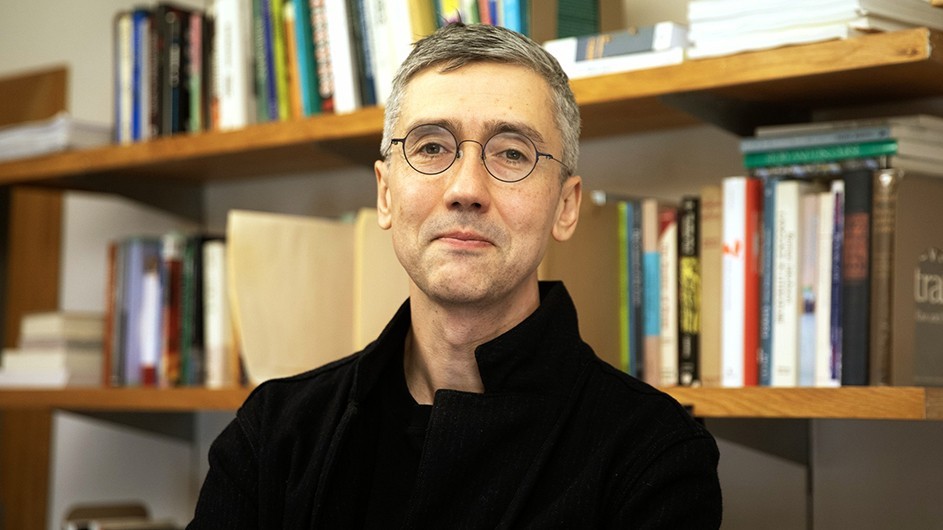
Robert J. Aumann
Aumann, who was born in Germany and came to the United States in 1938, received a B.S. degree from City College and a Ph.D. from MIT. Following post-doctoral studies at Princeton, he became an instructor at Hebrew University.

According to the Nobel prize citation, Aumann was the first to conduct a formal analysis of so-called repeated games -- situations in which players encounter the same situation over and over. Behavior patterns begin to emerge from the interactions in repeated games. From acts of altruism to those of vengefulness, repeated games help to make sense of seemingly irrational human behaviors.

When it comes to analyzing war, game theory suggests that scholars would have greater success if, instead of trying to resolve specific conflicts, they examined war as a long-standing phenomenon resulting from particular behaviors.

Or, as Aumann told his Columbia audience, war must be studied "like cancer," by "trying to understand what is happening in a cancer cell, not trying to cure an individual patient." And, "once you understand the causes, you can begin to try and cure it," he said.

For instance, game theory shows that countries are more likely to cooperate if their relations are characterized by frequent interactions and a long time horizon. Game theory also teaches that the chances of cooperation increase when "backed by the threat of punishment."

Disarmament, Aumann continued, "would do exactly the opposite," going on to cite the Cold War as an example of how the superpowers' stockpiles of nuclear weapons and fleets of bombers prevented a "hot war" from starting.

Concluding his remarks, Aumann quoted the passage from the biblical Book of Isaiah that has become the watchword of the peace movement: "And they shall beat their swords into plowshares, and their spears into pruning hooks. Nation shall not lift sword against nation, neither shall they learn war any more."

Aumann said he would caution against simplistic peacemaking, which, game theory shows, can have the opposite effect of causing war. "Nations must learn war in order not to fight," he explained. "You can have peace, but the swords must continue to be there."

Published: Jul 07, 2006
Last modified: Jul 11, 2006