






Jamal Joseph
|
Interviewed by Anne Burt
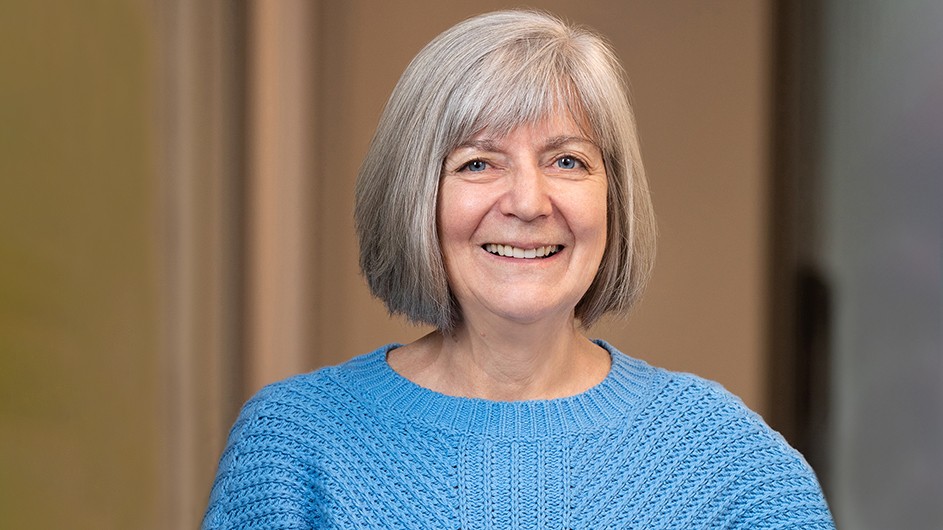
Jamal Joseph, the newly appointed acting chair of Columbia University’s School of the Arts film division, is a writer, director, producer, poet, activist and educator. He is artistic director of the New Heritage Theatre and Impact Repertory Theatre in Harlem, and has taught in Columbia’s film division for nine years. His new book, Tupac Shakur Legacy, published last week by Atria, is a biography of the rap/hip-hop artist Tupac Shakur. It is an “interactive biography,” with removable reproductions of Tupac’s handwritten lyrics, notebook pages, personal memorabilia, and a CD featuring rare interviews.
In this interview with Anne Burt of the Office of Communications and Public Affairs, Joseph discusses his personal history with Tupac and the Shakur family, as well as the strong connection he feels between Tupac’s biography and his own.
Q: What is your connection to Tupac Shakur and what inspired you to write this book?
A: I met Tupac’s mother, Afeni Shakur, in 1968 when I joined the Harlem chapter of the Black Panther Party. I was 15 years old, but I probably looked more like 12 or 13. Afeni, who was 22 or 23 at the time, tried to send me home because she thought I was too young. I wouldn’t go, so she took me under her wing and became like a big sister to me. She still is.
I was there for some of the good moments of Tupac’s life and, certainly, for some of the bad moments, too. In recent years, Afeni has known my work as a playwright and screenwriter—I wrote a screenplay about Tupac that she was happy about because she thought it was honest and poetic. She told the publisher, Atria, that she wanted me to write the book.
Q: How does Afeni feel about the way you portrayed her son as having certain contradictions in how he led his life?
A: Afeni raised Tupac in the spirit of being honest. A freedom fighter herself, she knew that the cornerstone of freedom is people’s right to free speech and self-expression. That Tupac would one day make a song that calls women “bitches” and the next day make an anthem for single mothers called “Keep Your Head Up” wasn’t a contradiction to her or to the people who knew him and how he was raised.
If the artist’s job is to be honest and to reflect and to shock and to push and to shake things up, Tupac was pure artist in that sense. Doing the book, I had the same challenge, the same standard from Afeni: look at my son’s life honestly. So that’s what I set out to do. And just by doing that, all of these different sides of him come out.
Q: How does your book compare with other works on Tupac’s life?
A: As I was writing Legacy, I read a lot of books on Tupac that went for the sensational element. They went for giving the public more of the Tupac that inflamed and shocked and titillated the imagination.
People think of hip-hop stars as kids who grew up in the streets, rhyming their way out of the ’hood. But Tupac really loved the creative arts since he was a kid. He was part of Harlem’s 127th Street Ensemble as an aspiring young actor.
In Baltimore, where the family moved after Harlem, Tupac immersed himself in studying ballet and Shakespeare at the Baltimore School for the Arts. This is the guy who coined the phrase “Thug Life,” but that’s not who Tupac was at the core of his being.
Now, if we made the book a giant Valentine’s Day card, that wouldn’t have worked either. So I talked about his flawed moments, too. He was addicted to marijuana; he often talked about getting clean, only to fall back into his addiction. I talked about the sexual assault case he faced. His life was very big and fast and Shakespearean in that way.
In the end, I hope that readers are able to make up their own minds about who they think Tupac Shakur was and what his legacy is.
Q: Did you discover anything that surprised you?
A: I had a chance to talk to Tupac when he was in prison when he had his first revelation about how he had been living to that point, about the anger and the weed and thug life. He said, “Thug life is dead.” He also predicted his own death long before he was shot and killed. He said, “I’m going to die. My only choice here is: do I want to go out like Malcolm X or like Tony Montana from Scarface?” He wanted to go out like Malcolm X. He talked about wanting to start programs for kids in the creative arts—which his mother has done since his death.
But then after he came out of prison, hip hop got even bigger, and he became its biggest star. What I didn’t realize was how he had started to clean up his health, break away, and start taking steps to become involved in community activities. I was surprised to find out how close Tupac actually got to moving in a new direction with his life.
There’s real wonder in my mind now whether his incredible output, something like 400 songs, was from a sense that he had only a finite amount of time left. Many people thought that, and I thought it, too, at the time. But now I think we had it wrong. When he got out of prison, Tupac had a three-album obligation to Death Row Records and its CEO, Suge Knight <http://en.wikipedia.org/wiki/Suge_Knight> (who posted his bail in exchange for producing albums on his label). Now I think he was trying to give them those records so he could move on. It was really Tupac saying: “I’m trying to do this so I can close these doors and move in a different direction in my life.”
That really surprised me—discovering how much he wanted to live at the end.
Q: You have a strong commitment yourself to working with youth in the creative arts.
A: Like Tupac, I spent time in prison—in Leavenworth in the 1970’s. Prison is a microcosm of society—certainly, the anger and the hatred in society is ramped up in prison. The men segregated themselves along racial lines. They stayed within their own boundaries and created forcible walls around themselves in terms of where they hung out in the yard, where they ate, how they moved. They stayed with their own kind.
So I started a theater company, first doing a play with only black prisoners about black history month. It turned out to be a play about prison life in general, and then Latino and white prisoners wanted to join. They could see there was no escape plot, there was no war, it was just art. And I began to see the power of art to bring people together to tell their stories.
I did theater in high school and then agitprop as part of the Black Panther Party and had worked a bit as an actor. But doing a play in prison, my first, was life changing for me: I found out how art could heal the human spirit.
Q: And nowadays you are involved with theater here in Harlem.
A: When I came out of prison, I met Vosa Rivers, who is the executive producer and a founding member of the New Heritage Theatre. He produced some of the plays I had written while I was in prison. I also worked as the artistic director of the City Kids Foundation for eight years, which gave me a chance to encourage young people to use music, dance and drama for getting out the word on their lives.
Nine years ago, we founded Impact Repertory Theatre in Harlem, very much based on the work of City Kids, using creativity as a way to empower young folks. Maybe they can’t change the circumstances of their lives, but they can write or sing about it and be heard. Whether they go on to have careers in theater or film or not, everyone is enriched and changed for the better because of this experience.
At Impact, we’re very proud that out of this Harlem-based program serving mainly poor families, we currently have close to 40 kids at universities and colleges across the country, ranging from community colleges to NYU, Yale and Brown.
Q: You’ve led such a rich and varied life. What does teaching at Columbia mean to you?
A: I’ve been at Columbia for more than nine years now and it’s still amazing to me that I’m here—even though I’m a professor of professional practice and acting chair of the film division—because Columbia was the place where we came to protest in the 1960s. I remember being up here many days when students had taken over the campus. We were demonstrating against the war in Vietnam or calling for political prisoners to be freed. I remember standing in front of Low Library on College Walk, right in front of the statue of Alma Mater, shouting: “Brothers and Sisters, if Columbia University won’t relate to the needs of the community, if they won’t denounce the war in Vietnam as a war of exploitation, if they won’t talk about the slumlords and police brutality in Harlem, if they won’t be relevant, then you’ve got to do more than take this place over—you’ve got to burn the damn place down!”
And, of course, that was the right thing to say. I had my audience screaming: “Power to the People! Power to the People!”
Now flash forward 35 years and here I am walking across campus one cold morning. No one is out chilling on the grass or hanging out on the steps, but I hear someone go “Psst!” And I look around and no one is there. So I take another step and I hear “Psst!” and I look around again and it’s the statue of Alma Mater and she looks at me and goes, “Oh, it’s Professor Joseph now, huh? I remember that speech when you said burn the damn place down!”
The amazing thing about Columbia—it’s also the amazing thing about American society and culture—is that, through the arts and through education, people get the chance to reinvent themselves. They get the chance to grow and prove themselves and explore new opportunities.
I am a good example of that. It’s amazing that I had the opportunity to come back to Columbia having been in the Black Panther Party, having been in prison (where I earned one of my degrees from the University of Kansas). To have gone through all of that and be back here teaching and working with filmmakers supports all of what I believe about education and creativity. I’m in a place where I can help nurture artists who will go out and make us think, and will someday make a difference. |