




|
Feb. 12, 2008
Q & A with Political Science Professor Fredrick C. Harris
Special from The Record
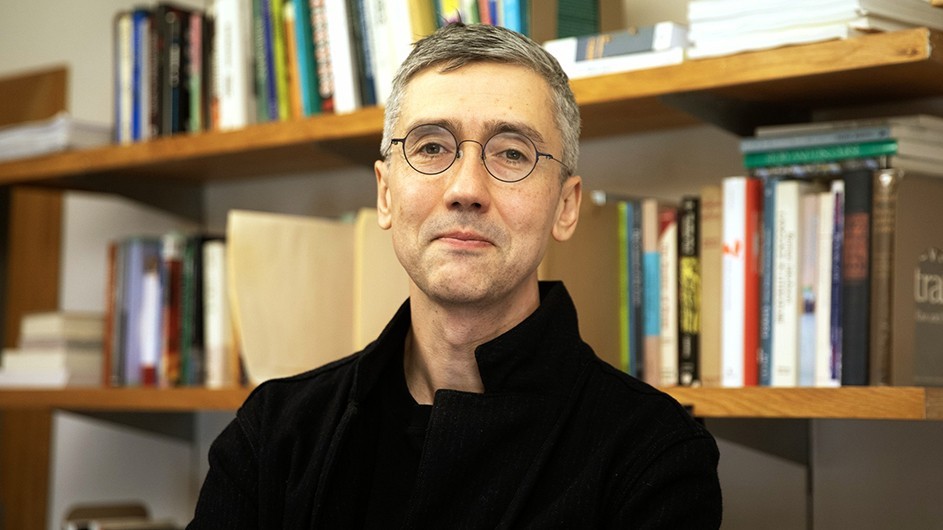
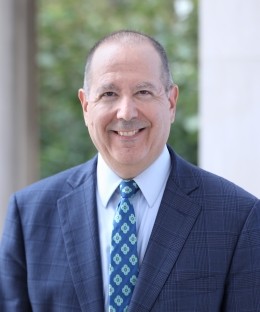
Professor Fredrick C. Harris
|
Professor Fredrick
Harris was involved in race and politics long before he
became an expert in the field.
After Atlanta elected Maynard Jackson its first black mayor in
1973, many blacks were hired in large numbers, including Harris’s mother, who worked in the
mayor’s office as a secretary and in human resources.
“I was socialized in a political environment that really got me interested
in politics because of the changes that were happening all across the country,
particularly in my home town,” Harris said. “In the household, family
members always talked politics.”
Harris’s life still revolves around race and politics, as he is
head of the newly created Center
on African American Politics and Society, part of the
University’s Institute
for Social and Economic Research and Policy. The
center, which opened in January, just released its first
study (pdf) exploring racial
attitudes toward the presidential nomination process. Among its
major findings, reported in a story last month: 76 percent of black
voters find a candidate’s
electability is one of the most important factors in choosing which
candidate to back, compared with 65 percent of whites.
Q. What is your primary goal for the center?
A. What I really want to do in this first semester is
to look at the political side. And that will [encompass] information
about the presidential election process and bringing together
scholars who may be interested in participating in cooperative
research within the center … and providing an intellectual
forum to talk about these different political issues in the presidential
process through a visiting speakers series. I really want to
develop a major think tank where Columbia, through this center,
will play a leading role informing the public as well as policy
makers about these social-economic conditions.
Q. Why is this new center essential to the University?
A. I want to develop an umbrella of scholars in
psychology, political science, sociology, law, economics and
urban studies. So to bring together this talent and to develop
both theoretically sophisticated work as well as work that will
have policy ramifications that inform conditions that affect
black communities … is good for Columbia. We have a broad
base of talented people who are distributed throughout not only
the college but the entire University.
Q. Has there been a greater focus on Democratic candidates
since one is African American and the other is a woman?
A. One of the most remarkable things about the Barack Obama
candidacy is that this is an African American running who is
not running on traditional issues that African Americans have
advocated for. In many ways it is a de-racialized black candidacy
unlike past presidential candidacies. The Rev. Al Sharpton, for
instance, and Jesse Jackson didn’t necessarily think that
they would win, but it was part of the agenda-setting process
on issues of civil rights, poverty, unemployment and affordable
housing—traditional Democratic issues. Barack Obama is
a break from the past because he is a black candidate who has
been able to raise money, whose base is not necessarily African
American but at the moment it seems to be college students. Barack
Obama represents the development, or it could be argued, the
maturing of black politics.
Q. How did you first get interested in politics?
A. I remember watching television during the Nixon impeachment
hearings and the proceedings were done by the judiciary committee.
There was this African American woman who gave this great speech
and she was a member of Congress and, I found out later, the
first black woman from the South to be elected to Congress. Her
name was Barbara Jordan.
Q. You are currently writing a book about black activism
in the wake of the lynching of 14-year-old Emmett Till. How
did that event change things?
A. When Americans think about the events that sparked the modern
civil rights movement they think of either the Supreme Court’s
1954 Brown decision or Rosa Parks and the Montgomery Bus Boycott.
But between these two events was the Mississippi lynching of
14-year-old Emmett Till in August of 1955. While scholars of
the civil rights movement have focused on the miscarriage of
justice—the two accused men who later confessed to the
murder were found not guilty by an all-white jury—few have
looked closely at the wave of activism in black communities that
took place in the fall of 1955.
The mixed emotions blacks felt—anger
and fear—were a catalyst for collective action in black
communities. African Americans contributed huge amounts of money
to the NAACP, at that time the most given in the association’s
history; held mass rallies in northern cities; picketed the White
House and the Justice Department; and linked Till’s lynching
to the injustices blacks were facing in their local communities.
The mobilization that took place in the response to Till’s
murder helped to build national support for Martin Luther King
and the yearlong Montgomery Bus Boycott that started in December
of 1955, just months after Till’s murder.
|