








Q: What is your opinion of the Chinese media and their discussion of the Olympics?
A: I look at comparative media systems, and I'm interested in the treatment of sports in different historical circumstances. The 1936 Olympics in Berlin, for example, was a complete whitewash. The Nazis removed anti-Jewish graffiti and signage in the attempt to hide the physical signs of oppression from visitors in Berlin.
Another controversial Olympics occurred 40 years later in the Soviet Union, which had just invaded Afghanistan, prompting a boycott organized by President Jimmy Carter.
Fast forward to Beijing: Some of the events simmering in the background have been China's crackdown in Tibet and Chinese trafficking of weapons for use in Darfur, which has prompted criticism from Human Rights Watch and others. The Chinese government will continue to argue that these issues have nothing to do with the Olympics. They want to put forth a positive international image, showcasing Beijing as a first-world city that has been physically transformed into glass and steel.
Q: Who are the media in China?
A: Indigenous Chinese press, both official and "hand picked," work under government control. There are many types of media in China, but the most cited government media are The People's Daily and Xinhua news agency. State television, CCTV (China Central Television) is aligned with the government but can reflect some independence in its programming, especially about regional issues. South China's news organizations exhibit more independence than their counterparts in Beijing. One example is Southern Weekend in Guangzhou, which has done extensive investigative reporting but recently suffered a crackdown. One medium that is often overlooked is local talk radio, which can be quite raucous and includes strong criticism of local officials.
The Chinese online environment is quite broad and diverse. Although the government closes down Web sites regularly, there is an ongoing "Chinese cat and mouse game" happening, in which sites that are shut down are quickly replaced by mirror sites. There are about 30,000 minders, or "cyber cops" who troll the Internet in China looking for problem Web sites. They utilize keywords, and worry more about Chinese-language sites.
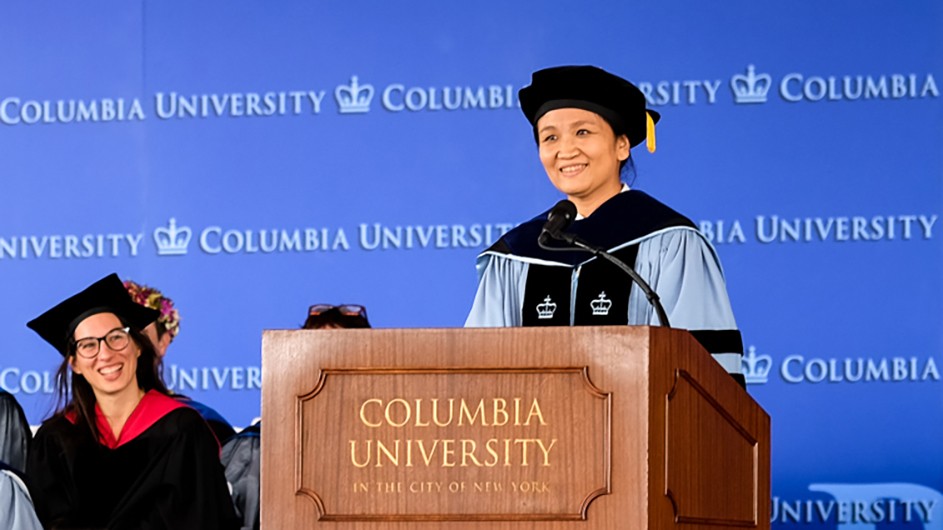
It's been fascinating to follow the Chinese media over the years, first as the director of the Committee to Protect Journalists and later, as an educator at Columbia. I've had the good fortune to work with Ying Chan, an extremely accomplished journalist who has made a huge impact on journalism education in China. After she founded a new media program at the University of Hong Kong, she went on to help establish others at leading Chinese universities, with the goal of promoting independent quality news media.
Q: Have there been changes in the Chinese media during the run-up to the Olympic Games?
A: I think the government's approach to propaganda has become a little more subtle. I saw one example a few months ago, featuring a Chinese Para-Olympian wheelchair-bound athlete. This young woman had been harassed by demonstrators in Paris as she carried the torch. CCTV produced a feature about her, using her plight as an argument against politicizing the games. The Chinese broadcast the piece internationally on the CCTV English satellite service. This was a case of the government being strategic and preemptive, in contrast to its more reactive style of the past.
Q: Will you be watching the Olympics?
A: I'll watch some of the Olympics, and will be also following some of the citizen journalism reports on Ground Report. You'll find a different mix of stories there. It will be difficult for foreign journalists to report anything beyond the sporting events they will have to get outside of the tent, and I'm confident that China will have more than enough "minders" to escort them around and limit their access. And I'll be rooting for Dara Torres—because I'm thrilled by the idea of a 41-year-old U.S. swimmer.
—Interview by Tanya Domi
© Columbia University