





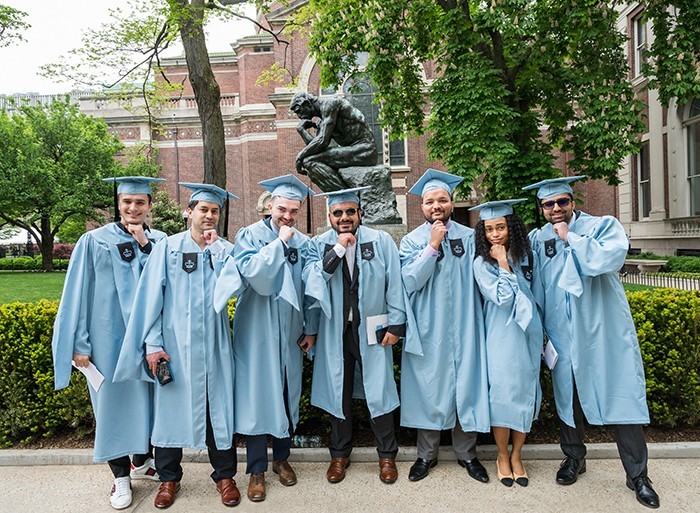


The Human Rights Clinic at Columbia Law School is designed to teach second-and third-year students, as well as foreign students, the basics of good legal practice. Along with exercises and simulations, research and writing, the clinic also teaches students how to interview clients, develop facts and organize cases and projects.

But what really makes the program come alive is the hands-on experience with active human rights cases, such as that of Gonzales vs. United States of America. Now, a third class of students is working on this domestic violence case, which has an unusual history. It stems from a 1999 incident in which the estranged husband of Jessica Gonzales kidnapped her three daughters, despite a domestic violence restraining order. The kidnapping was reported immediately, but police never arrested her husband, who was shot and killed after he arrived at the police station and opened fire. The bodies of her children were found in his truck.
After moving through the lower courts, the U.S. Supreme Court ruled in June 2005 that Gonzales was not entitled to police enforcement of her restraining order under the due process clause of the Constitution. Her disappointed lawyers, who had assembled hundreds of friends-of-the-court briefs and include Caroline Bettinger-Lopez, deputy director of Columbia's Human Rights Institute, decided not to give up. They have taken the case to the Inter-American Commission on Human Rights, a body that promotes human rights within the Organization of American States. In agreeing to hear the case, the commission held in October 2007 that the U.S. is required to protect individuals from private acts of violence. It will rule some time next year whether the human rights of Jessica Lenahan (her name now that she has remarried) were violated.
"This is all about creative advocacy and about ways to persuade the federal and state governments that they are accountable for preventing domestic violence in this country," said Bettinger-Lopez, who brought the case with her when she joined Columbia in 2006 from the American Civil Liberties Union. In addition to this case, the law clinic students are working on several others, including one against the Dominican Republic for the mass expulsion of Haitians, allegedly because of the color of their skin. Another case challenges the imposition of life-without-parole sentences for 40 juveniles in Michigan. In all, the clinic is involved in more than 10 active cases and projects this year.
In the Gonzales case, the central issue is whether local police departments have a duty to enforce restraining orders, and what remedies are available to victims when the police fail to protect them and their children. In October, Lenahan appeared before the Inter-American Commission at a hearing in Washington, D.C., to make her statement on the merits of the case. The commissioners, who came from a panel of seven experts in human rights, heard testimony on whether the police department's failure to protect Lenahan and enforce the restraining order was a violation of U.S. international obligations under the American Declaration of the Rights and Duties of Man.
The commission's decision won't necessarily be binding on the U.S., but the training for the students who worked on the case will have a lasting effect. This year's group was assisted by several from last year's clinic who stayed on. "It's a challenging legal case; there's always plenty of work to go around," Bettinger-Lopez said. The students also get to know Lenahan through the case files and will get a chance to meet her when she comes to the school to speak about the case. "It's a really rewarding experience for clinic students to have contact with real clients," said Bettinger-Lopez. "Especially somebody who is so very powerful and empowered and an inspiration to all of us."
© Columbia University