











































Go to Columbia Web


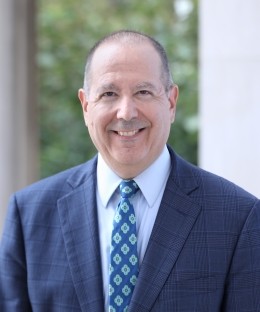
Photo of Ellen Smith
Ellen Smith, assistant vice president, represents and informs the Univesity on issues such as financial aid, Medicare and Medicaid, research funds and tax policies as they pertain to higher education.


Where to Find It

The Federal Relations Web is accessible on the Administration and Index pages of ColumbiaWeb.


The (Mostly) Good News
  • A $1,500 tax credit for the first two years of college
  • A lifetime learning credit
  • Cap on tax-exempt bonds is removed
  • Student loan interest deductions partially restored
  • Undergraduate student tax benefits restored, but graduate tax benefits are not
  • Penalty free IRA withdrawals allowed for education
  • Tax-free treatment of loan forgiveness
  • R&D tax credit extended
  • TIAA-CREF's tax exemption is lost

Record Banner
 VOL. 23, NO. 1SEPTEMBER 5, 1997 


Clinton Signs Two Bills Aiding Colleges and Students


BY ELLEN S. SMITH

There's good news from Washington: With strong bipartisan support, Congress passed, and President Clinton signed, two historic bills this summer:

  The Balanced Budget Act of 1997 (H.R. 2015) has created the biggest investment in higher education since the G.I. bill, and The Taxpayer Relief Act of 1997 (H.R. 2014) will give the U.S. its first balanced budget since 1969.

  Members of the New York delegation played key roles throughout the negotiations. The congressman from Columbia's own district, Charles B. Rangel (D-N.Y.)—the senior Democrat on the very influential House Ways and Means Committee—was key in the efforts in targeting more benefits to lower-income individuals. Senator Daniel Patrick Moynihan (D-N.Y.)—the senior Democrat on the Senate Finance Committee—was unwavering in his fight for tax provisions and for fair payment for medical centers. The entire New York delegation worked on issues of concern to New York, but Ways and Means member Rep. Amo Houghton (R-N.Y.) and Finance Committee member Sen. Alfonse D'Amato (R-N.Y.) worked closely with Moynihan and Rangel to make sure their tax-writing colleagues were aware of their concerns.

  The bill provides a host of new tax provisions and restores some portions of provisions that were eliminated in the 1986 tax act. Columbia's senior administrators, faculty, staff and students worked actively with the New York delegation and others on these issues. Included in the tax provisions were the following:

  HOPE Credit: A nonrefundable (available only if an income tax form is submitted) $1,500 tax credit is included for the first two years of college. Covering the first $1,000 in tuition and related expenses and 50 percent of the next $1,000, the credit is available for tuition and fees less all grants and scholarships for classes that begin after Jan. 1,1998. The credit is applied on a tax return and is phased out for single taxpayers with adjusted gross incomes between $40,000 and $50,000 ($80,000 to $100,000 for joint returns). These amounts are indexed (or adjusted for inflationary increases) after 2000. Reportedly, students, upon enrolling at college, will be required to fill out a tax form which will certify who claims them as a dependent.

  Lifetime Learning Credit: A "lifetime learning" tax credit is established for all years of undergraduate, graduate or professional education. The nonrefundable credit is equal to 20 percent of the first $5,000 (increase in later years to $10,000) in tuition and fees in years after the HOPE credit is taken. The credit is available for all tuition and fees less grants and scholarships, for classes beginning on or after July 1, 1988. It is applicable for the same income ranges as the HOPE credit.

  $150-Million tax-exempt bond cap: The bill repeals the $150 million cap on 501 (c )(3) tax exempt bonds for private institutions. This cap was imposed on private institutions in the 1986 tax act. Senator Moynihan and Congressman Houghton were the key sponsors of this bill.

  Student Loan Interest Deduction: The interest deduction eliminated in the 1986 tax act is partially restored. The bills allows an above-the-line (allowed for individuals who do not itemize deductions as well as those who do) student loan interest deduction which is phased-in to a maximum of $2,500 per year for up to 60 months. Starting in 1998, the maximum deduction is $1,000 and it is phased-in at $500 increments each year until 2001. Included in the eligible expenses are undergraduate and graduate tuition, fees and related expenses, and room and board. Expenses are reduced by scholarships and other tax-free benefits. The income phase-out range (indexed after 2002) is $45-55,000 for single filers and $60-75,000 for joint filers.

  Section 127: Despite a nationwide coalition of colleges, universities and businesses and the active participation of many Columbians, graduate student benefits were not reinstated. We will continue to work to see that this benefit is restored.

  Section 117 (d) saved: A Columbia-led coalition helped retain this benefit, which allows tax-free treatment of undergraduate tuition benefits for employees and their children and tuition waivers for graduate research and teaching assistants.

  IRAs: The bill allows penalty-free withdrawals from IRAs for undergraduate and graduate education, including tuition, fees, books, supplies and equipment beginning in January of 1998. The provision applies to the taxpayer, the taxpayer's spouse, child or grandchild. In addition, the Education IRAs established in the bill allow nondeductible contributions of up to $500 per child beginning Jan. 1, 1998. Earnings are tax-free if used for education expenses (room and board for students attending at least half-time, tuition, fees, books, supplies, equipment). The $500 annual contribution is phased out for contributors with adjusted gross incomes between $95,000 and $110,000 for single taxpayers ($150,000 and $160,000 for joint filers). If a HOPE or Lifetime Learning credit is claimed in a year, an individual would not also be able to take this withdrawal.

  Tax-free Treatment of Loan Forgiveness: Taxes would not be levied on individuals when their loans are repaid or forgiven by programs at not-for-profit institutions. The tax-free benefits apply for individuals engaged in public service. Columbia's law school has long sought this provision and law students involved in public interest work were key in promulgating it. This provision is activated upon date of enactment.

  TIAA-CREF tax exemption for pension reserves is repealed despite vigorous efforts on the part of many higher education organizations, institutions and individual beneficiaries. TIAA/CREF has stated that "...we intend to review the way we operate and make every effort to minimize the effect of this new tax."

  Research and Development Tax Credit: The credit is extended for 13 months from June 1 1997 to June 30, 1998.

  Child Tax Credit: The bill provides a $500 credit ($400 for taxable year 1998) for each qualifying taxpayer's child under age 17

  Empowerment Zones: The bill allows local governments to borrow money from financial institutions without interest to improve elementary and secondary schools. The borrowed money can be used for school repair or renovation, equipment purchases, course materials or teacher training. Schools in empowerment zones and enterprise communities would be the primary beneficiaries of the credit. To be eligible, a school must form a partnership with a local business. Qualified zone academy bonds will entitle certain institutions to a nonrefundable tax credit. In addition, the Secretary of HUD is authorized to designate two additional empowerment zones under current law and 20 additional empowerment zones with expanded tax incentives. Congressman Rangel was instrumental in the passage of these provisions.

  A summary of the Balanced Budget Bill follows: A number of significant provisions for medical education, nursing education and dental education were included in the bill. Vice President for Health Sciences Herbert Pardes hosted a New York delegation breakfast to describe our concerns. Among the provisions are:

  Removal of medical education from the amount paid to managed care companies: For five years, beginning in calendar year 1998, medical education payments previously made to entities that handled Medicare managed care will be carved out and paid to the entity providing medical education. Previously, these payments were made to the managed care company, even though there was no requirement that they contract with academic medical centers. This will mean an increase in funding for most medical centers. So-called disproportionate share payments (DSH) continue to flow to the managed care companies. Hospitals will be paid based on the number of Medicare+Choice or managed care enrollees discharged from a hospital.

  Voluntary Reduction of Residents: Hospitals in states other than New York will be allowed to voluntarily reduce their residents pending approval by the Secretary of Health and Human Services. New York's demonstration project began this program.

  Commissions: Two commissions will examine graduate medical education from different perspectives. The Medicare Payment Advisory Commission (MedPAC), which merges the two former Commissions (PROPAC and PPRC), will examine possible methodologies for making GME payments. This commission will consult with deans from allopathic and osteopathic schools of medicine and will examine among other issues the dependence of schools of medicine on service-generated income. The National Bipartisan Commission on the Future of Medicare will review and examine the financial condition of Medicare and will make recommendations about alternative methods of financing Medicare. Reports indicate that Senator Moynihan is hopeful that this commission will examine the potential for all payer funds to pay for medical education.

  Indirect Medical Education: Indirect medical education payments are reduced from 7.7 percent to 5.5 percent over a five year period. Original proposals would have reduced these payments in only two years—a major problem for hospitals in New York.

  Dental Residency Positions: Dental residency positions would be exempt from any caps imposed in Medicare formulas for medical education.

  Increased Medicare Reimbursement for Nurse Practitioners and Clinical Nurse Specialists: Effective Jan. 1, 1998, the restriction on settings for payments to nurse practitioners and clinical nurse special is removed

  Children's Health Initiative: a new state program is established to provide health care for children without health insurance. There will be three mechanisms for establishing the program: enhanced Medicaid funding; state health insurance programs, and direct services programs using up to 15 percent of funding or any other program for the first time since its passage, President Clinton exercised the line-item veto. Among the provisions he vetoed was one allowing New York flexibility in its fund-raising capabilities for matching Medicaid.

  For additional information, please contact Ellen S. Smith, assistant vice president and director of federal relations, ess9@columbia.edu, 854-3394,


webmaster@columbia.edu