








 |
| VOL. 23, NO. 1 | SEPTEMBER 5, 1997 |
|
UNIVERSITY UPDATE
Maintaining the Forward Momentum
s he noted in his commencement address on May 21, September marks the fourth anniversary of George Rupp's inauguration as president of Columbia. Following the natural four-year academic cycle, perhaps this is an appropriate time to look at the state of the University.
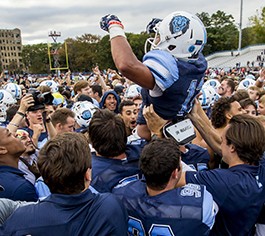
Very significant progress has been made in recent years in fundraising, in improvement of facilities and infrastructure, and in student and faculty recruitment. The accomplishments of our faculty in scholarship and research have been noted worldwide. The academic credentials of the College first-year class are the best ever. And the football team has become a source of great pride, enjoying its best season in half a century.
Still, much needs to be accomplished to ensure that our current momentum is carried well into the future, and these years have not been without controversy. A student protest over the pace of incorporating the study of ethnic cultures into the undergraduate curriculum ended peacefully, but not before some arrests occurred. There has now been much progress in this area of Ethnic Studies.
This summer, President Rupp and Columbia College Dean Austin E. Quigley reached an impasse over the direction of Columbia College and its relationship with Arts and Sciences, which resulted in Quigley stepping down. However, an agreement was quickly reached on a plan to move forward, and Quigley resumed his deanship.
Under the agreement, four administrative working groups drawn from the College, Arts and Sciences, and central administration will develop detailed action plans to further improve College admissions, residence life, advising, and fundraising. Rupp chaired the first meeting on July 10 and will convene the groups on a monthly basis. (See College advisement story, Page 6)
What follows is a snapshot of the University's general health, including data on student applications, fundraising, endowment growth and construction and renovation projects. Included are lists highlighting some of the new additions to the faculty and a handful of scholarly research projects, as well as a few of the accomplishments of individual schools.
ENRICHING THE FACULTY
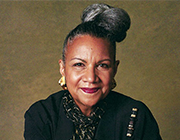
At the heart of the University the quality of its scholarship. In this regard, Columbia has grown and thrived. In the last four years, leading scholars from around the world have been drawn to Columbia. Among them: Simon Schama, the renowned historian and New Yorker critic, from Harvard; Samuel Danishefsky, the Wolf Prize laureate in chemistry from Yale; Patricia Williams, the legal scholar and author from the University of Wisconsin; Jon Elster, the distinguished political theorist from the University of Chicago; Kimberle Crenshaw, the authority on race, gender and law from UCLA; Manning Marable, from the University of Colorado, who now heads Columbia's Institute for Research in African-American Studies; Peter Eisenberger, the former director of Princeton's Materials Institute, who now heads Columbia's Earth Institute; Claudio Stern, the geneticist from Oxford University; Christopher Heyde, the statistician from Australian National University; Ira Katznelson, the political scientist from The New School; and Tony Heinz, the physicist and authority on the femtosecond from IBM.
In these four years, Columbia's faculty have received numerous honors, including many Guggenheim fellowships, memberships in the National Academy of Sciences and the American Academy of Arts and Sciences, and other awards. Also, two names were addedfor a total of 56to the list of faculty and alumni who have won the Nobel Prize, including that of the late economist William Vickrey. Further enriching Columbia's faculty is a prestigious group of scholars who recently joined Columbia's Institute for Research in African-American Studies, which was established and is directed by Marable, a professor of history. Among them: Michael Eric Dyson, the scholar from the University of North Carolina; Mary Patillo, the urban sociologist from Princeton; Lee Baker, the urban anthropologist from Duke, who has a joint appointment to the department of anthropology, and Gina Dent, editor of Black Popular Culture, who was appointed to the English department. She will also participate in the work of the Institute.
The anthropology department has undergone a great revitalization, through the recent appointments of Nicholas Dirks, the cultural anthropologist from the University of Michigan; Sherry Ortner, the cultural and urban anthropologist and Asia expert from Berkeley, who was previously chair of anthropology at the University of Michigan; Marilyn Ivy, the cultural anthropologist and Japan expert from the University of Washington; John Pemberton, the cultural anthropologist and Indonesia expert also from the University of Washington; and Valentine Daniel, the cultural anthropologist and Sri Lanka expert from the University of Michigan.
ETHNIC STUDIES
Nationally renowned scholars have been recruited to direct the Asian-American and Latino Studies Programs. Francisco Rivera-Batíz has been chosen for a two-year appointment as director of the new Latino Studies major. He currently is part of the Teachers College faculty and also runs a program at Columbia in international economics. Gary Okihiro, from Cornell, will serve for either one or two years as director and visiting professor of Asian American Studies, beginning in the fall of 1998.
INTERDISCIPLINARY EFFORTS
In recent years, Columbia has refocused its teaching and research to emphasize multidisciplinary efforts, drawing together scholars from different departmentseven different institutionsto develop new ways to organize the search for new knowledge. This work is under the Provost's Strategic Initiatives Program (SIP), which runs, among others, the Virtual Information Institute and New York City Institute.
Among the shining successes of SIP is The Earth Institute, which encompasses the Lamont-Doherty Earth Observatory, Biosphere 2, the Center for Environmental Research and Conservation (CERC), the Laboratory of Populations, the International Research Institute, the Goddard Institute for Space Studies, the Earth Policy Center, the Earth Engineering Center, the Program on Information and Resources, and the Center for Environment, Business and Renewable Resources.
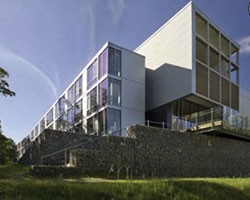
In the fall of 1996, Columbia took over management of the Biosphere 2 Center, Inc., the famous climate-controlled ecological laboratory in Oracle, Ariz. William Harris, formerly of the National Science Foundation, was appointed executive director and president, taking on the task of directing and building research programs focusing on the impact of carbon dioxide on plant life, one of the most challenging scientific problems of our time.
Over the summer, the United Nations Educational, Scientific and Cultural Organization (UNESCO) and the Smithsonian Institution joined with Columbia to form a consortium to help protect the environment while expanding the economy and improving the human condition. The consortium, called the Institute for Biosphere and Society, draws from research and experience gained in Columbia's Earth Institute and Business Schools, the Smithsonian's Institute for Conservation Biology and UNESCO's Man and the Biosphere Programme and the UNESCO-Cousteau Ecotechnie Programme. (See related story.)
INNOVATIVE MEDICAL PARTNERSHIPS
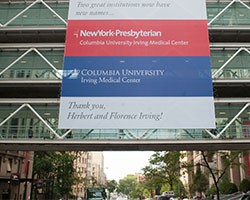
Last fall, Columbia made headlines as the faculty from our College of Physicians and Surgeons joined the faculty from Cornell's Medical College in a partnership to contract for managed care. The innovative relationship marks the first time two medical schools faculties have formed a clinical alliance while their medical schools maintain separate identities. The partnership is designed to increase market competitiveness for physicians by joining two leading clinical faculties and their community physician partners.
To date, approximately 1,500 of the projected 2,800 physicians from Columbia and Cornell have joined Columbia-Cornell Care LLC.
Bruce Spivey, president and CEO of Northwestern Healthcare Network in Chicago, has been appointed president and CEO of Columbia-Cornell Care. (See related story.)
PATHBREAKING USES FOR TECHNOLOGY IN ACADEME
In June, William Strachan, former vice president, associate publisher and editor-in-chief at Henry Holt and Co., was appointed president and director of Columbia University Press. Among the challenges he faces is to lead the Press' continuing innovation in electronic publishingan area in which CU Press has made great strides recently, by becoming in 1991 the first university press to publish a CD-ROM, The Columbia Granger's World of Poetry. Last month, C.U. Press launched Columbia International Affairs Online (CIAO), a first-of-its-kind online publication. (See related story.)
ENHANCING THE UNDERGRADUATE EXPERIENCE
Undergraduate education has once again become central to Columbia's mission. The University increased attention to the importance of teaching, maintained and encouraged diversity on campus, held to its promise of need-blind admissions, and celebrated the 75th anniversary of the College's Core Curriculum, oldest in the nation and the subject of David Denby's bestselling book, Great Books.
Columbia College received a new dean in Austin E. Quigley; Applications nearly doubled since 1991, with only 17.3 percent of applicants accepted. The Class of 2001 will be the most selective in the College's history.
The School of Engineering and Applied Science, under new Dean Zvi Galil, has seen applications increase, with more than 1,900 students applying for 290 spots last year. Joint programs were established with the medical school, andin collaboration with the schools of Journalism and Business and Teachers CollegeSEAS has established a Center for New Media Technology.
The School of General Studies has had two leaders, first Dean Gillian Lindt and now Dean Peter Awn, who have guided the school's new focus on undergraduate programs. A separate division, Special Programs, under the leadership of Dean Frank Wolf, is reaching out to more adult students and has greatly enhanced the academic summer programs for gifted high school students.
STUDENT SERVICES
Services for all students were improved by upgrading the service culture; completing a $10.4 million renovation of the fitness facilities; improving dining services; introducing a more flexible, preferred-customer student loan program; revitalizing career services; wiring all residence halls for Internet access, and starting the acclaimed "Go Ask Alice" on-line health service.
GRADUATE SCHOOLS SHOW THEIR STRENGTH
Columbia's graduate departments were awarded high marks in a key study by the National Research Council. Nearly 70 endowed professorships were created (largely through gifts) and applications increased dramatically in most of its schools.
Across the University all the schools were strengthened:
Graduate School of Arts and Sciences: Under Dean Eduardo Macagno, a new series of masters programs are being developed. Also several new collaborative research programs were created. The Mellon Fellowships program attracted gifted graduate students, and GSAS departments achieved high rankings in a recent survey by the National Research Council.
The School of the Arts underwent a thorough renovation, including the opening of the LeRoy Neiman Center for Print Studies, following the school's largest gift ever, $6 million. The new Dean Robert Fitzpatrick led a marked enhancement of the film program and the restoration of the painting and sculpture programs. The writing division is now one of the top five programs of its kind in the nation. And the Miller Theatre, recently placed under the school's aegis, is considered one of the premier music performance halls in the city.
The College of Physicians and Surgeons: Applications rose, a medical infomatics degree was introduced, an alternative medicine program was established, and a new comprehensive center for cancer research and treatment was created.
Columbia Business School: The school has experienced nearly a decade of growth under Dean Meyer Feldberg. Business Week magazine recently cited it as one of the ten best business schools in the country, jumping from 14th to 6th in the rankings. The curriculum has been completely revised, applications have increased, and student and alumni satisfaction have soared. With a new curriculum and dynamic, young new faculty, the school has moved beyond a Wall Street focus to train entrepreneurs for both nearby Harlem and around the world.
The School of Architecture, Planning and Preservation has, according to one recent critic, "taken over as the power center" for architecture and design education today. Its new supercomputer design labs now match its library, Avery, as the finest in the country. The periodical 40 Under 40 in 1995 found that 14 of the 40 best young architects in the country were Columbia alumni or professors, and declared that "Columbia has taken over as the power center" in architectural education.
The Graduate School of Journalism welcomed a new leader, Dean Thomas Goldstein. Programs in cutting edge technology, strengthened television and radio curricula and a new doctoral program confirm the school's number one national ranking. It is completing a $12.8 million rebuilding, in part to accommodate its New Media Center for state-of-the-art electronic information gathering and dissemination.
The School of Law under its new Dean David Leebron, completed $16.7 million in new construction and continues to be ranked as one of the finest law schools in the nation. Last year, the school hosted supreme court justices, international dignitaries and leading thinkers in legal scholarship. A new high-tech electronic library is in place and multidisciplinary programs have reached out across campus and the world.
The School of Social Work: The oldest such school in the nation is about to celebrate its centennial. In a recent study its faculty was found to be the most productive in the country.
The School of International and Public Affairs welcomed Dean Lisa Anderson, who implemented a strategic plan for growth of the faculty, and appointed to the faculty a number of experienced public figures, including former New York City Mayor David Dinkins and former White House aide George Stephanopoulos.
Schools of Nursing, Public Health and Dental and Oral Surgery have received very large increases in applications, expanded community clinics in Washington Heights and Harlem, increased endowments, and dealt deftly with threats of funding cuts from the state and federal government.
FINANCES
During George Rupp's presidency, Columbia has:
Increased its endowment to $2.6 billion.
Nearly doubled its annual income from patents and licensing.
Increased external funding for research.
Almost doubled the number of annual gifts
Succeeded in one of the largest fundraising goals of any university in the nation.
Extended that campaign to the year 2000 with a new record-setting total goal of $2.2 billion.
Became only the fifth university ever to raise $200 million.
In the Community
During the last four years, the University has deepened its commitment to the community and to the city. Among its accomplishments, Columbia:
Played a major role in helping to develop the proposal for a community Empowerment Zone
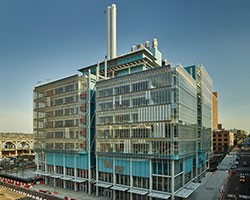
Aided stability and brought jobs to the Washington Heights neighborhood by erecting the two first buildings in the new Audubon Biotechnology and Research Park
Enlarged the Community Impact program, through which nearly 1,000 student volunteers in community service organizations help thousands of New Yorkers
Hired a University Chaplain dedicated to the ideal of community service and betterment
Continued as home to the Double Discovery Center, the college and career counseling program for Harlem students and oldest Upward Bound program in the country
Encouraged inner city entrepreneurship through a Business School course whose students provide Harlem firms with pro-bono marketing, management and planning advice
Published a detailed report on the city's economy that showed Columbia generating nearly $2 billion annually in direct and indirect economic activity
Conducted a neighborhood survey to determine the types of retail services residents want on Morningside Heights and began acting on the results
Created the Urban Technical Assistance Program (UTAP) to provide urban planning assistance to community groups in northern Manhattan
Began to "wire" more than 70 New York City schools through a federal grant to the Institute for Learning Technologies at TC
Facilitated the development of the city's newest and largest scholarly bookstore, Labyrinth, on 112th St. between Broadway and Amsterdam
Gave New York perhaps the ultimate scholarly gift: its own encyclopedia, Professor Kenneth Jackson's Encyclopedia of New York City.
Scientific Research
 | | The discovery that the Earth's core is spinning faster than the rest of planet generated worldwide news. |
|
Columbia became the country's second most productive patent-licensing university; opened the first biomedical research and development park in the city; took over management and operation of Biosphere 2 Center in Oracle, Ariz.; and, established several interdisciplinary research centers, many devoted to environmental issues, an area of increasing concentration. In addition, Columbia faculty and researchers:
Discovered the gene for Huntington's Disease
Discovered the mechanism by which nicotine affects the brain
Devised a better test for prostate cancer
Uncovered the DNA sequencing of Kaposi's sarcoma, an AIDS cancer
Found that estrogen can reduce Alzheimer's risk in women
Isolated genes that control cancer and the human sense of smell
Discovered the Earth's core is spinning faster than the planet itself
Found steps in human evolution linked to changes in climate
Discovered that the earth can cool abruptly and rapidly
Discovered a natural on-off switch for earthquakes
Invented "glasscrete," a new building material
Invented a camera with a hemispherical field of view
Devised a luminous marker to study DNA in living cells
Increased both its amount and share of government research funds.
Capital Improvements
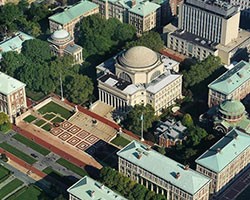
A $650 million building program began in 1994. Its goal is to physically transform the student and academic facilities on campus and help meet campus needs well into the next century:
Opened a $28 million research building and a second $66 million facility at the Audubon Park
Completed a $7.5 million renovation of Casa Italiana
ompleted a $10 million expansion at the Law School, plus opened a $6.7 million new home for student legal services and the Law Review.
Completed a $12 million renovation of Furnald Hall
Completed a $10.4 million renovation of athletic facilities
Rebuilt Dodge Hall for the School of the Arts
Began a $12.8 million renovation of the Journalism building
Began a $70 million renovation of Butler Library
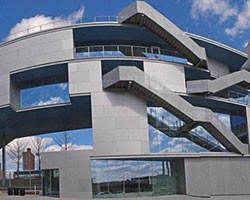
Began construction of the Lerner Hall student center
Started planning an undergraduate residence hall on Broadway
Rebuilt the College's Van Amringe Quadrangle
Restored the brick walkways near Low Library
Restored landscape beauty across the campus with new plantings
Created new visitors center in Low, with hundreds of visitors per day.
|