
















 |
| VOL. 23, NO. 3 | September 19, 1997 |
|
Five Journalists Win Top Cabot Prizes
In 58th Year, Awards Recognize Work Toward Freedom of the Press
By Fred Knubel
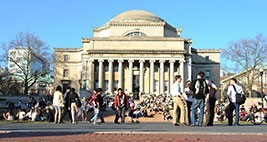
ive journalists who have contributed to inter-American understanding and who have advanced press freedom will be honored by Columbia in a ceremony on the Morningside campus on Oct. 16.
They are the winners of the 1997 Maria Moors Cabot Prizes. The University will also award a posthumous citation to a Colombian editor who was assassinated in March after writing editorials against drug cartel leaders.
The Cabot Prizes are the oldest international awards in the field of journalism. Individual journalists are traditionally honored for a sustained body of work covering events in the Western Hemisphere.
The five 1997 Cabot Prize gold medal winners are:
- José de Cordoba, senior special writer for The Wall Street Journal, who has reported the past 11 years on subjects ranging from the U.S. invasion of Panama to feature stories about the lives of ordinary Panamanians.
- Jorge Fontevecchia of Argentina, editor of the weekly news magazine Noticias de la Semana and founder of Editorial Perfil, who has during the past 23 years published 80 magazines in Argentina. He was forced into exile by the military dictatorship but returned with the help of Carlos Menem, who later was elected president and whose sharpest critic in today's Argentine press is Fontevecchia's Noticias.
- Julia Preston, correspondent in Mexico for The New York Times, who has written penetrating stories about turmoil and war, and emotionally powerful portraits. Her career has spanned the Contra war in Central America and the struggle for democracy in El Salvador and throughout the continent.
- Hernando and Enrique Santos Castillo, who are brothers and who have been the managing and editorial force running Bogotá's eminent daily El Tiempo for four decades. The newspaper, despite constant threats by the government and drug cartels, has become a bulwark in the struggle for democracy in Colombia with uncompromising, hard-hitting reporting and writing.
The posthumous citation will be awarded to Gerardo Bedoya Borrero, editorial page editor of El País of Cali, Colombia, who was assassinated in March of this year. His editorials called for the extradition of drug cartel leaders to face justice in countries where they are charged with committing crimes.
Rodrigo Lloreda Caicedo, editor of El País, will receive the award for Bedoya.
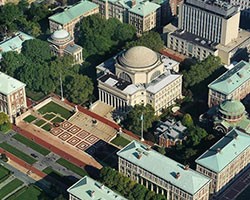
The five prize winners will receive the Cabot medal and a $1,000 honorarium. Medalists' news organizations will be given a bronze plaque. The presentation will take place at a formal dinner ceremony in Low Rotunda. Dean Tom Goldstein of the Graduate School of Journalism will present the winners to President George Rupp, who will confer the prizes.
The Cabot Prizes are awarded annually by the Columbia Trustees on recommendation of the Journalism School dean and the Maria Moors Cabot Advisory Board, which is composed largely of former Cabot Prize winners. Director of the advisory board is Frank N. Manitzas, former Latin American bureau chief for ABC News and himself a Cabot medalist.
More than 250 journalists have received Cabot honors since their inception in 1939. The prizes were established by the late Godfrey Lowell Cabot of Boston as a memorial to his wife.
|