





































 |
| VOL. 23, NO. 12 | JANUARY 23, 1998 |
|
Abram J. Jaffe, Social Scientist and Labor Expert, 85
BY FRED KNUBEL
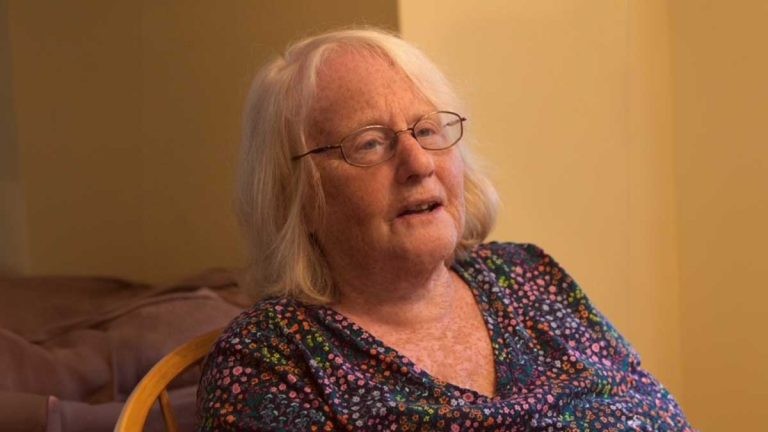
 | | Abram Jaffe |
|
bram J. Jaffe, a Columbia social scientist and labor expert whose studies reported on economic conditions of migrants, women in the workplace and retirees and who at the age of 80 published an award-winning history of North American Indians, died Dec. 22 after a long illness. He was 85.
The cause of death, at the Inglemoor Nursing and Rehabilitation Center in Englewood, N.J., was heart failure, said his wife, Betty. He lived in Leonia, N.J.
Jaffe was a statistician, employment expert and anthropologist who for more than two decades directed the Manpower and Population Program of Columbia's Bureau of Applied Social Research.
Analyzing labor statistics, economic trends and population movements, he reported a number of unexpected findings: in 1967, that living standards of retired workers were deteriorating and that poverty stalked one half of all retired persons; in 1975 that socially and economically, native Puerto Ricans living in New York State lagged considerably behind those living in other states, and in 1976 that, contrary to a common assumption then, women did not tend to move in and out of the labor force but were a stable part of it.
Jaffe was born Feb. 28, 1912, in Chelsea, Mass. His family moved to Chicago soon after, and he grew up there, earning his B.A., M.A. and Ph.D. in sociology from the University of Chicago, studying under William F. Ogburn. From 1939 to 1950 he was a demographer and statistician at the U.S. Bureau of the Census. He took a leave from 1942 to 1945 to survey the morale of soldiers for the U.S. War Department.
He joined Columbia in 1950 as a lecturer in sociology and began a 26-year term as director of the manpower and population program of the Bureau of Applied Social Research. He studied labor productivity, pension systems, employment patterns of college educated workers and the integration of migrant Spanish Americans. He discovered that people of the 6,000-year-old LaJolla Culture, the earliest North American society, had a life expectancy of 17. And he found that population growth was a result, not a cause, of the transition from hunting to farming on the North American continent
He retired from Columbia in 1979 but continued as a special senior research associate in business and anthropology. Besides his wife, he is survived by two daughters, Anne Jaffe and Barbara Rios, and two grandchildren, David and Michael Rios, all of New York City.
|