









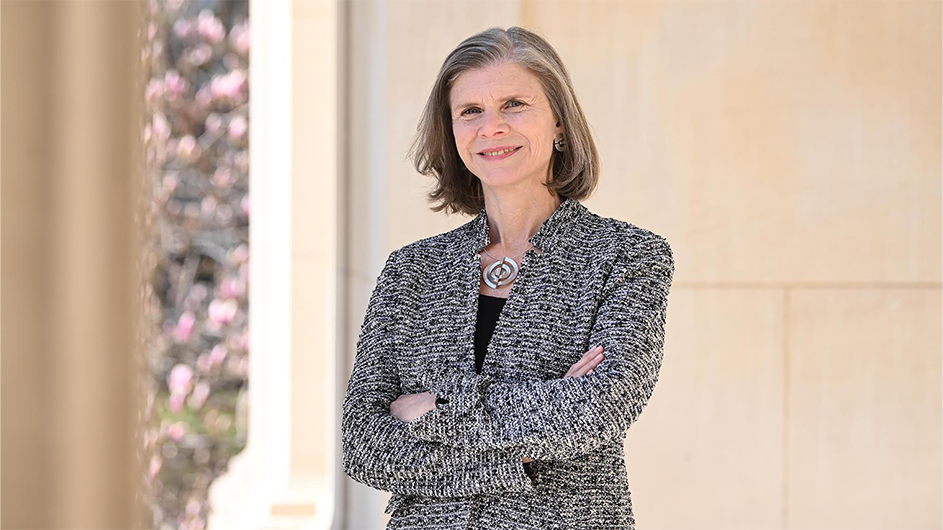
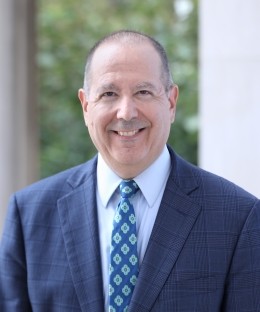











They are: Irving P. Herman, professor of applied physics; Richard Osgood, Higgins Professor of Electrical Engineering and professor of applied physics; Wen Wang, professor of electrical engineering and applied physics, and William Zajc, professor of physics.
The fellowship program was created to recognize members who have made advances in knowledge through original research and publication or made significant and innovative contributions in the application of physics to science and technology. Each year, no more than one-half of one percent of the society membership is recognized by election to fellowship.
Irving P. Herman has made contributions in several major areas of laser science, notably in isotope separation and spectroscopy, in materials processing and in the development and application of optical techniques to probe surfaces and thin films. In 1996, he published Optical Diagnostics for Thin Film Processing, the first comprehensive text on the subject.
Last year he developed and started teaching a freshmen-level course, Physics of the Human Body, in the Fu Foundation School of Engineering and Applied Science. He holds a Ph.D. in physics from MIT and joined the Columbia faculty in 1986.
Richard Osgood was honored for pioneering work initiating and fundamental studies elucidating light-induced chemical reactions on surfaces. Osgoods work in chemical physics, which began with molecular internal energy studies at MIT, has more recently considered similar processes in cryogenic liquids as well as a range of optical spectroscopy-related measurements. His group is now engaged in fundamental studies of reactions and electronic structure on the surface of single crystals of metals and semiconductors.
 | | Wang |
|
He is a former director of both Columbias Microelectronics Sciences Laboratories and the Columbia Radiation Laboratory. Osgood earned the Ph.D. from MIT in 1973 and joined the faculty in 1981.
Wen Wang is investigating wide bandgap semiconductors, which have applications in high temperature environments such as monitoring and control of jet and automobile engines.
He was recently awarded an Office of Naval Research grant to use molecular layering techniques, such as molecular beam epitaxy, to create a multilayered crystal that could be used as a high-temperature semiconductor. He was selected by the IEEE Electron Device Society as a distinguished lecturer to speak on the topic.
He was cited by the society for his contributions to heterostructure physics, the study of the interaction of electrons and photons at the interface of dissimilar semiconductors, a field in which he has guided 15 top Ph.D. students over the past 10 years. He holds a Ph.D. from Cornell and joined the faculty in 1986.
 | | Zajc |
|
William Zajc was recently named spokesperson of the PHENIX experiment, an international collaboration of more than 400 physicists from 10 countries, that will perform measurements at Brookhaven National Laboratorys Relativistic Heavy Ion Collider upon its completion in 1999.
The collider will accelerate heavy ions, including those of gold, to speeds near that of light, then smash them together to recreate the conditions that existed shortly after the Big Bang. The information obtained could ultimately explain the origin of most of the mass found in ordinary matter.
The society noted his landmark contribution to experimental studies of two-boson correlations, a technique that allows researchers to directly measure the size and lifetime of the matter created in such relativistic heavy-ion collisions. He holds a D.Sc. from Berkeley and joined the faculty in 1987.