































 |
| VOL. 23, NO. 16 | FEBRUARY 27, 1998 |
|
In the Uncertain World of University Presses, a New Leader Takes the Challenge at Columbia
BY A. DUNLAP-SMITH
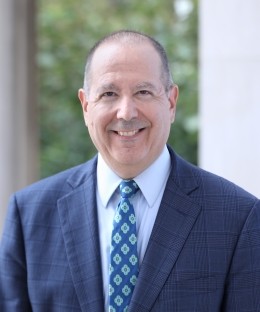
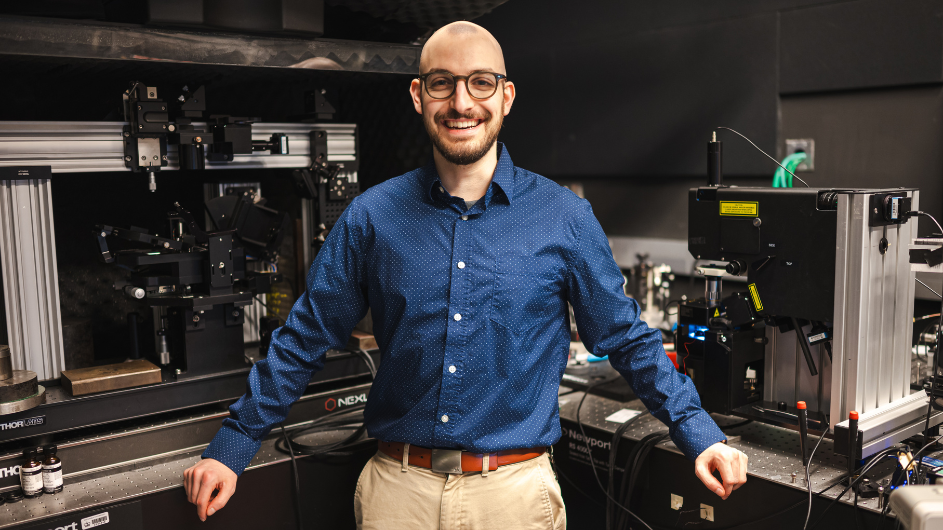
 | | Bill Strachan is the new president and director of C.U. Press. Record Photo by Joe Pineiro. |
|
he honking and whine grows in his McBain Hall office as the firetruck approaches W. 113th St. along Broadway. The building, it seems, is on fire. Bill Strachan is unfazed. Hes a publisherat a university pressso hes accustomed to putting out fires.
In an era that Strachan (pronounced strawn) himself characterizes as very difficult for publishing, he left the for-profit world at Henry Holt where he was vice president, associate publisher and editor-in-chief to become president and director of the not-for-profit Columbia University Press last June.
Although now unfettered by the bottom line, Strachan nevertheless faces more, not fewer challenges. Were in competition for the eyeball, he says; University presses must figure out how to compete in this new worldnot just for library budgets, but for the general reader.
The mission of the press, which is affiliated with Columbia though not a part of it, is to publish scholarly work, the kind of books that by nature dont appear on bestseller lists. Yet its endowment is too meager to absorb the losses that many of Columbias rival university presses run up.
That means Strachan has to find a way to make a profit with books that dont. Here, he says, is where his relentless mercenary upbringing in trade publishing will be particularly useful. This past summer, for instance, he had the Press warehouse modernize its way of taking inventory. And when a wholesaler made what he considered a small order of Martin Gilberts Holocaust Journey, he wanted to know why. Told that a university press doesnt know how to promote a book, Strachan convinced him with an authors tour and an ad campaign that he was wrongat least about the C.U. Press. The wholesaler doubled his order; the books have since sold out.
So thats nice, Strachan says without a trace of irony after listing each hurdle he must get the Press to leap to operate more efficiently. Despite his nearly 30 years in New York publishing, Strachan, whos from Minnesota, has a guilelessness and a youthful sense of wonder that reveal his midwestern roots. The boyish features that complement these characteristics belie his 49 years.
Among those hurdles are to build the Press endowment, of course, and to reshape its book list. But to calm those who look with alarm at a trade publisher having taken the helm of a scholarly press, Strachan is quick to say that he doesnt intend to change the nature of what we publish but to utilize better what we publish. To illustrate, he cites the tie-in with the Globe Theatres production of the Merchant of Venice that resulted in shipping to London 1000 copies of English Professor James Shapiros Shakespeare and the Jews.
He is also exploiting the few advantages that a university press has over a trade publisher. When he discovered that his old employer, Henry Holt, would stop printing four books by Donald Keene, Columbias emeritus professor of Japanese literature, because yearly sales no longer made it financially viable, Strachan picked them up. The ability to keep books in print and to pay greater attention to each book than at a big trade house should, Strachan feels, help niche publishers like the C.U. Press compete in a world of increasing conglomeration.
Strachan is encouraging the making of more overtures to the Universitys faculty. He is talking with Journalism Dean Tom Goldstein to develop projects there. He also wants to publish more books written by Columbia historians, and has had the Press accepted as a publisher-member in the Society of American Historians.
He also plans to expand in electronic publishing, particularly in the areas of science and reference, because the electronic future for us is right now. And a new science editor whose main task is to develop trade-oriented science projects will join the Press on March 1.
Strachan readily admits that for him as an editor there is a personal challenge of being at a scholarly press. Every now and then its like, Yikes! he says of some of the manuscripts he reads. You thought you were serious but then some author comes along who knows so much about a subject and its beyond youthen you have to remind yourself that youre not writing these books, youre publishing them.
|