



















Go to Columbia Web


Where to Find It

The Lamont-Doherty Earth Observatory Web is available on the Schools & Departments and Index pages of ColumbiaWeb.


Record Banner
 VOL. 23, NO. 17MARCH 6, 1998 


Lamont-Doherty Receives Grant to Create a Remote Sensing and Visualization Facility


 BY HANNAH FAIRFIELD

Chris Raxworthy needs to use satellite images to study the forest cover in Madagascar to research chameleons on that island.

  He and 19 of his faculty colleagues at Columbia’s Center for Environmental Research and Conservation (CERC) need to use remote sensing to carry out new aspects of their research.

  And a Columbia anthropology professor wants to use satellite photos to look at ancient road networks, irrigation systems and land modifications in Argentina.

  Until now, they and others have been unable to accomplish these tasks.

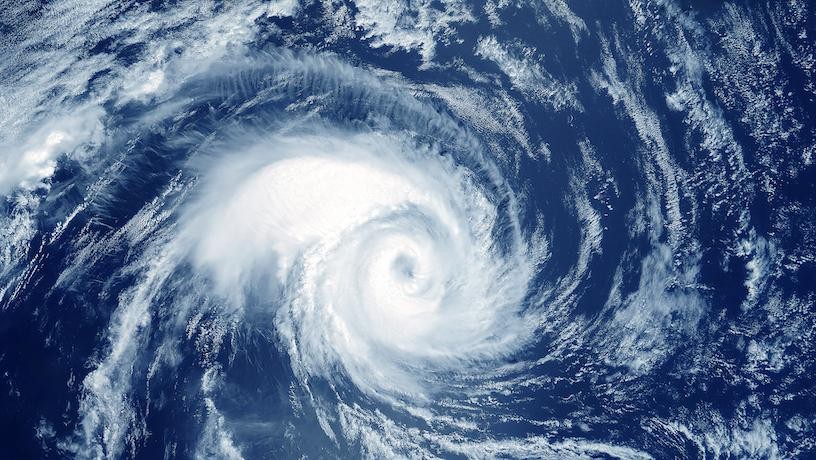
  But last month scientists at Columbia’s Lamont-Doherty Earth Observatory received grants to establish the University’s first large-scale remote sensing and visualization facility.

  It will have the facilities to download and process satellite images, so scientists can do their own classification of the data sets for application to their areas of study.

  The new lab is drawing interest from researchers in many fields at Columbia.

  The facility is different from other labs that process satellite images in that it is designed to be user-friendly.

  State-of-the-art remote sensing and image processing software called ENVI will run with the same look and feel on three common computer platforms: Macintosh, Windows NT and Unix.

  Chris Small, associate research scientist at Lamont and one of the driving forces behind the creation of the lab, uses satellite imagery to study the relationship between human population growth and continental landforms.

  Satellite images collected over the past 20 years provide a way to quantify land cover changes, such as deforestation, and relate them to areas of rapid population growth.

  “The reason we have all three platforms is to make it easier for people in different fields of study to collaborate,” Small said. “They will be able to sit down at a computer they are familiar with rather than having to adapt to a new platform.”

  The new lab has start-up funds totaling $420,000 from NASA’s Mission to Planet Earth, which studies global change; Intel Corp.; Lamont, and the Columbia Earth Institute. Laboratory users will have their choice of 21 top-of-the-line color graphics workstations.

  There are 12 remote sensing workstations to run the ENVI software for processing satellite imagery and 9 visualization computers, which are powerful desktop workstations that scientists need to manipulate large data sets and render 3-D images. The lab includes a server, a color scanner, a large-format color printer and a projection screen for teaching.

  The combined remote sensing and visualization facility will be housed in the Geoscience Building at the Lamont campus in space already equipped to handle high-speed computers.

  Part of the grant money will also be used for training sessions to teach people unfamiliar with remote sensing and image processing how to use the wealth of satellite data available.

  Jeff Weissel, Doherty Senior Research Scientist and a principal investigator on the NASA grant with Small, hopes that the lab “will promote cross-fertilization among disciplines in the study of environmental problems. The intent is to encourage more students and researchers, particularly those from disciplines within CEI outside the traditional earth sciences, to take advantage of the widespread availability of remote sensing data for their education and research needs.”

  Roelof Versteeg, associate research scientist and principal investigator with Small on the Lamont share of Intel Corp.’s grant to Columbia ($2.9 million in hardware over 3 years) is researching estuaries.

  Many scientists use satellite imagery to look at global research, but Versteeg wants to go local—to look at watersheds in New York and New Jersey and at datasets in the Hudson estuary.

  One of the great problems in multidisciplinary research, he says, is creating a framework within which different data sets from different disciplines can be related.

  He sees the computer lab as a place to link data from chemical, physical and biological arenas, such as sediment contamination, water temperature and fish population.

  The Columbia Earth Institute, which integrates several Columbia research and educational centers, is supporting the lab in order to build intellectual and physical connections among its member centers. Many disciplines within the Institute, such as oceanography, climate studies, ecology, agriculture, environmental economics, natural hazards assessment and anthropology will benefit from increased access.

  “Researchers at Lamont are helping to bring this general capability to Columbia,” says Peter Eisenberger, director of Lamont and vice provost for the Earth Institute.

  Further information about the new remote sensing-visualization lab can be obtained from: small@ldeo.columbia.edu, versteeg@ldeo.columbia.edu, and jeffw@ldeo.columbia.edu.


webmaster@columbia.edu