














Go to Columbia Web


Record Banner
 VOL. 23, NO. 17MARCH 6, 1998 


From around the Globe, Human Rights Advocates Study Here


 BY SUZANNE TRIMEL

A former Kenyan political prisoner, a lawyer helping to rebuild Rwanda’s shattered judicial system, a member of Argentina’s forensic anthropology team and a journalist studying ways to promote human rights on the Internet are among 15 human rights advocates who are developing new skills and knowledge this semester at Columbia to advance their work at home.

  The Human Rights Advocates Training Program, now in its 10th year, brings experienced human rights activists to the Columbia campus every spring for study and advance training.

  “The advocates are from countries where human rights violations are serious and local resources are most strained,” said J. Paul Martin, Executive Director of the Center for the Study of Human Rights, which sponsors the program. This year’s program is supported by the Ford Foundation with gifts from the Instituto Ayrton Senna of Sao Paulo, Brazil, and the Odebrecht Foundation of Salvador, Brazil.

  The advocates take a semester-long graduate-level seminar in international human rights, in addition to selecting other areas of study, such as international law, foreign policy, economic development, war crimes or conflict resolution. They also take courses to develop strategic skills in fundraising and proposal writing, data analysis, NGO management, public speaking and video documentation. And they meet with leaders of the top human rights institutions in New York and Washington, D.C., such as Amnesty International, Human Rights Watch, the State Department Human Rights Bureau, and the United Nations High Commissioner for Human Rights Office to expand their network of human rights contacts as they continue their work back home.

  “I’m already full of ideas and projects to be implemented as soon as I go back to Brazil,” said Anna Penido, who is working on a human rights education program for adolescents. “To be able to share my work not only with people here at the University but with people doing similar work in other countries has been so important to me.”

  Chivy Sok, program coordinator for the last four years, said the advocates also act as teachers, giving lectures in the classroom, to the public, and to human rights organizations on the problems in their home countries.

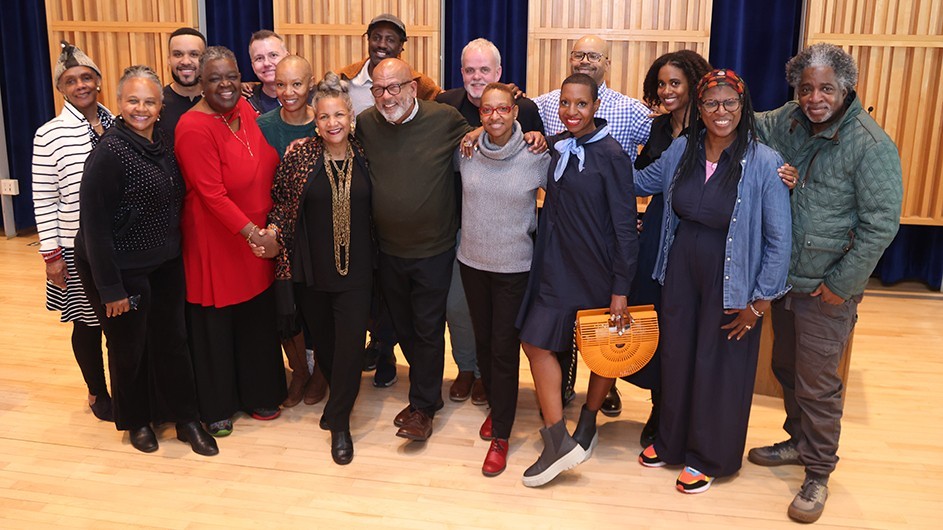
FIFTEEN INTERNATIONAL HUMAN RIGHTS ADVOCATES are studying at Columbia this semester through the Center for the Study of Human Rights. In front from left: Tunde Musibau Akanni of Nigeria, Hanna Mollan of Norway, Stephen Wreh-Wilson of Liberia, Sophea Ung of Cambodia and Ghassan Khalil of Lebanon. Top row, from left: Gisele Kambou of Burkina Faso, Sherine Xavier of Sri Lanka, Fatmira Myteberi of Albania, Marie Shaba of Tanzania, Anna Penido Monteiro of Brazil, Kayoko Asada of Japan, Gilberto Nascimento of Brazil, Kang’ethe Mungai of Kenya, Silvana Turner of Argentina and Budi Santoso of Indonesia. Record Photo by Joe Pineiro.

  This year’s advocates are:

  • Tunde Musibau Akanni of Nigeria, is head of an organization that monitors and documents rights violations concerning free speech;

  • Kayoko Asada of Japan, works with Sayuri-kai, an Episcopal organization to help battered women and the elderly;

  • Gisele Kambou of Burkina Faso, is a human rights lawyer helping to reconstruct the judicial administration of Rwanda;

  • Ghassan Khalil of Lebanon, is Secretary General of the Higher Council of Childhood in Lebanon and a member of the executive board of the Lebanese Union for Child Welfare;

  • Anna Penido of Brazil is the Education Projects Manager at the Odebrecht Foundation. She hopes to advance human rights education for young people through computer technology;

  • Kang’ethe Mungai of Kenya, a freelance journalist, was a political prisoner in Kenya for six years and is treasurer of the organization Release Political Prisoners;

  • Fatmira Myteberi of Albania oversees the development of the social studies curriculum for the Albanian education system and wants to introduce human rights education;

  • Gilberto Nascimento of Brazil is assistant editor of the weekly political magazine IstoE and writes regularly about children’s rights, police violence, prison conditions, political corruption and the plight of landless peasants;

  • Budi Santoso of Indonesia, a lawyer, is director of Yogyakarta Legal Aid Institute and founding board member of the Indonesian Legal Aid and Human Rights Association.

  • Marie Shaba of Tanzania is a freelance journalist, broadcaster and animator who is working on the establishment of the Tanzania Human Rights Commission.

  • Silvana Turner of Argentina is a researcher with the Argentine Forensic Anthropology Team and is an expert on the exhumation and analysis of human remains in cases of people who disappeared during the 1976–1983 military regime. In her job, she provides criminal evidence to the judiciary, assists the families of victims in recovering remains and helps to document abuses.

  • Sophea Ung of Cambodia is a member of the management committee of the Cambodian Human Rights Task Force who helps train human rights advocates in different provinces on monitoring and documenting human rights abuses.

  • Sherine Xavier of Sri Lanka is executive director of Home for Human Rights, which provides free legal aid services and rehabilitation programs in Sri Lanka. She established the group’s Women’s Desk, which counsels women who have been incarcerated, widowed or displaced and represents them in court.

  • Stephen Wreh-Wilson of Liberia is the senior research assistant of the Justice and Peace Commission responsible for training and sensitization workshops on human rights, democratic institution-building and community civic education.

  • Hanna Mollan, a freelance journalist from Norway, is the Center’s first Belldegrun Human Rights Research Fellow who is working on research to develop strategies for promoting human rights on the Internet.


webmaster@columbia.edu