

























 |
| VOL. 23, NO. 18 | MARCH 27, 1998 |
|
LEGISLATIVE UPDATE
Student Go to Washington for Lobby Day
BY ELLEN S. SMITH
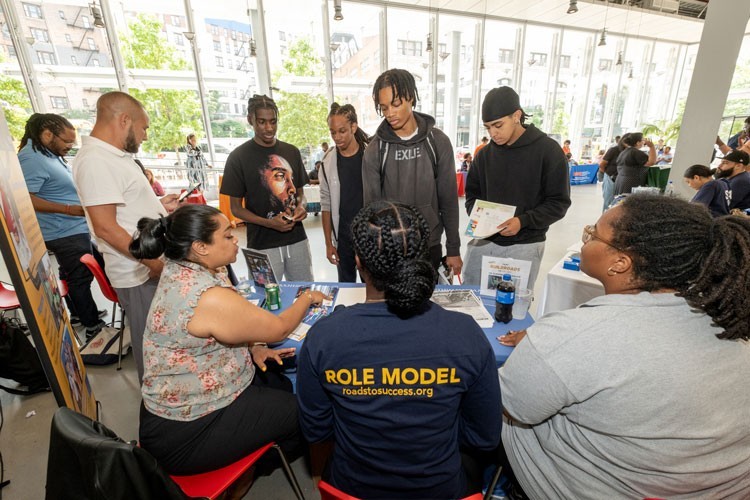
early 30 Columbia students traveled to the nations capital Tuesday night to participate in the Columbia and Cornell Student Lobby Day on Mar. 25.
This trip comes at a perfect time, said Assistant Vice President Ellen S. Smith, director of federal relations, who is leading the trip. Legislation for student aid is still being considered on Capitol Hill. We actually will have an impact.
Students, joined by their Cornell peers, spend the day meeting with senators and representatives or members of their staffs, pleading the case for student aid.
Sen. Judd Gregg (RN.H.), a 1969 graduate of Columbia College, has agreed to meet with students in his offices, and Rep. Carolyn McCarthy (DN.Y.) will address students on the steps of the Capitol at the end of the day.
Students will also hear from Pamela Curtin, of the Office of Mayor Rudolph Giuliani in Washington, who received a graduate degree from Columbia and is a former Columbia federal relations intern.
The trip occurs at a key time, as students could influence the outcome of the Higher Education Reauthorization Act. The House Committee finished action last week and the Senate Committee is expected to do so before the end of March.
In addition to Smith, accompanying the students are: Associate Vice President for Public Affairs Virgil Renzulli and Executive Director for Student Financial Services Kate Wilson.
The trip was organized by SIPA student Kristen Koch, who is the current federal relations intern for Columbia.
Another student lobby trip to Albany is scheduled for Mar. 31, which is the budget deadline in Albany. Students may have a big influence on the outcome of TAP funding.
Student Aid
The House Education and Workforce Committee reported H.R. 6 out of committee last Thursday. The bill includes previously agreed-upon compromises and increases for student aid. Although no portable graduate fellowship was included in the bill, Rep. McCarthy asked Chairman Bill Goodling (R.Pa.) to work with her on this issue before the bill goes to the House floor.
Recommendations of the college cost commission were incorporated into the bill in a more stringent manner. An annual GAO report on college costs would be required. The Secretary of Education would be authorized to collect information on undergraduate and graduate college costs and to reduce the number of regulations currently in place.
Rep. Chaka Fattah (D.Pa.) offered an amendment for college-school partnerships to prepare low-income students for college. The amendment is the Presidents High Hopes program. In addition, an accepted amendment was offered by Congressman Harold Ford Jr. (D.Tenn.) to increase TRIO program funding significantly.
Committee Passes Resolution
The five year Senate non-binding Federal budget resolution was passed by Committee last week. It retains the so-called firewalls (preventing transfer of funding) between defense and nondefense discretionary funding through fiscal year 1999. Additional and significant funding (above the Balanced Budget Act agreement last summer) is provided for highways and mass transit.
The resolution assumes that monies available from the tobacco settlement will be set aside for preserving Medicare. The resolution assumes a 10 percent increase in NSF funding and an 11 percent increase is assumed for NIH. Other budget functions including research funding are similar to those in last summers Balanced Budget Act. The House will also pass such a resolution in Committee and on the floor and then the two bodies will work out their differences. The broad guidelines of budget resolutions are followed by Committees but specifics are deviated from.
For additional information, please contact: Ellen S. Smith, ess9@columbia.edu or 854-3394.
|