







































The software that now operates telephone and Internet networks is linked to network hardware much the way mainframe computers of the 1970s ran only the software supplied by the vendor.
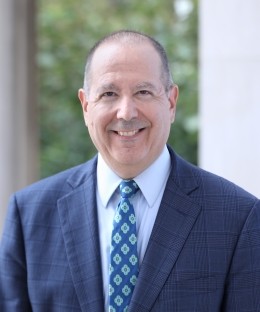
Aurel Lazar, professor of electrical engineering, is working to give network operators the flexibility that personal computer users have in combining software and hardware from different sources.
Lazar has developed unique network software called xbind that will make telephone, cable and Internet networks as programmable as personal computers and allow rapid installation of new services as markets demand.
As the high-speed switching and communication infrastructure improves and bandwidth becomes cheap and widely available, Lazar believes that the competition for product differentiation will increasingly depend on the level of sophistication, degree of flexibility and speed of deployment of services that a service provider can offer. These factors in turn will depend heavily on the flexibility of the software architecture in place in a provider's operational infrastructurethus the need for programmable networks.
Lazar cites the example of one telephone company offering discount calling limited to certain parties on certain days; competitors took as long as two years to reprogram their software to offer the same service.
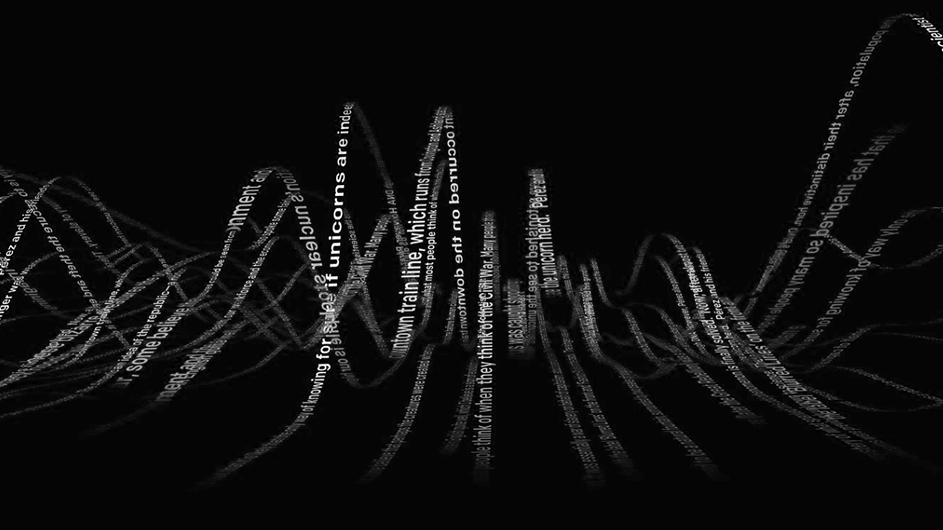
 | Visual models of a network help researchers think about how network traffic can be routed | |
Programmable networks will benefit consumers as well as providers, offering the public more flexibility, more services and fewer busy signals on phones and computers.
"A network is like an economy," Lazar says. "There is competition for scarce resources. Many messages want to go through few channels. A programmable network allows network managers to direct the messages and increase the network's efficiency. But the network also provides an infrastructure onto which the economy can graft new services."
Xbind
The first step in separating network hardware from software is under way. Lazar envisages a new class of software known as "broadband kernels," operating systems designed not for computation but rather for data transmission. Xbind, the first entry into this new class of software, is a flexible multimedia programming platform for creating, deploying and managing sophisticated next generation multimedia services. It serves two major functions: it allows engineers to manipulate networks to increase efficiency, serving as a kind of traffic cop by routing data over some paths and not others, and it provides a platform for the creation of new services, allowing operators to provide video on demand, other interactive multimedia or services not yet known.
"The ability to rapidly create and deploy new and novel services in response to market demands will be the key factor in determining the success of future service providers," Lazar said. Communications services not yet imagined will be available in the coming decades, and programmable networks will allow service providers to quickly adapt existing infrastructures to the new requirements, whatever they are.
Once large-bandwidth, optic fiber networks begin carrying large volumes of video, audio and computer data, networks will use asynchronous transfer mode (ATM) switches, in which information is chopped up into small packets and sent by the least congested route, then reassembled at their destination. Mobile telephone and computing networks will provide yet another complex routing network. Lazar has designed xbind to be compatible with all three, either individually or in combination, allowing transmission of video on demand, for example, to a wireless computer via other networks.
The software has been tested in Lazar's laboratory at Columbia and between Columbia and the U.S. Air Force's Rome Labs in Rome, N.Y., over the NYNET high-speed fiber optic network designed and built by NYNEX Corp. Lazar has also conducted simulations of message routing on a 512-node network, using the Cornell supercomputer.
Netmaster
Visual models of a network help researchers think about how network traffic can be routed. In collaboration with Steven Feiner, associate professor of computer science, Lazar has developed a network visualization tool that automatically shows various types of ATM network management activities. The system, called Netmaster, uses both general knowledge about graphic design and knowledge specific to network structures and various types of network activities. The researchers have focused on two major tasks: to examine the physical or virtual structures of network entities (e.g., nodes and links); and to monitor the network traffic status inside the network entities.
More information is available at http://comet.ctr.columbia.edu/xbind/.
|