








































 |
| VOL. 23, NO. 21 | APRIL 17, 1998 |
|
Columbia Honored for Using Local Female and Minority-Led Firms
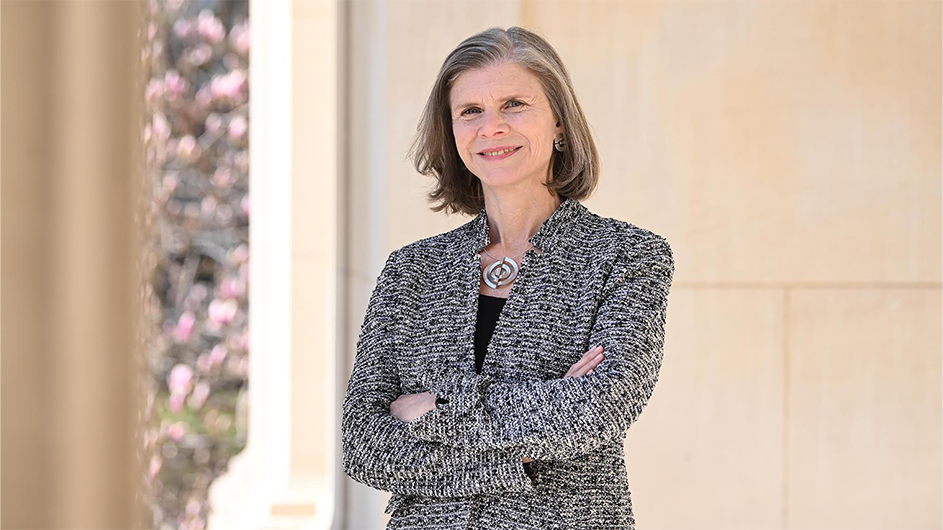
 | | At the Professional Women in Construction Awards reception, from left: Charles Maikish, vice president-facilities management; Emily Lloyd, executive vice president-administration, and Patricia Lancaster, assistant vice president-facilities management. |
|
BY ANNE CANTY
t a time when some institutions are retreating from programs to promote diversity, Columbia is leveraging its construction spending to maximize diversity and multiply the positive economic impact of its $650 million, 5-year capital plan. Close to 35 percent of the construction firms that have so far worked on Alfred Lerner Hall, Columbias new student center, are headed by women or members of minority groups, and nearly 37 percent of the workforce on that project has been similarly diverse. On the new business-law classroom building, William and June Warren Hall, 32 percent of the subcontractors and more than 46 percent of the workforce are women, members of minority groups or local residents.
Columbias success in promoting diversitywhich has already resulted in payments to women, minority and local subcontractors of more than $25 millionwas recognized last month when Professional Women in Construction awarded the University its Construction Recognition Award for its commitment to the participation of minority, women and locally-owned businesses.
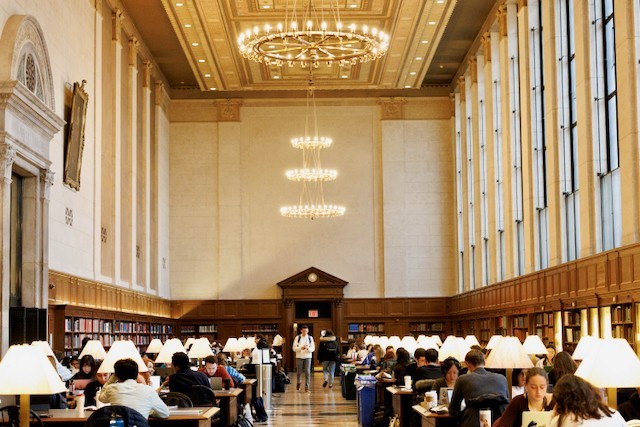
The University policy to promote the participation of women and minorities in its construction program debuted at Alfred Lerner Hall in September of 1996 and was extended to the business-law project less than a year ago, in June of 1997. The diversity goals are currently being introduced for the second phase of the Butler Library renovation, where 15 percent of the subcontractors are minority-owned and 14 percent are women-owned.
In reaching these goals, Columbia has successfully met its self-imposed standards, articulated in a 1996 policy. It has done so without price-preferences or set-asides, some of the practices that have spawned an anti-affirmative action backlash over the last several yearsparticularly in public institutions. Ken Knuckles, New York Citys former Commissioner of General Services and now Columbias Vice President for Support Services, wrote the Universitys policy. The goals are based on well-established public sector models: 5 percent women-owned subcontractors, 5 percent female work force representation, 15 percent minority-owned subcontractors and 20 percent workforce.
The impetus for this program, said Executive Vice President for Administration Emily Lloyd, is Columbias commitment to conduct its business in such a way that as many of its economic resources as possible remain in New York City and our surrounding neighborhoods. Even though the University is not legally required to meet diversity standards in its construction programunless it is using public funds, such as those provided by the Dormitory Authoritydoing so is a good way of maximizing the positive economic impact of our building program.
According to economist and economic development specialist Hugh ONeill, who researched and wrote Columbias economic impact study, Columbia Universitys Contribution to the New York City Economy, the reasons to promote the hiring of women and minorities in the construction industry go beyond being a good neighbor and a New York loyalist. There are also business reasons. ONeill believes that large, stable institutions in New York City have a stake in helping to foster diversity in the construction industry.
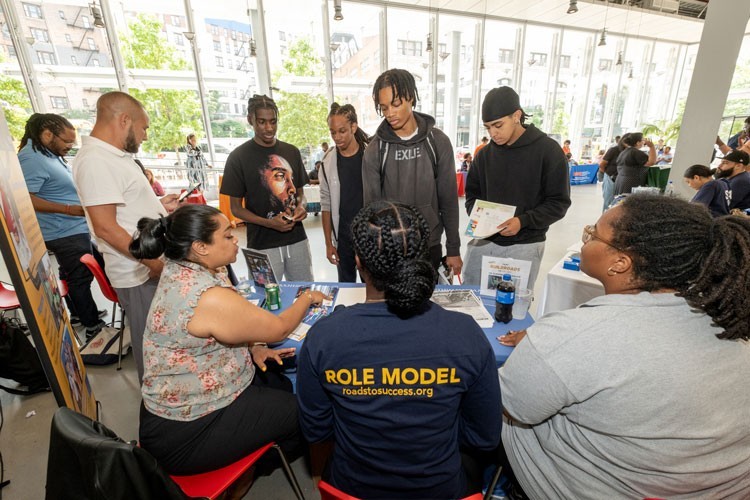
As the demographics of the City change, according to ONeill, the construction industry will not be able to meet its need for skilled workers if it continues to rely so heavily on its traditional white male labor force. Any urban institution with continuing long-term construction needs has a vital interest in developing a local skilled construction workforce. To introduce workforce diversity, Columbia has partnered with existing community workforce development organizations and it will be looking to further develop that aspect of its program.
One of the frequently cited barriers to successful programs to promote diversity in large construction programs is finding companies that have the economic means to undertake projects of that scale. The firms and people are clearly out there, said Patricia Lancaster, Assistant Vice President for Planning, Design and Construction, the success of the Lerner program and the business- law efforts prove that, but you have to invest the time on the front end to locate them.
One of the most important factors in meeting the diversity goals, Lancaster said, was making sure that the construction management firms knew we were serious. They got the message and have been partners in making the program work, starting with identifying subcontractors. As a result of this work, the University now has a pre-qualified bidders lista list of construction firms that are routinely asked to bid on workwith a sizable representation of minority-, women-owned, and local businesses. That list will be a key instrument in helping to attain diversity on future construction projects.
Columbia is now developing diversity goals for all its large projects and studying how it can extend those principles to smaller projects.
|