



























Go to Columbia Web


Where to Find It

The Barnard-Columbia Center for Urban Policy Web is available on the Schools & Departments and Index pages of ColumbiaWeb.


Record Banner
 VOL. 23, NO. 22APRIL 24, 1998 


Dinkins Forum

Economic Impact of Culture and Tourism Examined at May 4 Forum


 BY ANNE CANTY

The economic impact of tourism on New York City was $18 billion in 1995, including $12.3 billion in direct spending by visitors, according to New York City Convention and Visitors Bureau statistics.

  New York City is not unique in this respect; nationally, the tourism industry has a sizeable presence in the economy of cities. But despite the industry’s place as a revenue generator, there is a growing belief that its potential is not fully realized.

  Can the economic benefits of culture and tourism extend beyond large institutions and well-known attractions to smaller institutions and historic neighborhoods? Is there more that we can do to develop the mainstream tourism sector? Can properly developed historical and cultural resources help to economically rejuvenate inner-city neighborhoods?

  These are some of the questions that will be explored on Mon., May 4, at “Culture and Tourism: Tools for Urban Economic Development,” the fourth annual David N. Dinkins Leadership and Public Policy Forum, sponsored by the Barnard-Columbia Center for Urban Policy.

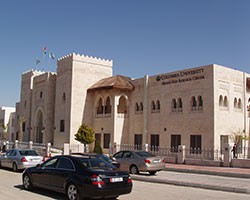
  All panels will be held at the Kellogg Center in the International Affairs Building. Admission is free. Fourteen prominent tourism, culture, hospitality, planning, business improvement district and tourism development professionals from New York, New Orleans, Baltimore, San Francisco, Chicago, and Los Angeles will participate in the panels: “Culture, Tourism, and Downtown Revitalization,” “Neighborhood-Based Projects” and “New York City Culture and Tourism.” Participants include: William Rudin, President, Rudin Management Co.; Pat Dowell-Cerasoli, who is the prime mover behind the restoration of Chicago’s Bronzeville, the African-American community known as the Midwest’s “Black Metropolis”; Gretchen Dykstra, President of the Times Square BID; Betsy Gotbaum, Executive Director of the New-York Historical Society; Harvey Lichtenstein, President and Executive Producer, the Brooklyn Academy of Music, and Jonathan Tisch, President and CEO, Loews Hotels.

  “All cities have a unique historic legacy and cultural life to offer residents and visitors alike,” said David N. Dinkins, former New York City Mayor and a senior fellow at the Barnard-Columbia Center for Urban Policy. “But too often these wonderful resources are hidden treasures and not the public jewels they ought to be. This year’s forum will explore the ways in which cities have successfully developed and preserved their cultural and historic assets.”

  “Increasingly cities are looking for ways to strengthen their local tourism and culture sectors by highlighting the attractions of historically important communities,” said Ester Fuchs, Director of the Barnard-Columbia Center for Urban Policy. “One of the particular challenges for neighborhood-based projects is to make sure that economic benefits actually return to the neighborhood.”

  Dinkins will open the day with remarks at 10:00 A.M. Congressman Charles Rangel will give a luncheon address at 12:30 P.M. Panels will be continuous, except during the lunch break, and the event will close with a cocktail reception at 5:30 P.M.


webmaster@columbia.edu