



































 |
| VOL. 23, NO. 23 | MAY 20, 1998 |
|
Chemist Harry P. Gregor Dies at 81
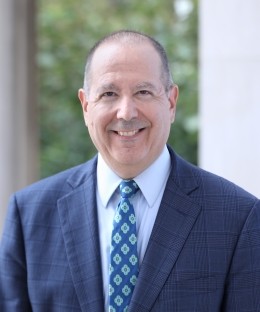
 | | Harry Gregor |
|
BY BOB NELSON
arry P. Gregor, a Columbia chemist and leading authority on ion exchange and membrane separation technology, died May 3 at St. Lukes Hospital in Manhattan. He was 81 years old.
He was in good health until very recently, when he suffered a series of strokes, which were the cause of his death, said his daughter, Polly Gregor, a research immunologist.
He was Professor Emeritus of Chemical Engineering and Applied Chemistry at Columbias Fu Foundation School of Engineering and Applied Science, where he taught for 23 years, and Distinguished Research Professor at Polytechnic University, where he was conducting research for the U.S. Navy.
He had a keen insight into how physical processes take place in aqueous solutions, said Carl C. Gryte, professor of chemical engineering and applied chemistry at Columbia and a student of Gregors.
Born Dec. 16, 1916 in Minneapolis, he received the B.A. magna cum laude in chemistry, physics and mathematics in 1939 and the Ph.D. in physical chemistry, biochemistry and physiology in 1945 from the University of Minnesota. He joined Brooklyn Polytechnic Institute as assistant professor of physical chemistry in 1946, and was eventually promoted to full professor. In 1967, he was named professor of chemical engineering and applied chemistry at Columbia and was named professor emeritus in 1987. He rejoined Polytechnic University in 1990 and was named Distinguished Research Professor.
In his early work at Polytechnic, Gregor conducted basic research on ion exchange resins, which he realized could be the basis for a purification technology. He developed several applications for the gels, among them removing radioactive materials from water and, during the strontium scare of the early 1960s, strontium-90 from milk. The U.S. Navy asked him to develop ion exchange resins to purify drinking water in case of a nuclear confrontation.
At Columbia in the late 1960s, he did pioneering research on stabilized enzymes, in which enzymes that speed a reaction are bound to polymeric hollow fibers, allowing reactions to take place as a liquid flows through a fiber wall and eliminating the need to recover the enzyme from the final product.
He is survived by his wife of 57 years, Elinor, of High Falls, N.Y.; a sister, Mary Molner of Las Vegas, Nev.; four children, all New York City residents, Laurel Porter, Charles, John and Polly; seven grandchildren and one great-grandson.
|