

































 |
| VOL. 23, NO. 23 | MAY 20, 1998 |
|
CU Trustees Pass 199899 Budget of $1.4 Billion
Major Investments Made to Facilities, Academic Programs
BY AMY CALLAHAN
he University Trustees have approved a 4.8 percent increase in the operating budget for the 199899 school year, bringing total expenditures to $1.4 billion.
In this final budget of the millennium, President George Rupp reported, Columbias current financial strength is formidable.
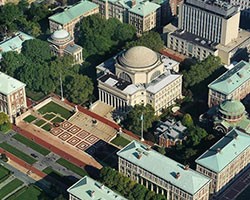
Standing on this financial solid ground, he presented a budget that supports major investments in facilities of great importance to all students and faculty, namely: the continuation of the phased renovation of Butler Library; the construction of the $77 million Alfred Lerner Hall student center, and the groundbreaking of the $50 million undergraduate residence hall on Broadway at 113th Street.
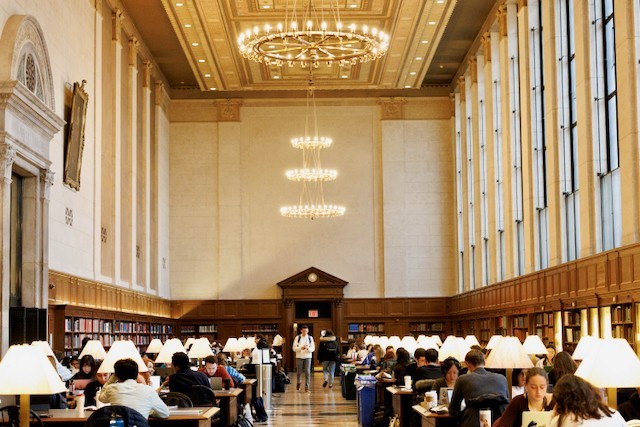
While these improvements to the classrooms, laboratories and other elements of the physical plant continue at a record pace, the budget also reflects investments to academic resources, such as the recently-announced influx of funding to the Libraries and salary increases for faculty members and the academic computing staff.
A $57 million increase in revenue is expected next year, due to tuition and enrollment increases, gifts and endowment income, sponsored research and physicians private practice income.
Some of the key factors contributing to Columbias current fiscal strength include:
- a 75 percent increase in the endowments market value in just 4 years;
- a successful budget-reduction program undertaken in the mid-1990s;
- record-setting fundraising;
- increasing enrollments; and
- a powerful technology transfer program, bringing in patent income.
These strengths, Rupp explained in his budget message, in combination with a much-improved economic environment, have allowed Columbia to invest heavily in its academic programs and its facilities, investments that have clearly paid off with regard to quality and reputation.
Expenditures
In the 199899 operating budget, more than half of the expenditures (59 percent) are funded from highly restricted sources, such as government grants, and are spread among many schools and departments of the University. The remaining expenditures (41 percent) are funded with unrestricted or interchangeable restricted funds.
Expenditures among schools on the Morningside campus will increase 7.2 percent, to $457.7 million. This increase is due to instructional salaries (nearly one-fourth of the budget), which are slated to rise by 6.7 percent. Other rising expenses include: debt service to capital projects, fundraising activities and financial aid expenses.
The Morningside schools also are charged with the common costs of running the University, such as central administration, debt service for shared capital projects, utilities and insurance. These common costs, which reflect costs not charged directly to academic budgets, are budgeted to rise 5.25 percent for the next two years and at 5 percent thereafter. The increase is driven by expenditures which support academic programs, such as the Libraries and academic computing; and by the costs of expanding and improving the physical plant. Central administrative budgets, a component of common costs, are slated to rise by 2.75 percent.
Central expenditures at the medical school on the will increase to $119.1 million, a 7.7 percent increase.
Capital Budget
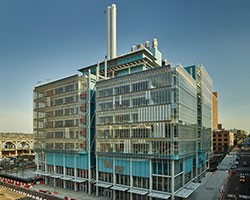
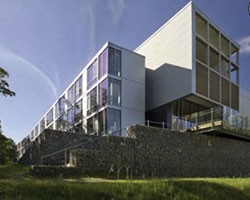
The next school year is the final in a 5-year capital renewal program which, all told, will pour $664 million into building projects across the University, from Journalism Hall and Dodge Hall, to Law school buildings and the new Audubon biomedical facility in Washington Heights.
In 199899, spending for capital projects will total $156.6 million. Of this, 68 percent is devoted to projects on the Morningside campus, 22 percent to projects on the Health Sciences campus and nearly 10 percent to projects within Institutional Real Estate properties.
Endowment Spending
Budgeted distributions of income from the Universitys endowment will increase by 15 percent in 199899, higher than the 5.5 percent increase that was budgeted for this year. This relatively high increase is made possible by the reduction in school deficits and the recent better-than-expected investment performance of endowment assets.
|