




































The University Senate, meeting on Feb. 24, heard in a report that the Faculty Affairs Committee had been asked by the Provost's Office to review the University's plan to extend tuition exemption and housing fringe benefits to same-sex domestic partners of employees.
In reply, the Committee endorsed this step but it felt it raised questions of fairness for those with opposite-sex domestic partners who for a variety of reasons may choose to refrain from marrying although they are not legally barred, like gays, from doing so.
Four resolutions were also considered:
The point of the initiative from the Student Affairs Committee, given that the military still recognizes homosexuality as a disqualifying trait, was to bring University practice strictly into line with its 1978 policy that added sexual orientation to the list of non-discrimination categories in University-administered programs.
Instead a substitute resolution was introduced, by a vote of 18-17-6, which reaffirmed the University's more sweeping non-discrimination policy and called on the Columbia administration to redouble its efforts to persuade the federal government to change the law. This substitute resolution was eventually passed by a vote of 24-13-3.
Proponents of the stricter version argued that by cooperating with armed forces recruitment the University was rendering its own nondiscrimination policy meaningless.
They pointed out that the Law School, as an accreditation requirement, has banned military recruitment under most circumstances for several years without challenge.
Two main objections were raised to the idea of barring military recruiters from campus. The first pertained to penalties the Department of Defense is authorized to levy on colleges that ban recruiters. In the case of Columbia, such funds could amount to $12 million each year. If heavier penalties called for in a pending congressional bill are approved, the cost to Columbia could be $300 million or more each year.
The second objection held that a cure for alleged hypocrisy on the part of the University should be comprehensive, meaning that every other compromise the University may be making should be examined, including hosting religious denominations on campus that discriminate on the basis of gender or sexual orientation, or maintaining affiliation with an all-female college like Barnard.
Normal teaching and departmental duties would not be suspended, the intent being merely to lessen the pressure to publish when children are most demanding.
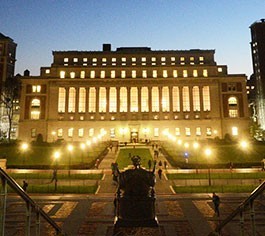
The next meeting of the Senate will be held on Mar. 31 at 1:15 P.M. in 301 Uris Hall. Non-senators who wish to attend as observers must obtain tickets by presenting a valid CUID at the Senate office, 406 Low Library, or at 3-411 P & S, by 11:00 A.M. on the day of the meeting.