










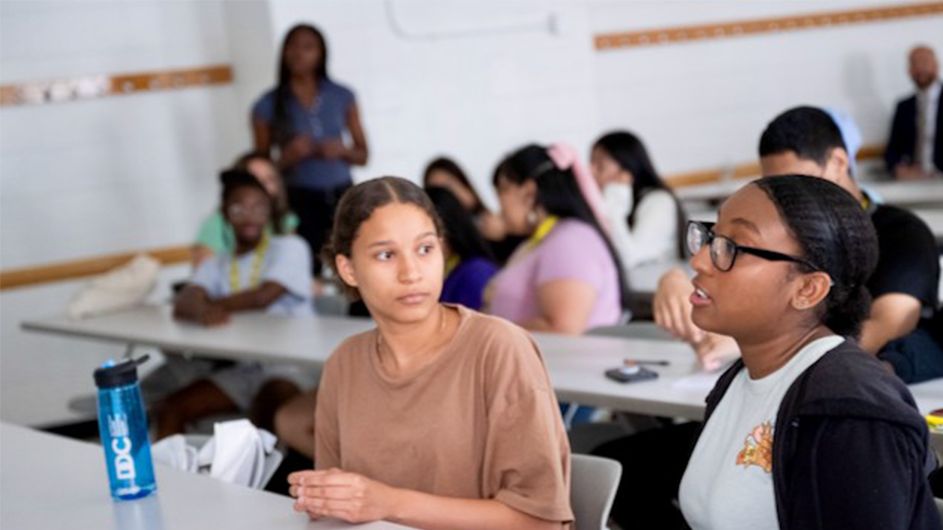
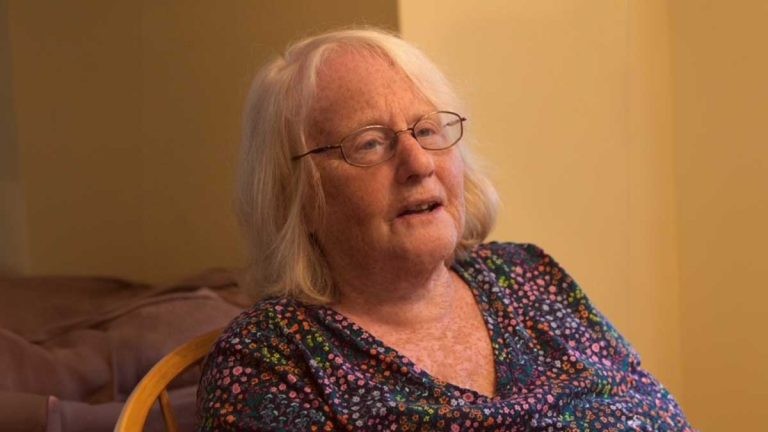



Photograph, Melissa Duperval BC '98 and a young patient at Grace Hospital in downtown Port-au-Prince.
Photograph, United States troops, on patrol in Port-au-Prince, pass in front of a billboard promoting democracy and President Aristide.
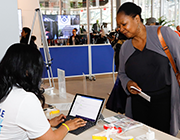
Photograph, Tamara Magliore CC '95 and Sabine Louissaint CC '95 take a work break to meet with children at a Port-au-Prince public elementary school.
Photograph, Clara Bouillon BC '97 with young patients at Grace Hospital.
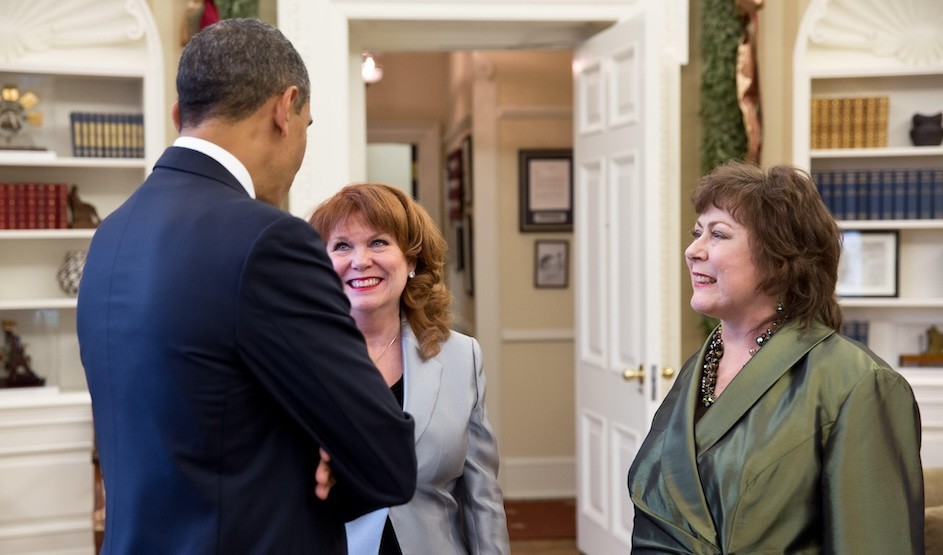
Photograph, Columbia students meet with U.S. Ambassador William Swing.
The sight of Columbians packing their bags and leaving Morningside Heights to spend spring break on a Caribbean island is not uncommon. But the Alternative Spring Break trip that took 19 students, along with Presbyterian Campus Minister Scott Matheney and Methodist Campus Minister K. Karpen to the Caribbean was anything but ordinary.
Rather than heading to traditional vacation destinations like Jamaica or the Virgin Islands, the group spent its week at work in Port-au-Prince, Haiti.
For most of the students, the extreme poverty they encountered in what is widely recognized as the hemisphere's poorest nation was unlike anything they had experienced before. Roughly half the students were Haitian-Americans, but even those who had visited Haiti before said conditions today were worse than they had ever seen.
As in previous Alternative Spring Break programs, which included helping with hurricane relief in Miami and work on a Puerto Rican summer camp, the group's schedule was organized around working to help local communities, in this case by painting a school in the rural farming village of Duplan and a hospital in downtown Port-au-Prince.
The group included Clara Bouillon BC '97, Elizabeth Brown BC '97, Rachelle Brutus BC '98, Marilyn Chaylot GS '95, Viviana Cristian CC '95, Patricia de Groot SIPA/GSAS, Malik Ducard CC '95, Melissa Duperval BC '98, Ernest Garnier CC '96, Edline Jacquet CC '98, Vanitha Janakiraman CC '97, Yoon Hee Kang BC '97, Sabine Louissaint CC '95, Tamara Magliore CC '95, Kathryn O'Neal CC '97, Suzy Papayer CC '95, Celeste Reinking CC '98, Michael Stanton CC '95, and Jim Talbot SE '98.
The trip was organized and sponsored by Community Impact, Earl Hall Center and the campus ministries.
The work projects turned out to be a small part of the trip, as the students took away many personal lessons working side-by-side with dozens of Haitians during the week.
"One day we went walking though the marketplace and we saw all the vendors out on the street, trying to sell food right next to the open sewers, in the middle of just hundreds of flies. Since the market was on an open street, there were cars passing through constantly, and they were knocking over the tables and things that were for sale. All the people wanted was a designated marketplace, and they took us to see a field that had been set aside for a market. After the military coup, the government never followed through on the plans to make it a market, and it just became a garbage dumping ground. They kept asking if we were going to come back and help them, and that just deepened my frustrations, because we saw so many immediate needs on this trip. I felt there were so few ways we could help the people immediately."
--Vivian Cristian CC '95
"Many of the children in my aunt's school are restaveks, which means they come from the servant classes, and their lot in life is to grow up to be servants themselves. They knew that they were lucky to even be able to attend school, but they showed no self consciousness about the class differences. All of the kids we met were amazed that a lot of us in the group spoke Creole.
When I spoke to people, I heard a lot of hope and courage. Haiti today is not like the Haiti I remembered. Port-au-Prince is a lot dirtier and there is a lot of homelessness--a lot of them sick, with nowhere to go but the streets. But there was still this spirit of hope, and I'm not sure where it comes from."
--Sabine Louissaint CC '95, a Haitian-American who last visited Haiti in 1981 and was able to visit several family members, including an aunt, who is principal of one of the few public elementary schools in Port-au-Prince.
"We walked into one woman's house, and she said, 'my boy died last month.' She told us that he was just two months old and he was her only hope. She said she didn't have money for a funeral, so they had to just throw his body into the river. She showed us holes in her house's roof, and said that every time it rains her family has to sleep in puddles, and that's how he got sick. She said they all knew he was sick, but there was no doctor to take him to anyway."
--Vanitha Janakiraman CC '97
"If [Columbians] are going to Haiti to help, [then] I think we definitely have to redefine what we're doing and how effective it's going to be, because going down there for a week to paint is not really an effective thing to help the country. Certainly there are ways we can be effective, [but] if what we want to do is help ease people's poverty, then I think it's kind of hypocritical for us to fly a few thousand miles away when next door is Harlem, which has its own horrible problems."
--Elizabeth Brown BC '97
"One of the things that stood out in my mind was seeing Haitians help other Haitians to help themselves. Often foreigners take a paternalistic attitude toward countries that lack economic resources, but it was such a great and satisfying feeling to see Haitians in real leadership roles at every level. It will definitely be Haitian people who lead the country toward change and a new direction."
--Edline Jacquet CC '98
"Right before the plane landed in Haiti, I looked out my window and had visions of the fire and strife of the Haitian Revolution of 1804, the only successful slave rebellion ever. When the plane landed, however, I was jolted by the reality of poverty. Although I have distant family there, Haiti for me was always an intellectual and cultural curiosity, and this trip helped put a lot of issues in context. Of all my experiences at Columbia, the alternative spring break trip to Haiti was definitely one of the best."
--Malik Ducard CC '95
Reporting for the above was contributed by Michael Stanton CC '95; photographs by K. Karpen, Methodist campus minister.