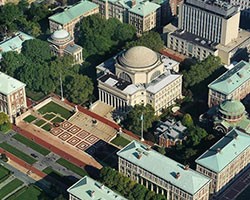
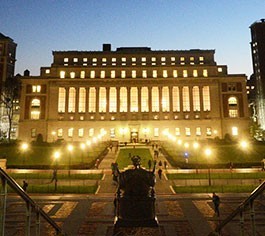





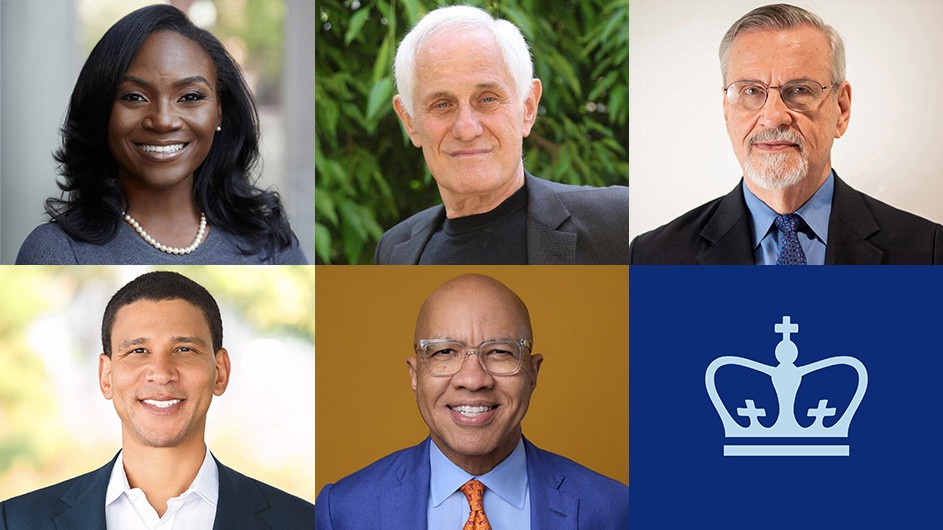
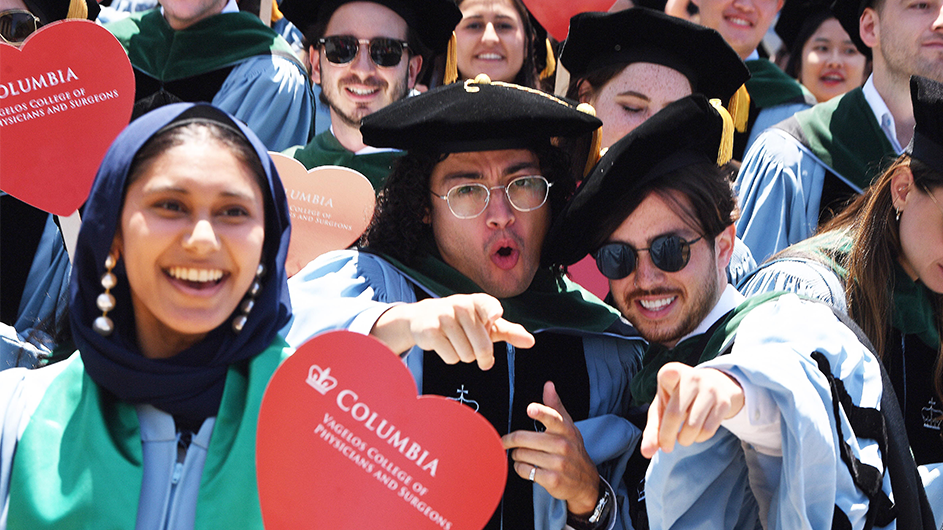
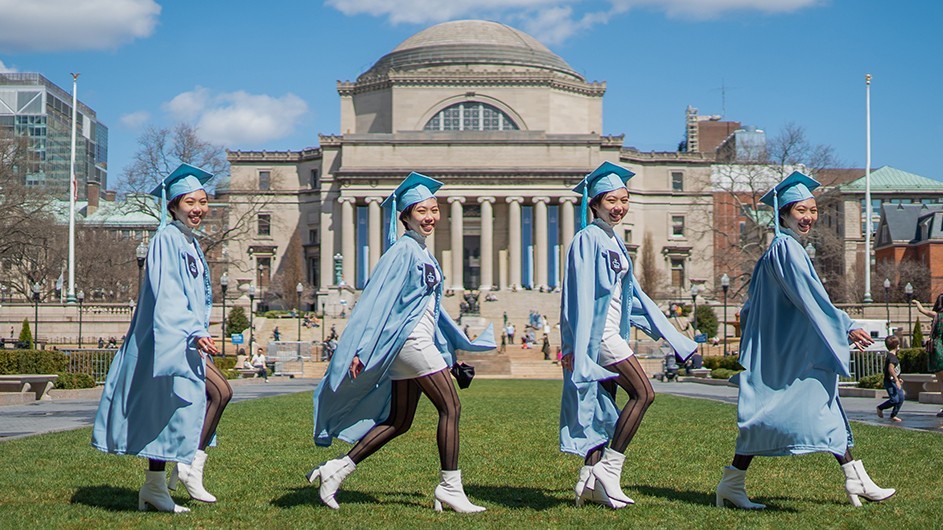
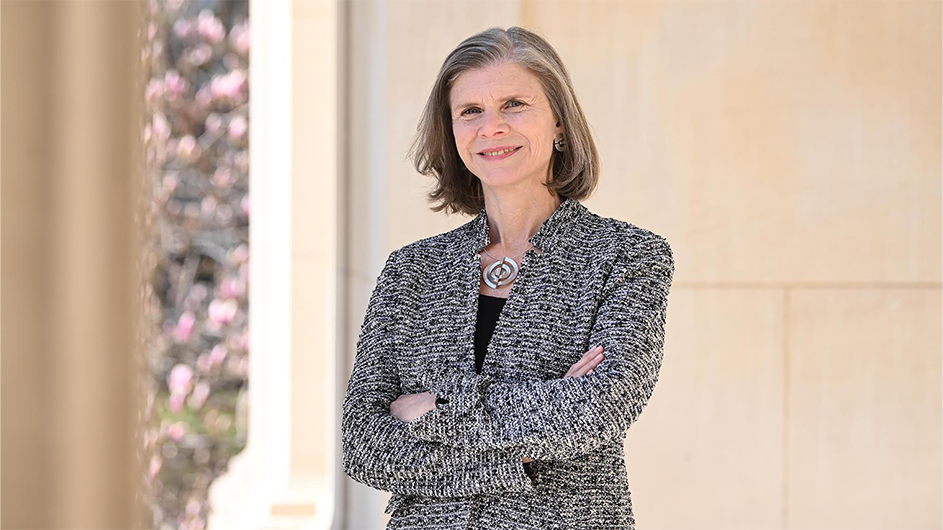



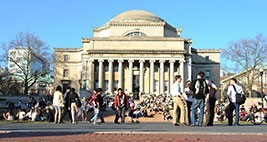


Columbia College, which has graduated more Nobel laureates in science than any other American college, will present to five of them its highest honor, the Alexander Hamilton Medal, this Thursday in Low Rotunda.
"These are humanist-scientists, at home with Hamlet and the atom, whose shared experience of Columbia's famed core curriculum sets them apart," said President Rupp. They are:
A total of nine Nobel Prize winners in science (physics, chemistry and physiology or medicine) are graduates of the College, the record for undergraduate degrees earned at any one school. The other four received the Hamilton Medal in a similar celebration 34 years ago, in 1961. Generally, the medal is awarded to only one individual each year.
The medal has been given since 1947 to honor faculty, former faculty or alumni for "distinguished service and accomplishment in any field of human endeavor." Previous winners also include Columbia President Dwight D. Eisenhower and alumni Richard Rodgers and Oscar Hammerstein II.
The medal is named for the statesman of the Revolutionary period, who attended King's College, as Columbia was then known.
The presentation will be made at a formal dinner. Speakers joining Rupp will include Austin Quigley, dean of the College, Martin S. Kaplan, president of the school's alumni association and the medalists.
Columbia distinction as an educator of Nobelists lies largely in physics, where five of the nine laureate graduates did their winning work. This year, a physicist, Martin Perl, won the Nobel for work begun as a graduate student under Columbia's I. I. Rabi in the 1950s. It was a time when Columbia professors were winning so many Nobels that junior faculty members wore lapel buttons reading "Not Yet."
This year's five honorees earned their Bachelor of Arts degree at the College in the past 60 years:
Cooper, who also received his master's degree and Ph.D. from Columbia, shared the Nobel for developing the theory of superconductivity, which explained the ability of certain materials at extremely low temperatures to sustain electric currents indefinitely. He is Thomas J. Watson Sr. Professor of Science at Brown.
Hoffmann shared the Nobel for his mathematical theories explaining the behavior of atoms and molecules. He is John A. Newman Professor of Physical Science at Cornell.
Ramsey, who also earned his Ph.D. at Columbia, shared the Nobel for devising measurement techniques that led to the use of the cesium atomic clock as the international time standard. He is Higgins Professor of Physics Emeritus at Harvard.
Schwartz, also holder of a Columbia Ph.D., shared the Nobel with two Columbia colleagues for studies at the University of neutrinos that led to the now accepted view that elementary particles are grouped in pairs.
He is I. I. Rabi Professor of Physics at Columbia.
Schwinger, who also earned the Ph.D. at Columbia, shared the Nobel for fundamental work in quantum electrodynamics.
University Professor of Physics at UCLA, he died Aug. 16, 1994.
Columbia University Record -- November 17, 1995 -- Vol. 21, No. 10