




















Lee Wins Korea's Ho-Am Prize


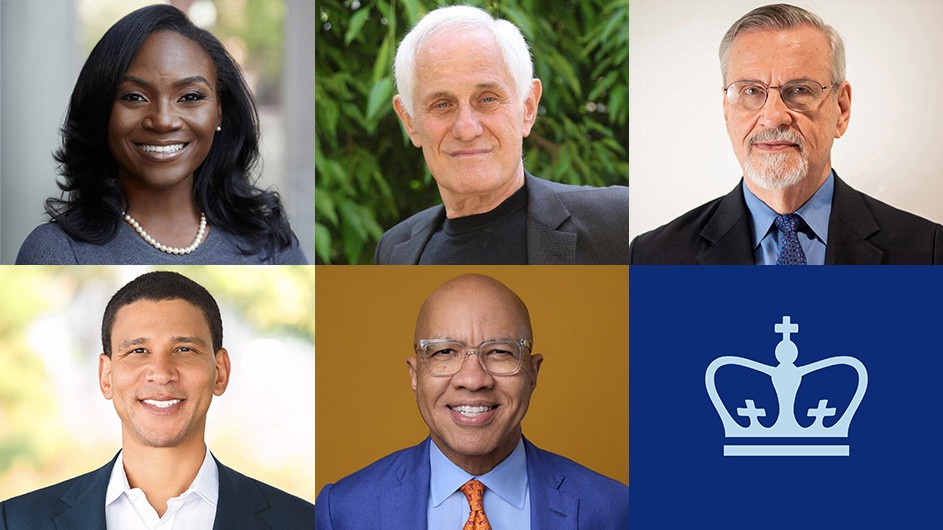
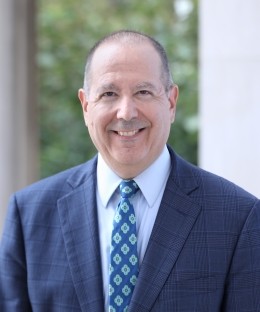
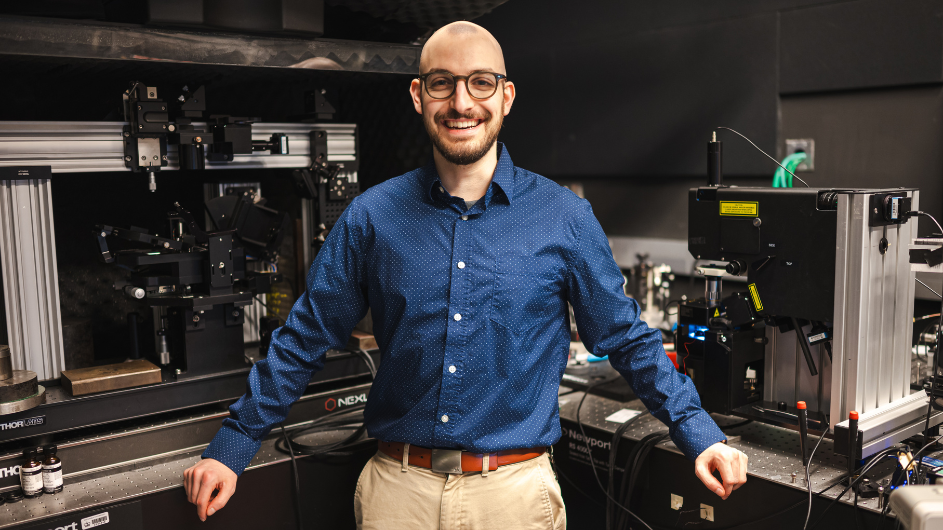
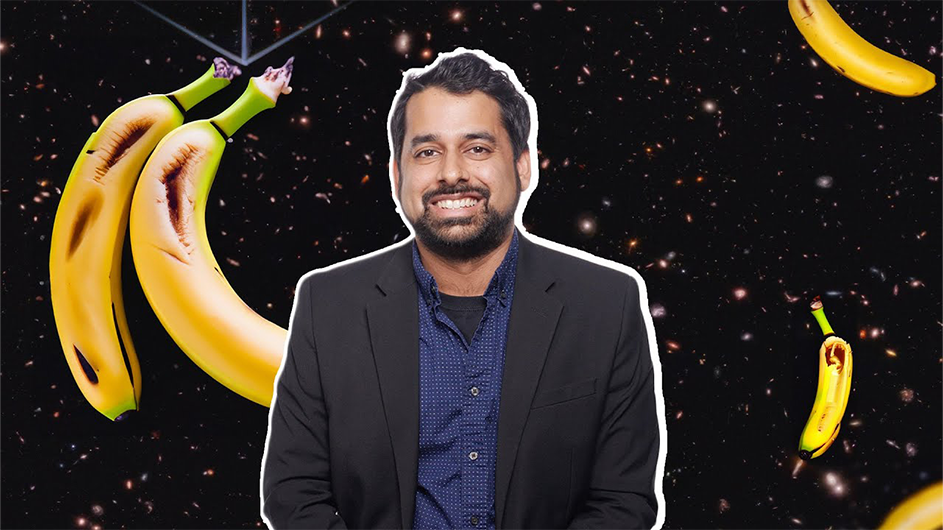
Photograph: Wonyong Lee. Photo Credit: Joe Pineiro.


Columbia physicist Wonyong Lee has won Korea's most prestigious award, the Ho-Am Prize, for his work in particle physics.

The prize, valued at more than $110,000, will be awarded Mar. 22 in Seoul by the Samsung Welfare Foundation.

Lee was cited for his "monumental contributions to the advancement of high energy particle physics." The prize is given in six fields annually to persons of Korean birth anywhere in the world. The foundation will award $60,000 to the Columbia researcher and $50,000 to support his scientific work.

Lee's prize, for basic science, and others in engineering, medical science, the arts, mass communication and social service, were announced in Seoul Feb. 7.

In 1965, Lee was part of a Columbia team, with physicists Leon Lederman and Samuel C.C. Ting, investigating antimatter, particles with the same mass and lifetime as matter but with opposite electric charge and magnetic moment. The Columbia physicists produced the antideuteron, formed of an anti-proton and an antineutron, at Brookhaven National Laboratory's particle accelerator on Long Island. The discovery was the first observation of the strong force that holds the nuclei of atoms together acting in an antinucleus, which told physicists that antimatter obeys at least some of the same laws as matter does.

In a series of experiments beginning in 1970 at the Fermi National Accelerator Laboratory in Batavia, Ill., and at Brookhaven, Lee and his research team sought to confirm elements of the unified electroweak theory, which held that electromagnetism and the weak force, which provides internal stability to protons and neutrons in atomic nuclei, were closely related. The theory required the existence of a neutral messenger particle, one that could convey the weak force without electrical charge.

Lee's team saw clear evidence of the neutral particle in 1974, adding credence to electroweak theory.

Lee's group was among the first to observe anti-charm baryons, particles that included an anti-charm quark.

Born in Ham-hung, Korea, Lee received a degree in mathematics from Seoul National University in 1950, a B.S. in physics from Cal Tech in 1957 and the Ph.D. in physics from the U.C.-Berkeley, in 1961. He came to Columbia as a research associate and joined the faculty as assistant professor in 1964. He was named associate professor in 1967 and professor of physics in 1972.

From 1985 to 1990, he was director of Columbia's Nevis Laboratories in Irvington, N.Y. He was a visiting scientist at CERN, the European Laboratory for Particle Physics, in 1979-80, and was president of the Association of Korean Physicists in America in 1983-84. That association awarded him its Medal of Physics in 1992.

He was Alfred P. Sloan Research Fellow in 1965-67 and John Simon Guggenheim Memorial Foundation Fellow in 1979.

Lee is a resident of Ardsley, N.Y.


Columbia University Record -- February 23, 1996 -- Vol. 21, No. 17