










































SW Alumni Advocate Change


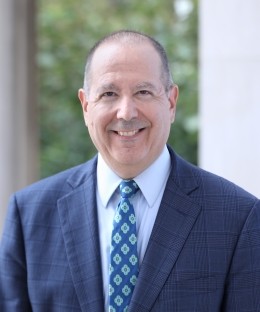
Photograph: Dowling, Feldman and Siskind addressed Social Work Alumni, students and community members at the Faculty House last Wednesday afternoon. Photo Credit: Joe Pineiro.


Michael J. Dowling, senior vice president of Health Services, North Shore Health System, and former New York State Commissioner of Social Services, and Alan B. Siskind, '66, executive vice president of the Jewish Board of Family and Children's Services, were the speakers at the May 1 School of Social Work's Annual Alumni Conference, titled "The Refinancing of Social Work Practice: Managing Managed Care." They were introduced at the Faculty House by chief program officer of the American Red Cross Steven Taylor, '84.

Dowling spoke on "Managing the New Reality." He focused on the way in which changing the funding stream in social welfare could improve the efficiency of service. Favoring a per-individual or "capitated" funding structure, Dowling said that change in social service financing should not be regarded as a partisan issue because most complaints about current practices in the field are shared by all financers--private taxpayers and public government financers alike. But, he said, criticisms that insufficient time is spent on prevention strategies and that holistic approaches are under-used, should come as no surprise. "We should not have been surprised at all. We built the system that way ... We micro-managed. We set up agencies to compete with one another."

Dowling ended by suggesting that changing the method of reimbursement for social services to concentrate more on results and less on time spent would allow agencies to serve their clients more efficiently and would encourage them to work together, which would, in turn, cut down the amount of time spent on paperwork. "Why not create a social service network?" he said. "Why not coalesce?"

Siskind's talk, "Maintaining Agency Mission in a Managed Care Environment," focused on the ways in which changing mindsets in the social welfare system have allowed practitioners to achieve better results in assisting their clients. He said that while in the past, long waiting lists for service were viewed as a sign of a program's success, practitioners now recognize them as an indication that efficient and timely service is needed in order to meet the needs of clients. The view that more treatment is better than less treatment is also changing, as is the opinion that the provider always knows what is best for the client and should be in complete control of the treatment. "The assumptions are shifting," he said.

The conference was co-chaired by Gay Hartigan, '75, and Steven L. Taylor, '84. Introductory remarks were made by Dean Ronald Feldman and alumni association president William G. O'Reilly, '71.


Columbia University Record -- May 10, 1996 -- Vol. 21, No. 26