














































Go to ColumbiaWeb


"I am delighted that two great medical schools are establishing an alliance of their physician organizations that will provide the best possible medical care informed by world-renowned biomedical research."
Hunter Rawlings, III
President of Cornell University


"This alliance is a dramatic step toward true health care reform. It will insure high quality health care by putting the finest medical professionals at the center of decision-making, and by helping reduce costs. The partnership will be a powerful vehicle for providing medical care while advancing medical science."
George Rupp
President of Columbia University


Where to Find It

The Columbia-Presbyterian Medical Center Web is accessible on the main page of ColumbiaWeb. See also: Cornell University Medical College.


Record Banner


Columbia and Cornell Plan Alliance--2,800 Physicians Strong


By Elaine Metcalf

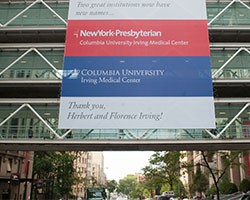
View from the Bridge
View of the Columbia-Presbyterian Medical Center and the Hudson River.
Columbia and Cornell universities announced this summer plans to establish an alliance of 2,800 physicians at their Ivy League medical schools to negotiate jointly with managed care companies and insurers and to develop joint practice sites throughout the metropolitan region.

  The innovative relationship marks the first time two medical schools faculties have formed a clinical alliance while their medical schools maintain separate identities.

  Dr. Herbert Pardes, Vice President for Health Sciences and Dean of the Columbia College of Physicians and Surgeons said, "Our new alliance is associated with two of the world's leading academic medical centers--The New York Hospital-Cornell Medical Center and the Columbia Presbyterian Medical Center. That combination assures that patients will receive the best and most up-to-date treatment available."

  The alliance is powerful because of the sheer numbers of physicians involved and the prestige and quality of Columbia and Cornell medical schools. Columbia ranks fourth in the country in terms of federal research dollars and Cornell ranks tenth.

  Joint practice sites will be developed throughout the metropolitan region in neighborhoods where large populations of people live or work, making it more convenient for patients to access Columbia and Cornell physicians. Creating these satellite practice sites where people are treated as outpatients is a growing trend in health care.

View from the Bridge
View of the New York Hospital-Cornell Medical Center and the East River.

  Columbia already runs a faculty practice site in midtown Manhattan at Madison Avenue and E. 60th St., near Bloomingdale's and Barneys.

  The alliance will take the physicians to the patients. Although the practice sites have not been selected, sites might be opened in Westchester county, Long Island or even Wall Street. The alliance also will reduce overhead and save money for the participating physicians. They will shop for the same clinical information systems, such as computerized medical records and patient billing, and eliminate dissimilar systems currently in use.

  Duplication in support services also will be eliminated.

  Initially 2,800 physicians with appointments at Columbia and Cornell's primary hospital affiliates (Presbyterian Hospital and New York Hospital) are eligible to join this dynamic new approach to health care.

  Eventually the arrangement may include 8,000 Columbia and Cornell physicians located at more than 20 hospitals affiliated with the medical schools.

  The faculty practice plans of the two institutions currently treat patients throughout the New York Metropolitan Region as well as nationally and worldwide and generate over $400 million annually in revenues. The two universities said that they expected to substantially expand the number of patients served.

  Columbia's College of Physicians and Surgeons and Cornell University Medical College, both based in Manhattan, are two of the country's premier medical schools. Columbia's medical school currently ranks fourth nationally in overall federal research support; Cornell's ranks tenth.


Columbia University Record -- September 6, 1996 -- Vol. 22, No. 1


webmaster@columbia.edu