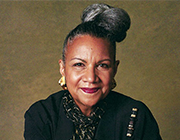
















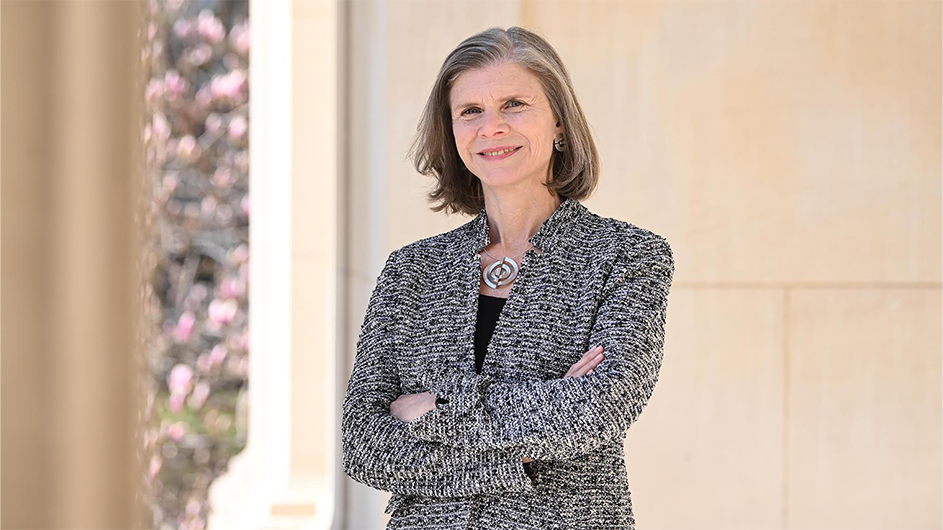





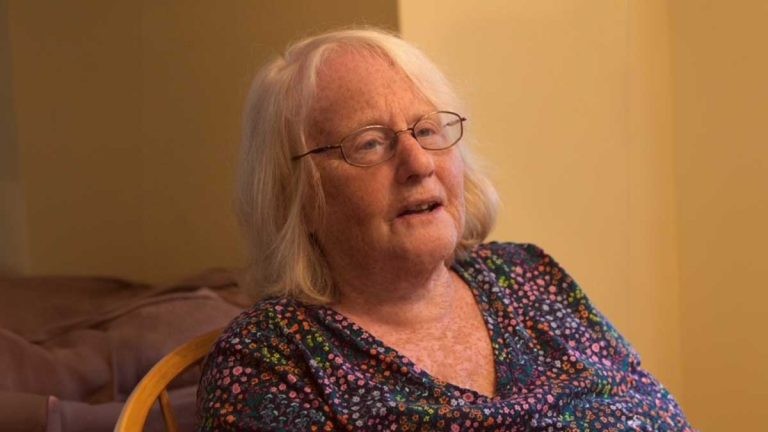





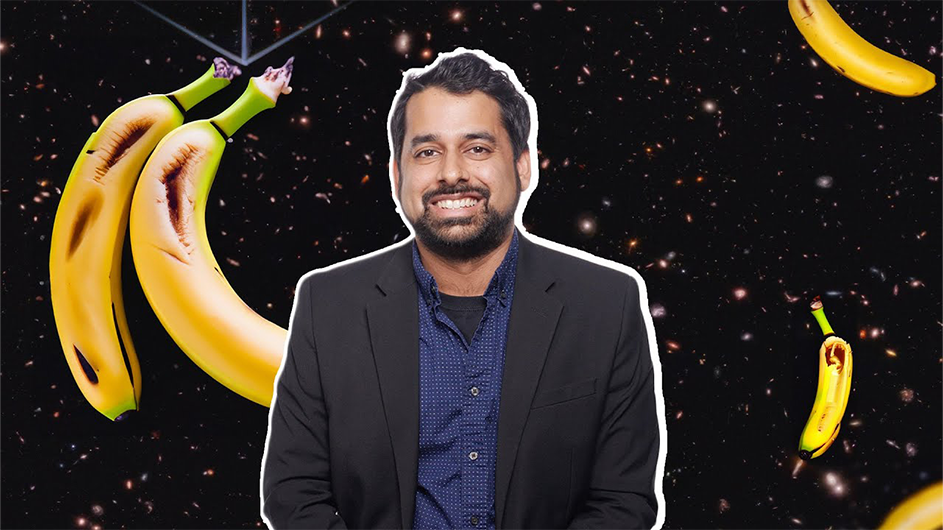
Photograph: Umberto Eco. Photo Credit: Joe Pineiro.
By Suzanne Trimel
The Internet and CD-ROMs will change the way we read and write but books as we know them will remain the fundamental currency of language, the distinguished philosopher and critic Umberto Eco told a Columbia audience last week.
"Books will remain indispensable not only for literature but for any circumstance in which one needs to read carefully not only to receive information but also to speculate and to reflect about it," said Eco. "To read a computer screen is not the same as to read a book. Books still represent the more economical, flexible, wash-and-wear way to transport information at a very low cost."
A capacity crowd of more than 200 people heard Eco speak on "From Internet to Gutenberg," the second of four lectures he is giving this fall at Casa Italiana, where he is Fellow-in-Residence at Columbia's Italian Academy for Advanced Studies. His lecture in the elegant Teatro of Casa Italiana was broadcast simultaneously to an overflow crowd of 50 in nearby Schermerhorn Hall and also broadcast live on the World Wide Web in a joint project of the Italian Academy and Columbia's Academic Information Systems.
Eco is a professor of semiotics at the University of Bologna and the author of more than two dozen books on interests ranging from St. Thomas Aquinas to James Joyce to Superman.
Speaking for nearly an hour, he described inventions through history--the printing press, the automobile, the daguerreotype, among them--that made great thinkers of their time wonder whether the new technology would doom an older one.
"The car is faster than the bicycle," said Eco, "but cars have not made bicycles obsolete and no new technological improvement can make a bicycle better than it was before. The idea that a new technology abolishes a previous role is much too simplistic."
New inventions and technology, such as computers, often profoundly change previous ones, he said. In an age of photographic images, painters no longer are obliged to reproduce reality, he said. But the tradition of hyperrealism in modern painting could not exist without the photographic model. "Reality is seen by the painter's eye through the photographic eye," he said.
In the same way, computer technology will make possible hypertexts which are unlimited and infinite, said Eco. "Every user can add something, and you can implement a sort of jazz-like unending story," he said.
"We are marching toward a more liberated society in which free creativity will co-exist with textual interpretation," said Eco. "But we must not say that we have substituted an old thing for a new one. A hypertextual device that allows us to invent new texts has nothing to do with our ability to interpret pre-existing texts."
Use of the Internet will require what Eco called "a new form of critical competence, an as-yet-unknown art of selection and decimation of information." Internet users today may be unable to discriminate between "a reliable source and a mad one," he said. "We need a new kind of educational training, a new wisdom" to cope with the deluge of information.
As new generations become computer literate, Eco predicted language will be dominated by increasing brevity--not an unwelcome development, he said. "Frequently for poetry, the fewer the words, the more the things."
Columbia University Record -- November 22, 1996 -- Vol. 22, No. 10