



























Go to Columbia Web


Record Banner
VOL. 22, NO. 21APRIL 18, 1997


An Anti-Cancer Vaccine Is Tested

By Bob Nelson

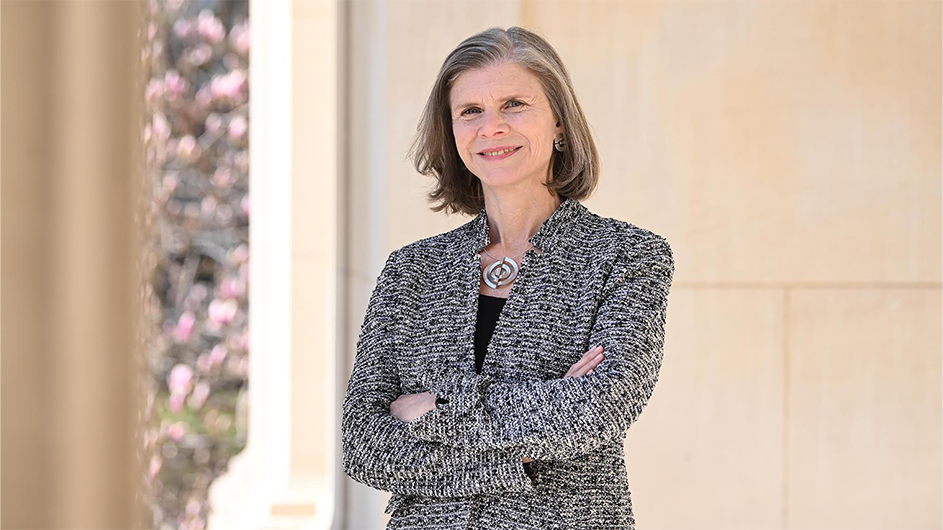
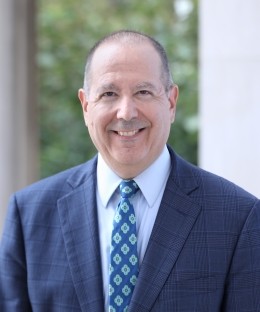
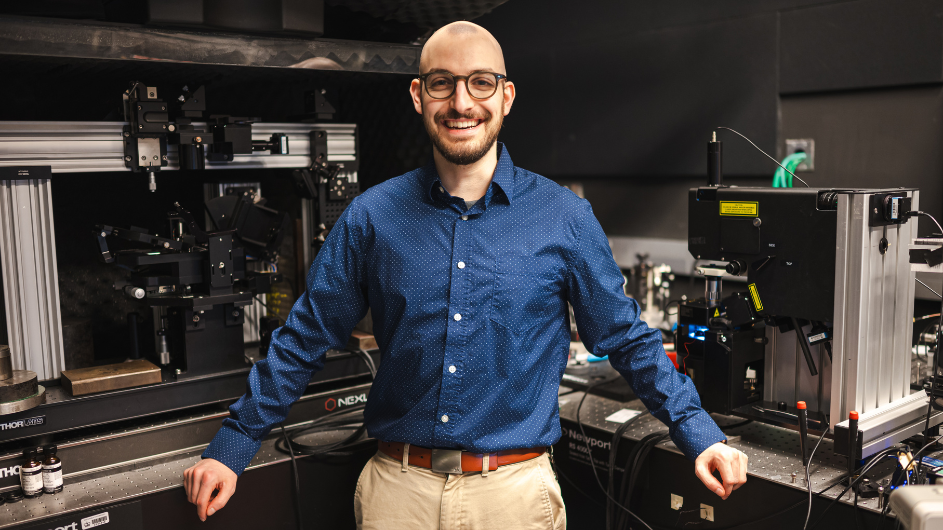
Danishefsky.
A Columbia chemist's synthetic carbohydrate molecule is undergoing clinical tests as an anti-cancer vaccine in 20 patients with early prostate cancer at Memorial Sloan-Kettering Cancer Center.

  The molecule was synthesized by Samuel Danishefsky, head of the Laboratory for Bioorganic Chemistry at Sloan-Kettering and professor of chemistry at Columbia. A report on the synthesis of the vaccine appeared in a recent issue of the international chemistry journal Angewandte Chemie.

  The patients in the current clinical trial have undergone radiation therapy or surgery to treat their primary tumors. Doctors hope the vaccine will provoke an immune response and destroy any remaining tumor cells that could cause a recurrence of the cancer being treated. The vaccine is also being tested for toxicity.

  Although the treatment is termed a vaccine, it is administered to combat one incidence of cancer, and is not expected to confer long-term immunity because it does not trigger production of the quantity of antibodies such immunity would require.

  Danishefsky had explored the field of synthetic carbohydrates during his tenure at Yale from 1979 to 1993, before he joined the Columbia faculty. He became interested in how a synthetic carbohydrate might be used as an anti-cancer vaccine after conversations with Philip Livingston of the Clinical Immunology Service at Sloan-Kettering.

  The vaccine is based on an antigen--a molecule that can be recognized by the human immune system--called globo H, a carbohydrate molecule found in high numbers on the surface of many cancer cells, including prostate- and breast-cancer cells. Danishefsky first synthesized globo H, a complex hexasaccaride, or six-sugar chain, in 1995.

  Many cancer-cell antigens, including globo H, are too small to provoke an immune response, Danishefsky said, as evidenced by the fact that the immune system does not eradicate cancer on its own. But if the cancer-specific antigen is attached to a molecule the immune system recognizes as foreign, and an immune stimulant is also administered, the immune system may make antibodies to the cancer-specific antigen, according to Sloan-Kettering researchers.

  In this approach, those antibodies then destroy any cancer cells left in the bloodstream after treatment of a primary tumor. similar vaccine, developed by Danishefsky and Kenneth Lloyd of Sloan-Kettering's Immunology Program, will soon enter clinical trials for ovarian cancer patients. This vaccine is based on another carbohydrate antigen, known as Lewis Y, which is present on the surface of ovarian-, breast- and prostate-tumor cells. Lloyd, who was an assistant professor of biochemistry at Columbia from 1968 to 1974, discovered the antigen in the 1960s and Danishefsky synthesized it in 1996. In preclinical studies, Lloyd has found that the vaccine spurred an immune response in mice. The vaccine is to be administered to 18 Sloan-Kettering patients with recurring ovarian cancer.


webmaster@columbia.edu