

















RESEARCH IN THE CURRICULUM
Not Just a Job, an Adventure: Undergraduate Research
By COLIN HENDRICKS
(Related Story: students discuss their research projects)
Natasha Pfeiffer, a soft-spoken sophomore at Columbia's School of Engineering,
used to work in John Jay cafeteria dishing up pasta. Now she works in a bioengineering
lab, editing graphics for a report on the cause of blood clotting on artificial organs in the
human body. She is one of many undergraduates who become involved, one way or
another, in research performed at the university. Some do it for academic credit, some
for money, some just for experience. Students and professors agree that an
undergraduate research project can be uniquely beneficial to both parties. It can also be a
disaster.
 |
Ideally, undergraduate research is an opportunity for the kind of intensive study that can
expand the mind in ways traditional courses can't. Economics Professor Todd Idson
says: "To really understand a discipline you have to get the feeling that knowledge isn't
just out there and you passively have to absorb it, but rather that it's constantly being
created and we're constantly rethinking things.... When students see a discipline as
evolving rather than fixed, they usually get a lot more excited about learning because
they see that it's an ongoing process." Judith Klavans, computer science researcher and
director of the Center for Research on Information Access, points out that research can
be exciting because "a research project really gives students an opportunity to answer
real-life questions that we don't know the answer to."
Research also fosters independent thinking and intellectual confidence in students.
Shelley Tselepis, a graduate student in computer science who did research work as an
undergraduate, says, "You had to go out and learn on your own. You weren't going to
be spoon-fed." Her fond memories of work as an undergraduate researcher played an
important role in her decision to leave her Wall Street programming job and return to
Columbia as a graduate student.
Tselepis' experience is a good example of how undergraduate research work can
influence career choices. For some, it is a litmus test for an entry into academic life.
Klavans, whose own experience doing undergraduate research contributed to her
decision to become a professor, says, "[It's] rewarding to know that I may have played a
part in helping someone find a satisfying career."
 |
Jason Lynch, a 1994 political science graduate of Columbia College who wrote an
honors thesis about the political influence of black representatives in the U.S. Congress,
says undergraduate research "felt like a whole new mode of learning." Instead of looking
for the knowledge we do have, he says, research forces students to look for knowledge
we don't have. It's a process of looking for holes and trying to plug them, which is
completely different from the classroom experience of learning what others already
know. Lynch also describes how creating a piece of original research instilled a "pride
of authorship" in his work, something he hadn't found in his regular classes.
Undergraduate research can help professors as well as students. Obviously, professors
are happy when undergraduates do research that makes a positive contribution to a
project, but this is only the most obvious of the benefits faculty derive from the
arrangement. Klavans appreciates the outside perspectives that a student taking courses in
diverse areas can bring to her projects. Opportunities for mentoring on a closer level
than classroom work provides can also be part of one's professional development,
especially for younger faculty-in-training. Pascale Fung, a doctoral candidate in
computer science, says working with undergraduates has been educational in itself: "It's
been great to see what it's like to be an adviser."
Dancing the porcupine tango
Of course, the ideal situation is one where an inspired student is doing
groundbreaking work for an enthusiastic professor. It doesn't always work out that way.
Undergraduate research can go badly for as many different reasons as there are students
and professors.
Sometimes it's a matter of confused expectations on the part of the professor or the
student, or both. Bioengineering Professor Edward Leonard says, "We're between a
rock and a hard place in the sense that if we take them in and treat them like dishwashers
and technicians and whatever, only a few will see the prize behind that much abuse or
that much burden. If we take them in and we pretend that they are doing great research
because they turn a knob when we tell them, then they will have expectations that cannot
be sustained. So it has to be done, I guess, the way porcupines make love: carefully."
On a less metaphorical level, the human interactions that accompany collaborative work
sometimes go awry. "Sometimes things interpersonally can go wrong," says Klavans.
"You're disappointed in each other for some reason or another. Somebody has
expectations that weren't fulfilled... That doesn't happen that often, just out of
experience, but it can happen."
Other problems arise when students have motivations other than genuine interest in their
research. Leonard says, "A kid will come around with a 2.5 average, which is bad news,
and know that the average professor who lets them do research for credit is going to
give them an 'A' for doing anything, and this is how he's going to get his cumulative
average up. That's an absolute recipe for disaster, because the motivations are all
wrong." Trying to use a research course to lighten up a tough semester can also cause
problems, because the research project often takes a back seat to the student's other
course work. Professors generally try to prevent these kinds of situations by
interviewing students who want to work on research. Leonard also requires a 3.5 grade
point average.
 |
These screening efforts are also aimed at preventing students from getting in over their
heads. Leonard emphasizes that it is important for professors to be aware of how
undergraduate researchers are doing as their projects progress. He describes what can
happen if they don't: "The kid stumbles through the project. Never really understands
what's going on. You don't know that the kid doesn't understand, and some graduate
student is telling him what to do next, and at the end you say 'Hey, I have to give you a
grade; write me a report.' You get the report and say, 'Oh my God, this kid didn't know
what he was doing for 10 minutes.'"
Even if the personal communication between the professor and the student is fine and the
student's motivations are genuine, the research itself can turn out differently than you
expected-a normal part of the experimental process, but often a disappointment to the
newcomer. Klavans says: "[Sometimes] you get no reliable answers, just continual
negative results. You can say that the research went wrong, because that's part of doing
research, but in a one-semester research project this could be somewhat dissatisfying to
the student."
For credits, cash, or commitment
Columbia Undergraduates are working on research projects ranging from
computer-driven natural language translation to women's studies, and the circumstances
surrounding each project are nearly as varied. The professor-student relationship, the
type of compensation, and the process the student undergoes to get involved in the
research all vary from department to department, and even among professors in the
same department.
Most undergraduates doing research are working for credit. They register for a
semester-long course and do a project for a professor who gives them a grade for their
efforts. In some departments (political science and economics, for example), a research
project might constitute an honors thesis.
Other students, like Pfeiffer, do research for pay. Taken simply as a form of
employment, it's one of the most desirable jobs available to undergraduates. Although
Pfeiffer misses her friends at John Jay, she says, "I need some kind of income, and I'd
rather work here than in the cafeteria"; paid research work gives her an opportunity to
transform a work-study job into an engaging aspect of her education. The money for her
wages is available because of a joint pilot program started this year by the Office of the
Provost and the Center for Career Services, providing $100,000 to fund undergraduate
research. This funding is intended to support about 50 undergraduates in work-study
research positions.
Other students do research not for credit or for money but simply on a volunteer basis.
Usually, these are students pursuing a career that requires some demonstration of
altruistic commitment, such as medicine.
When students and professors work to sidestep the pitfalls of misaligned expectations,
ulterior motives, and uncooperative experimental results, undergraduate research can
become a valuable part of a Columbia education. As Leonard says, "It's a real and
valuable privilege. It has to remain an extraordinary undertaking for extraordinary
people in extraordinary circumstances."
Voices From the Trenches
21stC asked undergraduate researchers to tell us about their work.
"I work with optiaclly active helical conjugated molecules. My project is based on research and
synthesis of these compounds.
"At first I worked as a lab technician in order to learn all the basics--lab work, lab safety, and bringing up
starting material. But then, the more I read, the more I learned, the more I became involved in the project; it
became my own. I think because Columbia has such a small chemistry department, you really work with
professors. You're not just a student working in the lab; you're actually a member of the group.
"One of the scariest moments presented itself when my group was preparing the first steps of our synthesis.
We were working in a 12-liter flask with 6 liters of concentrated HCl and closed off all the doors because
we didn't want it to get into the hallway. Later we noticed that there was HCl in the air because all the
pennies on the bench were shiny. We figured, 'Our lungs must be filled with HCl!'
"I heard a story about a student who was working on the synthesis of a particular molecule for five years.
When he thought he had reached the end of his project, he ordered a sample extracted from the natural
source, and when he ran the tests and compared it to his own, nothing matched. So he spent five years on
this project and the end result just wasn't there.
"Research is that moment of uncertainty: You want it to work, everyone else says it will work, the papers
say it will work, but when you apply it to your synthesis, it might not work."--Louis Castellanos,
Chemistry
"The Parkin Research Group group focuses on making new types of inorganic molecules. In some ways,
inorganic synthesis is less developed than organic synthesis because inorganic chemists have the entire
periodic table to work with--it's not just focused on carbon--so naturally the chemistry of all the other
elements has been explored a lot less. I worked with a graduate student on zirconium and hafnium
chemistry, and we discovered an example of a new kind a molecule, which was really exciting.
"When you're in a classroom lab, you don't really learn how to think independently. You're always
following a recipe that you know has been tried before and is supposed to work. In research, you just never
know what's going to happen--sure, you make predictions and try to be logical, but nature doesn't
necessarily work the way you think. And at some point, you start improvising in an attempt to make things
work. Research is actually a very creative activity."--Tina Trnka, Chemistry
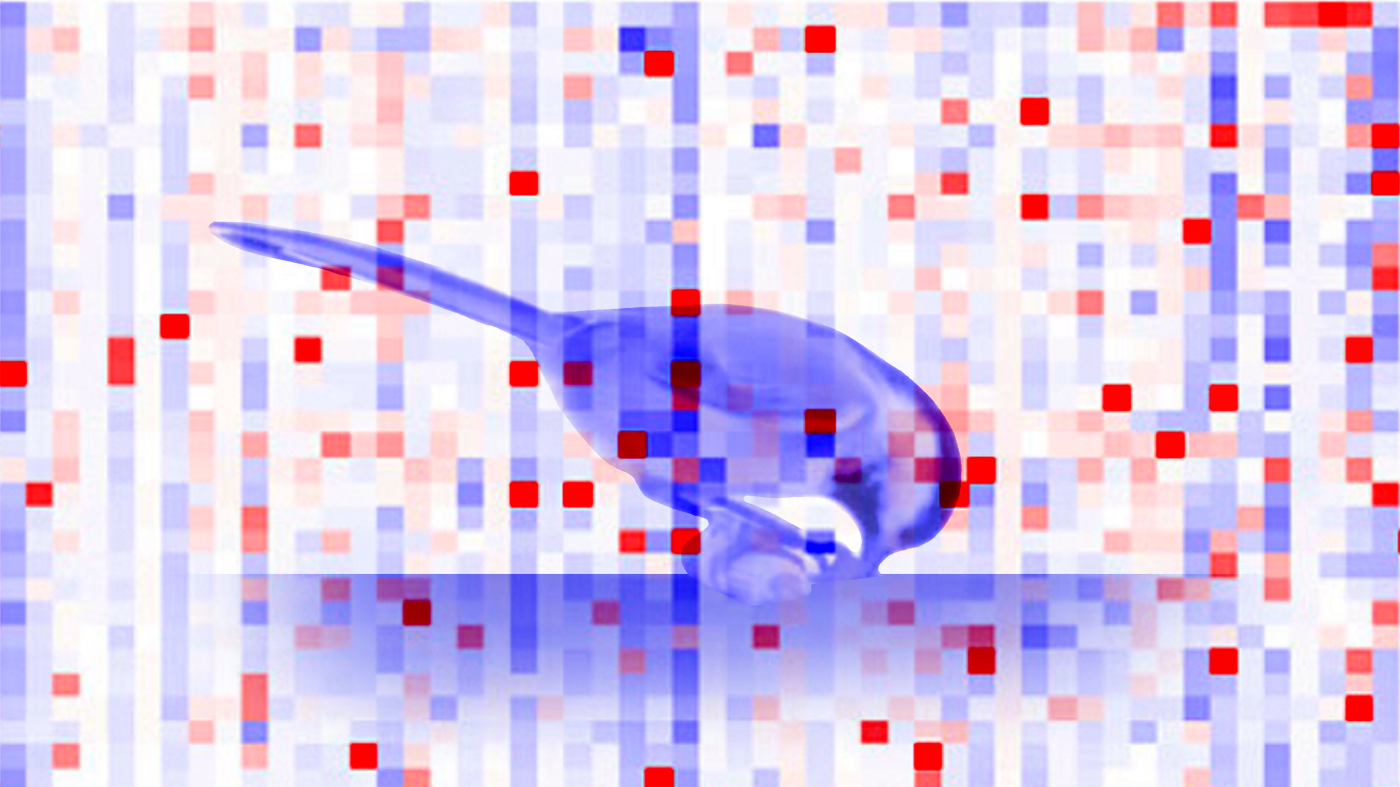
"As a field technician, unobtrusive and silent but also formulative and critical observation was my
prime directive. I was a peeping tom to the parrot's every motion. Trends were sighted, generalized and
tested, hunches were fleshed out to greater or lesser certainties, and soon theories were born. I joined the
other researchers at the dinner table each evening, where we acted as a serious-minded convention
assessing data, propounding theories, designing new experiments. We were humanity's representatives at
the frontier, searching the underlying patterns of seemingly ordinary, even repetitive data for extraordinary
conclusions.
"The project was rigorous, taking its toll on both body and mind. The long days (sometimes 13 hours)
began at times before the light was out, and featured steep, long, muddy, slippery hikes through the
mosquito-infested jungle with hot, humid weather conditions. But the rain forest was truly a magical place:
Evolution must have sped up many times the rate at which it proceeded in the comparatively barren
temperate forests. The rain forest demonstrated life's infinite mutability: trees' buttress roots extending 30
feet like walls, vines that become trees, wasps laying eggs in tarantulas, ting-ting bugs that sound like little
bells. And the involvement of the St. Lucians, genuinely friendly people with a wealth of knowledge
concerning the local forest, helped make the project a rewarding learning experience."--I'Kyori Swaby,
Biology
"Since the beginning of high school, I wanted to be involved in either natural language processing
(NLP) or machine learning. I thought the idea proposed by Alan Turing of having a computer doing poetry
analysis was very cool. I've been searching for an idea that might help to do fast machine translation. I've
never had the leisure time to just sit and relax and think about it, but research coupled with classes has
enabled me to think about the problems on grounds closer to implementation level rather than just
theoretical. There's quite a marked difference--a difference I wasn't previously aware of until I started
research.
"Honestly, I can't say I'm 100 percent for doing research because of the added responsibilities. The hardest
thing about undergrad research is balancing your schedule with classes; when classes hit hard, the project's
progress seems to waver. As an undergrad with only 10 hours a week, if you're lucky, it's impossible to
really feel research pounding at your door. But the weekly NLP group conference [is] a resounding positive
point; I'm forced to learn in order to understand the conversation, and the discussion is lively. After my
research experience, I've decided to pursue graduate school." --Min-Yen Kan, Computer Science
|